Smart Glasses in 2026: The Designs That Finally Make AR Wearable
The smart glasses category has been trapped in a paradox: the technology needs to be invisible to be socially acceptable, but invisibility requires miniaturization that the technology has not yet achieved. In 2026, that paradox is finally beginning to resolve. A new generation of smart glasses, documented by Glass Almanac’s survey of the year’s most significant releases, demonstrates that AR eyewear is crossing the threshold from “noticeably technological” to “acceptably glasses-like.”
The Form Factor Breakthrough
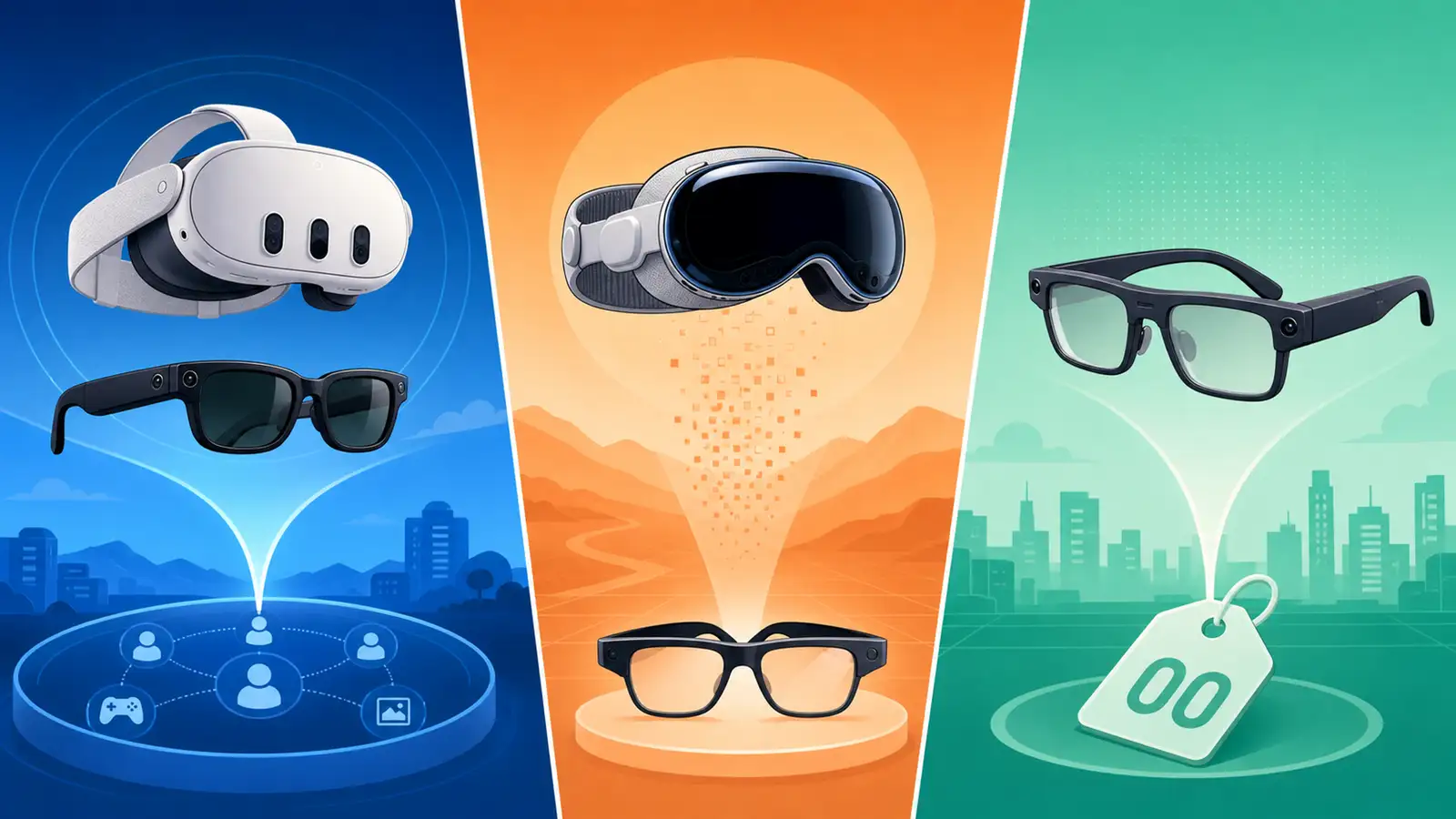
The seven designs highlighted in the 2026 survey share a common characteristic: they look more like conventional eyewear than like technology products. The bulkiest components — batteries, processors, connectivity modules — have been miniaturized or offloaded to companion devices. The optical systems that project digital information onto the wearer’s field of view have been refined to the point where they are nearly invisible when not in active use.
This form factor breakthrough is not just an aesthetic achievement. Social acceptability is the primary barrier to smart glasses adoption. People will not wear devices that make them look strange, that make others uncomfortable, or that signal “I am recording you” to everyone in the room. The 2026 designs address these concerns through discretion — the technology is present but not performative.
The Enterprise Sweet Spot
Enterprise adoption of smart glasses is accelerating faster than consumer adoption, following a pattern familiar from earlier technology cycles. Warehouse workers, field service technicians, and manufacturing line operators do not care whether their eyewear looks cool. They care whether it helps them do their jobs faster and with fewer errors. Smart glasses that overlay pick-and-pack instructions in a warehouse, display maintenance procedures to a technician with both hands occupied, or provide real-time translation to a factory supervisor communicating with a multilingual workforce deliver measurable ROI that justifies deployment costs.
The enterprise smart glasses market is becoming crowded with specialized offerings. Some designs prioritize durability and battery life for industrial environments. Others prioritize lightweight comfort for all-day wear in office or retail settings. The specialization reflects a maturing market where different use cases demand different design trade-offs, rather than a one-size-fits-all approach.
The Consumer Question
Consumer adoption of smart glasses remains the industry’s holy grail — and its biggest question mark. The devices are still expensive relative to consumer electronics budgets. The killer consumer application — the equivalent of the iPhone’s App Store moment — has not yet arrived. And the privacy and social concerns, while mitigated by better design, have not disappeared.
But the trajectory is encouraging. Each generation of smart glasses is better, cheaper, and more socially acceptable than the last. The underlying technologies — displays, batteries, connectivity, AI — are all improving rapidly. And the smartphone platform, which smart glasses complement rather than replace, provides a familiar user experience foundation that reduces adoption friction.
For enterprise technology leaders, the 2026 smart glasses landscape provides a clear signal: the devices are ready for serious evaluation in industrial and field service contexts. The ROI cases are real, the hardware is mature enough for enterprise deployment, and the software ecosystem is developing rapidly. For consumer markets, the timeline is less certain — but the direction of travel is unmistakable. AR eyewear that looks and feels like regular glasses is no longer science fiction. It is the 2026 product roadmap.