Meta VR Glasses: $1,299, 100 Grams, a Puck
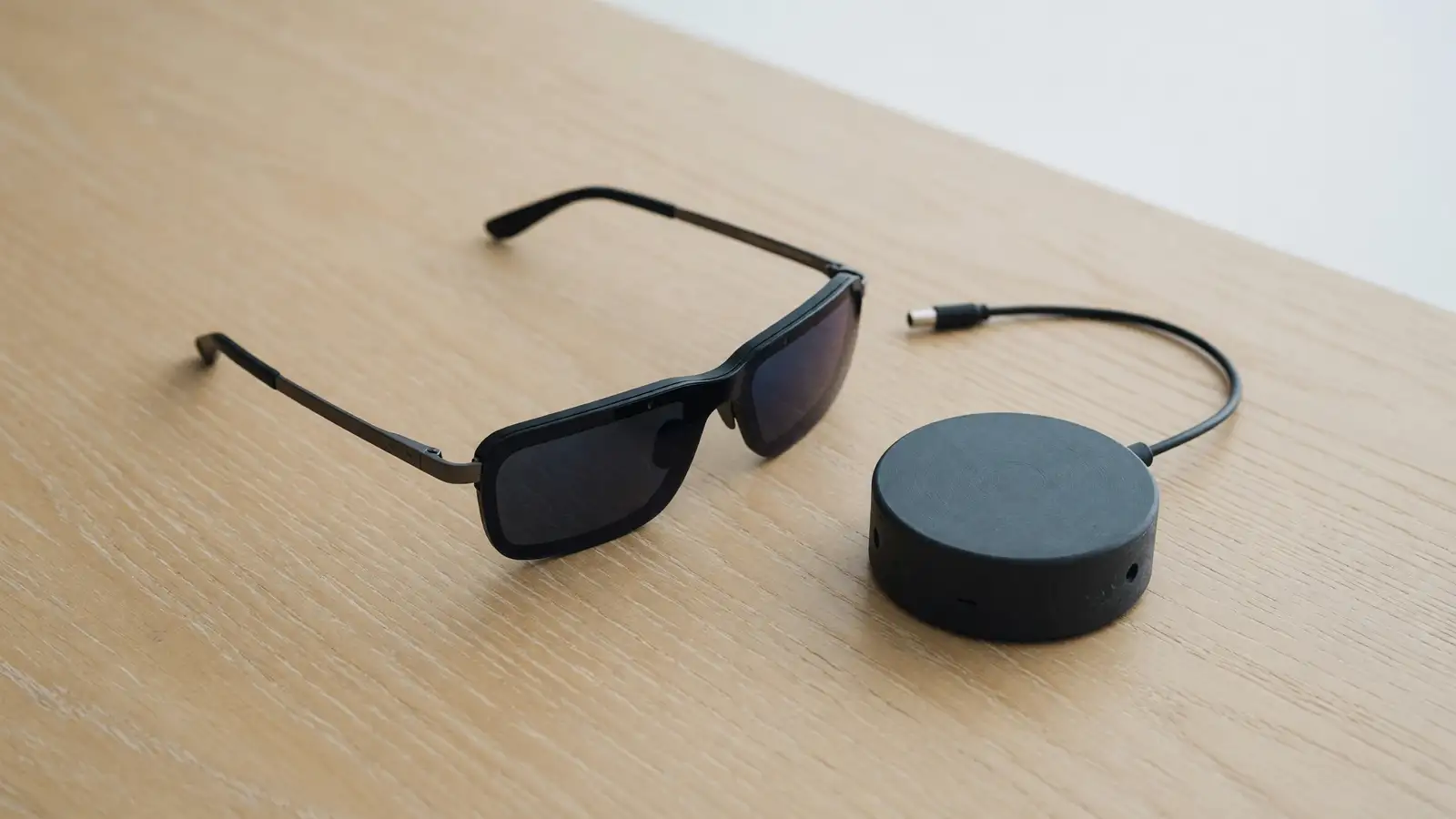
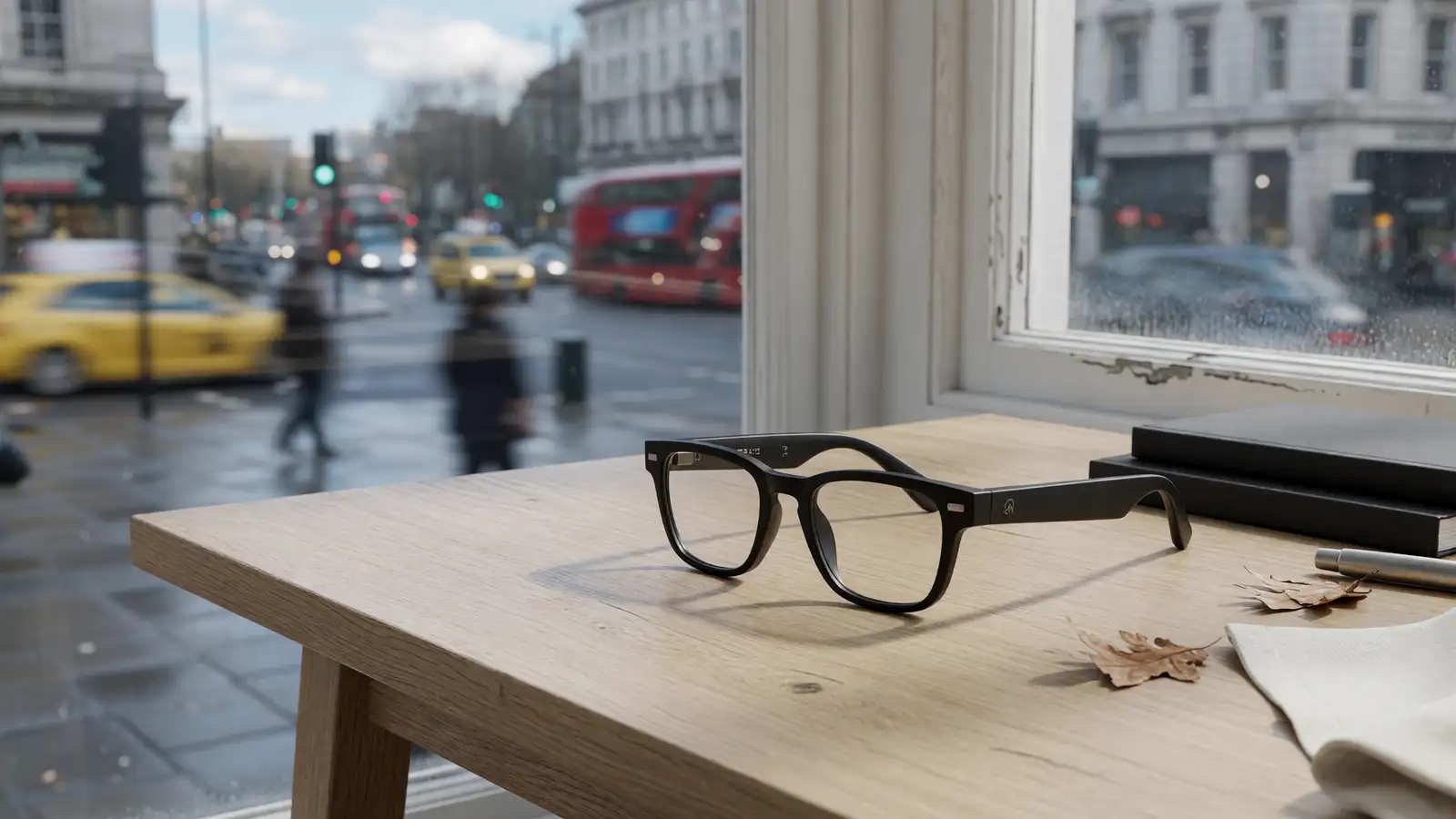
The tease had a date and no price. The product now has both, and a cable. PC Guide, covering Connect on Sept. 23 and 24, puts the Meta VR Glasses at $1,299 with a spring 2027 ship window. The glasses are 100 grams. The compute puck is about 300 grams. Meta’s line, quoted there, is that the glasses are “5x lighter than Meta Quest 3.” The sentence is true of the part on your face. It is not true of the thing you still have to carry.
We wrote the pre-show version twice. The Phoenix stills were a silhouette and a cable with no price. The Connect preview said the hardware you could buy in 2026 was still Quest 3 and 3S. That second claim held. Spring 2027 is not this holiday. What changed is that the ultralight headset stopped being a leak and started being a spec sheet.
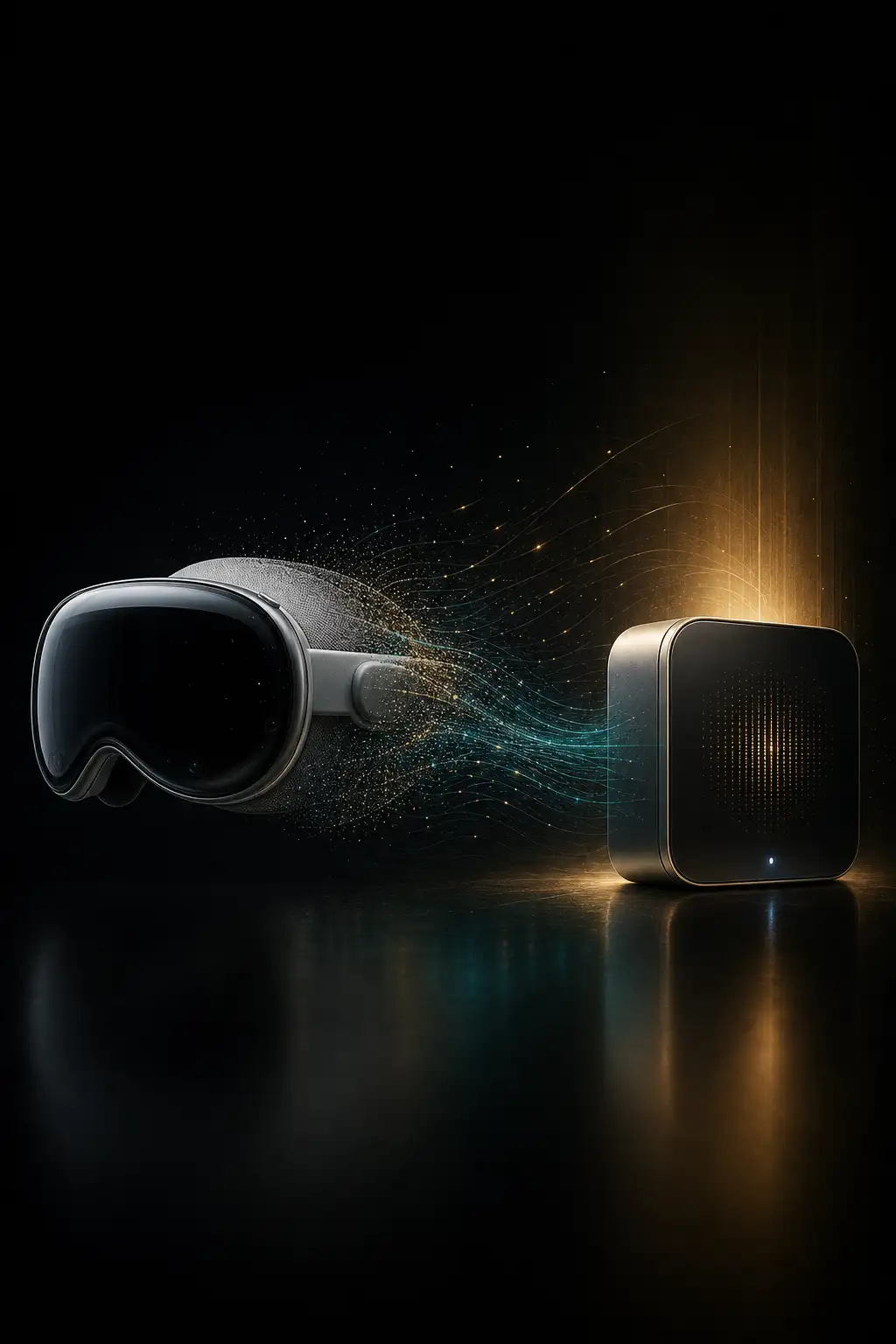
Meta VR Glasses leave the computer in the puck
PC Guide is explicit about the split. The glasses have no processing and no battery. A cable runs to a phone-sized puck. The puck is where the Snapdragon Reality Elite sits. PC Guide’s table identifies that chip as XR2 Gen 3. GSMArena’s Sept. 25 writeup calls the link an optical cable and gives the puck a charging figure the other piece does not: 45W. Battery life, in both writeups, is a bit over three hours with the puck attached. PC Guide says “3+ hours.” GSMArena says “up to three hours.” I would not budget a flight around the gap between those two phrases. I would budget around three hours and a cable.
The weight claim needs the same treatment as the battery claim. One hundred grams is the glasses. Three hundred grams is the puck, per PC Guide. Add them and you are at 400 grams of kit, plus the tether, which neither table puts on a scale. A Quest 3 on your face is one object. This is two objects and a wire. Tom’s Guide on Sept. 26 already has a reader calling the wire a non-starter, and calling the glasses still too heavy and silly-looking. That is one reader. It is also the objection the form factor was built to provoke. If you wanted the computer off your face, you accepted a tether. The marketing will keep saying 100 grams. The bag will weigh the puck.
GSMArena adds two media labels PC Guide’s table does not lead with: Dolby Vision on the panels, and Dolby Atmos from speakers in the frames. The panels themselves, in PC Guide’s table, are a “5K Infinite Display,” micro-OLED, 2412 by 2288 per eye, 37 pixels per degree, up to 120Hz. Pancake lenses. Eye tracking. Field of view 70 degrees horizontal by 66 degrees vertical, 88 degrees on the diagonal. IPD adjustment from 56 to 70 millimeters. Those are the numbers I would put on a comparison chart. “5K” is a marketing width. 2412 by 2288 per eye is the count you can argue with.
Seventy degrees is a VR number wearing glasses clothes
Tom’s Guide lists both the Meta VR Glasses and Xreal’s Aura at 70 degrees. PC Guide is more precise for Meta: 70 by 66, 88 on the diagonal. Tom’s Guide’s writer likes the peripheral view and the passthrough, and says VR people are already unhappy with the immersion. Both can be true. Seventy degrees horizontal is a large field for an optical see-through glasses product. It is a small field for someone who bought a headset to forget the room. The Ghost Howls, on Oct. 1, treats the Vision Pro comparisons as half fair and half not. Fair, because both devices are aimed at media and productivity. Unfair, because the specs, the timing, and the target user are different. The small-FOV complaints he is seeing come from people with a Vision Pro icon next to their name. He thinks a lot of that is team sport. I think the degree count is still the degree count, whoever is annoyed by it.
Passthrough is specified, which matters if the pitch is “glasses” rather than “goggles.” PC Guide lists full-color RGB passthrough at 26 pixels per degree, against 37 on the virtual panels. The world you see through the cameras is a lower-resolution picture than the movie. That is normal for this class of device. It is also the sort of gap a hands-on will notice before a spec table does. Tracking, in the same table: 6DoF, eye tracking, hand tracking, iris detection. Tom’s Guide’s comparison row says Meta has hand tracking, eye tracking from four sensors, and face tracking. Xreal’s row, in that same table, is 6DoF spatial and hand tracking from two world-facing cameras. I am not going to declare a winner from two tables that do not even use the same nouns.
Storage and memory are only in the PC Guide table among the pieces I read: 128GB, microSD up to 1TB, 12GB of RAM. Controllers are a yes and a no at the same time. PC Guide says more than 75 games on day one, designed to be played with your hands, “no controllers required,” and also says Touch Plus controllers are supported. GSMArena says Xbox Cloud Gaming is in, and that the glasses are IMAX Enhanced and can do 3D movies. PC Guide adds that the puck takes USB-C DisplayPort video in, so a laptop, a phone, or a handheld can show up as a virtual screen. The writer compares that trick to the ROG XREAL R1. The device is being sold as a headset you wear like glasses, a cloud-gaming screen, and a monitor for a computer you already own. Those are three products sharing a cable.
The $349 glasses are the one you can buy in October
The VR Glasses are not the only thing Connect put on a face. GSMArena’s same story covers Ray-Ban Meta Audio: camera-free, 43 grams, up to 12 hours on a charge, up to 48 hours with the case, 23 color and lens combinations, Clubmaster and Burbank styles, $349, on sale starting Oct. 13. That is a product with a shelf date. The VR Glasses have a season. If you are trying to describe what Meta is actually shipping this fall, the audio glasses are the answer. The 100-gram VR pair is a spring 2027 object with a price tag attached early.
Knoxlabs’ September XR roundup restates the VR Glasses figure ($1,299, about 100 grams, 5K Dolby Vision, tethered puck, Snapdragon Reality Elite, spring 2027) and adds a Gen 3 Ray-Ban Meta refresh: a 12-megapixel camera and a six-microphone array that Meta says cuts background noise by more than 90%. “Meta says” is doing the work in that sentence. I do not have a measurement. The roundup also prints a category split: audio-only glasses at 70.3% of shipments, display glasses at 14.3% and up from 11%, VR and MR headset shipments down 42.8% in 2025, the rest of XR (mostly smart glasses) up 211.2%, Meta at 69.2% of the full XR category. The page credits IDC with expecting training and design pilots to keep growing. I am not going to promote the shipment percentages into an IDC table the roundup did not name in the sentences I could extract. I am going to treat them as Knoxlabs’ roundup figures, and treat the direction as the part that matches the product split on stage. Audio glasses are the volume product. Display glasses are the growing slice. A $1,299 VR pair with a puck is neither of those volume stories. It is a third object, priced like a headset, shaped like glasses, and scheduled for next spring.
Snap’s SPECS preorder was the other expensive glasses story on this site, at $2,195. I am not lining them up as substitutes. Snap’s pitch and Meta’s pitch are both “not a brick on your face.” The prices are not in the same band, and the ship stories are not the same paragraph. The useful comparison inside Meta’s own keynote is the $349 audio pair versus the $1,299 VR pair. One has no camera and a case that gets you to 48 hours. The other has micro-OLED panels, a puck, and a three-hour battery. Buyers who say “Meta glasses” in October are talking about the first one.
$1,299 will not be judged against Quest 3 unit sales
PC Guide notes that $1,299 is well above Quest 3 and Quest 3S, and $200 under the Quest Pro’s 2022 launch price. That is a historical comparison, not a demand forecast. The Ghost Howls is more direct about volume. At $1,300, the author does not expect stellar sales. Twelve years of watching this market, in his telling, say price decides how many headsets move. His success bar is rough parity with the Vision Pro, not millions of units. His fear is that the press will expect millions, miss them, and write that VR is dead again.
I think that fear is specific enough to keep, and vague enough not to turn into a prediction of my own. Spring 2027 is two quarters away from a spec sheet published in late September 2026. A lot of the sheet can still move before a unit ships, including the day-one game list and whatever Hologram Calling turns out to be. GSMArena says Hologram Calling is claimed to build a photorealistic stand-in of the user for video calls, with real-time facial expressions. Claimed. I have not seen the call. I would not put it in a buying guide.
Tom’s Guide’s comparison with Xreal Aura is the other price anchor. Aura is listed at more than $1,000, glasses-plus-puck, Snapdragon Reality Elite, about 95 grams or a bit over, 70-degree field, Android XR. Meta’s column is $1,299, Meta OS, 100 grams, the same chip family, 70 degrees in that table’s shorthand. The writer’s preference for Google’s software stack and for Gemini over Meta’s Muse is an opinion, and he labels the experience as his. The fact I would keep from that table is the shared shape: both companies decided the computer belongs in a puck, and both are asking about a thousand dollars or more for the privilege. Meta is not alone in the tether. Meta is alone, in this pair, in shipping a VR-first OS rather than Android XR, and in posting a fixed $1,299 instead of a “more than $1,000.”
What I would ignore until a unit ships
I would ignore “5x lighter” unless the sentence includes the puck. I would ignore day-one game counts until the list exists. Seventy-five hand-tracked games is a company sentence. Touch Plus support means the “no controllers” line was never absolute. I would ignore the category-growth percentages as a reason to buy this device. A 211% jump in smart-glasses shipments is a 2025 market fact in a retailer’s roundup. It does not make a spring 2027 VR puck a mass product, and Knoxlabs’ own split says audio still holds about 70% of shipments.
I would not ignore the field of view, the per-eye resolution, the three-hour battery, or the ship window. Those are the numbers that survived three writeups. PC Guide, GSMArena, and Tom’s Guide agree on $1,299, on 100 grams for the glasses, on a tethered puck, on Snapdragon Reality Elite, on a roughly 70-degree field, and on spring 2027. GSMArena adds the optical cable, 45W charging, Dolby Vision, and the Oct. 13 date for the $349 audio glasses. The Ghost Howls adds the sales ceiling a person who has watched this market for 12 years is willing to say out loud: not millions, and do not let a miss of millions become an obituary.
The pre-Connect posts on this site asked for a price and a year. The year is 2027. The price is $1,299 before you buy a case, a prescription insert, or a second cable. The computer is in your pocket, or on the table, and it weighs about 300 grams. That is the product. The 100-gram line is the part Meta would like you to repeat. The puck is the part you will pack.