Meta's Phoenix Leak Is a Tease. Connect Cannot Sell You a Headset This Year
Meta Connect is later this month. The hardware that will actually sit on faces in 2026 is still Quest 3 and 3S. The hardware in the leaks has three names and no price.
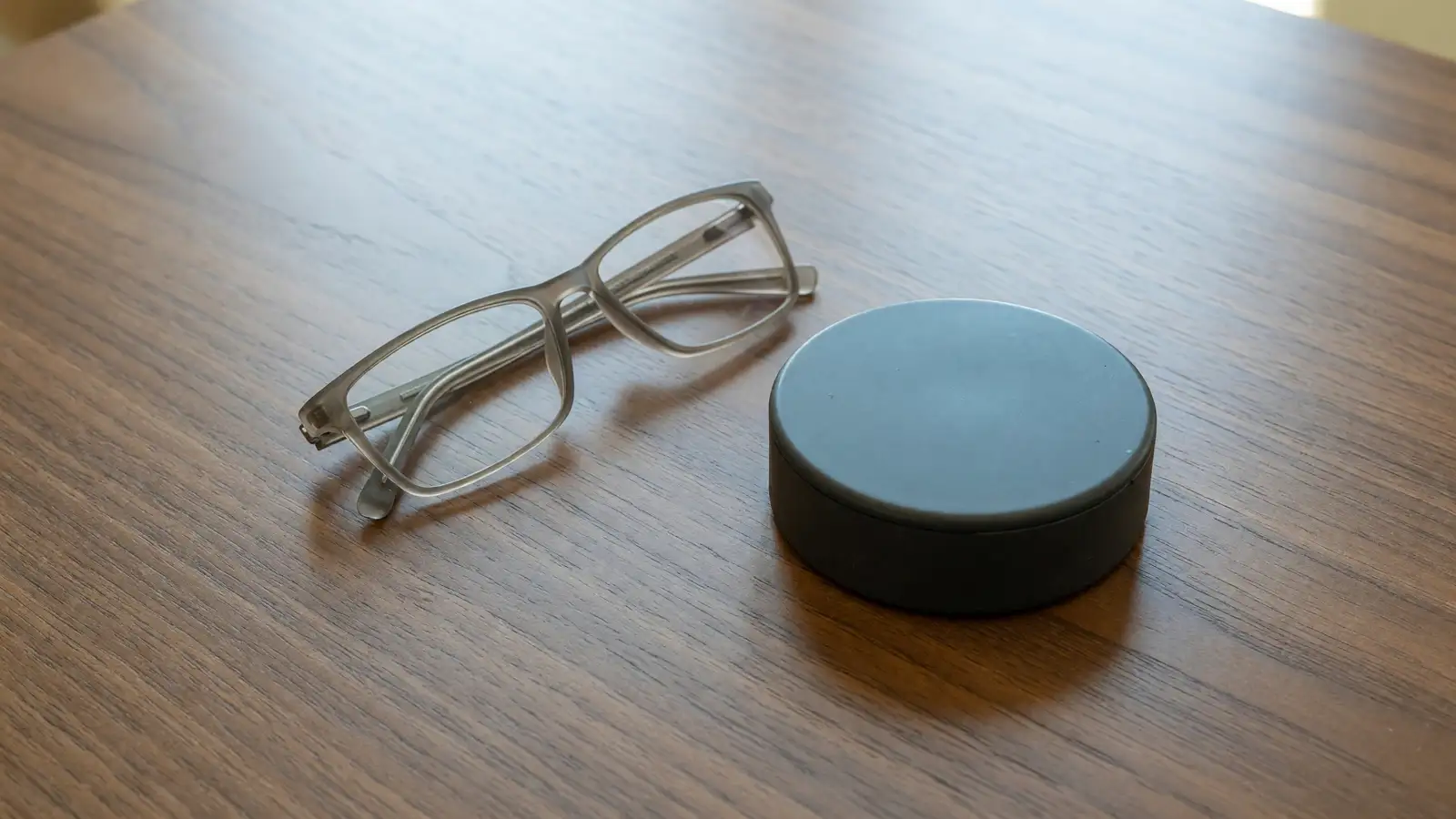
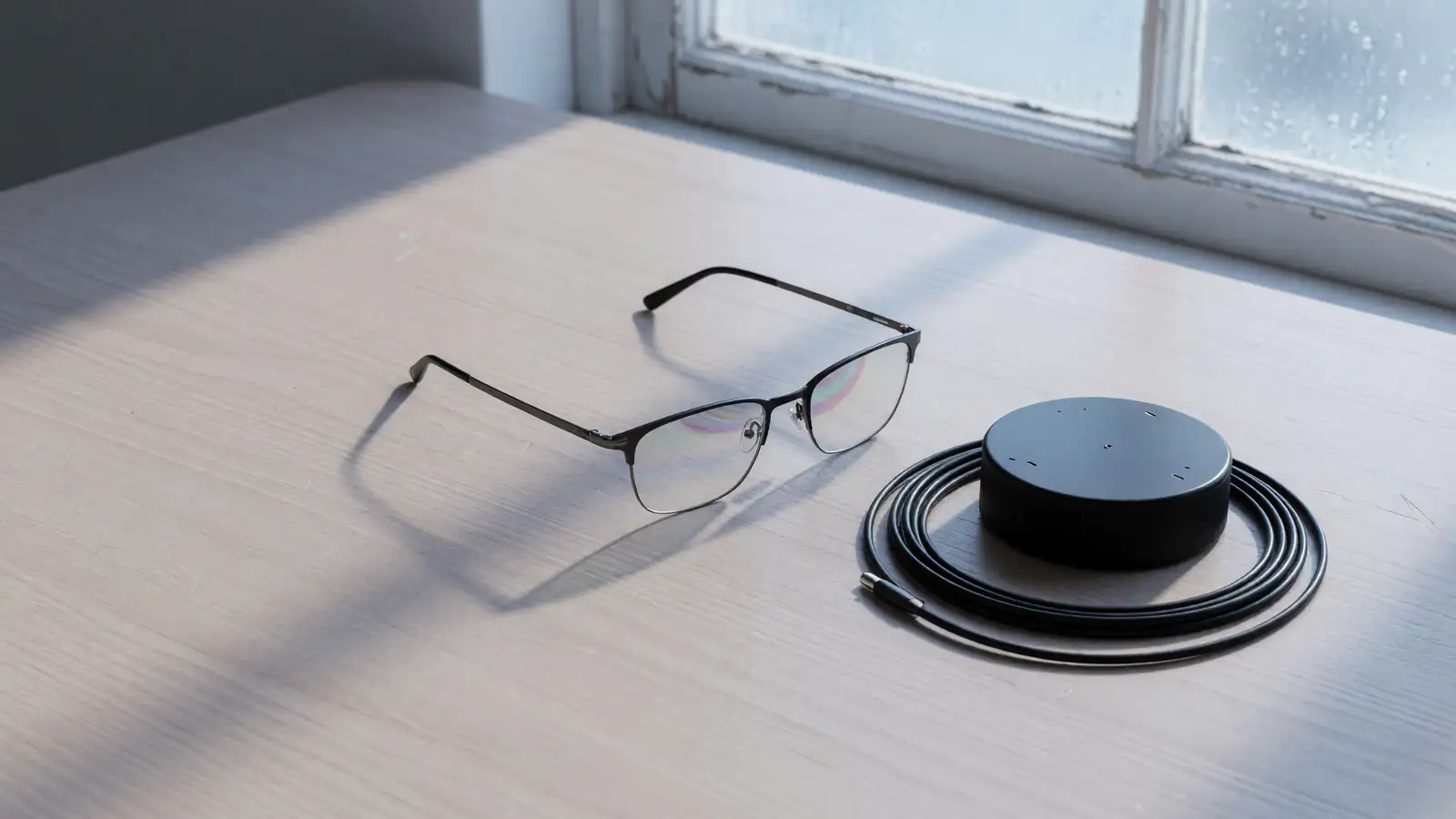
Road to VR on 10 September published new stills of the ultralight mixed-reality headset people have been calling Phoenix. They sit on top of a July setup-video leak. The silhouette is glasses-like. Compute is not in the glasses. A cable leaves the left temple toward a puck that still has not been shown cleanly. The QR code in one still is a mock-up. Treat it as a mock-up.
We already wrote the glasses-first Connect preview. This is the September leak cadence, not a new keynote.
What the stills actually show
Phoenix, in these frames, has sensors on the outer temple and on the underside, pointing sideways and down. Commenters jumped to face tracking for the downward ones. That is a guess. Downward cameras can also watch hands in the lap or keep passthrough from breaking when you look at a keyboard. Road to VR did not claim a firmware string that proves face tracking. Neither will I.
The rest of the list is more boring and more useful. Independent lens spacing. Removable nose clips. Built-in hand and eye tracking, which implies sensors on the front and sensors close to the eyes even when those modules are blurred. None of that is a launch. It is a statement that Meta is not shipping another brick that copies Quest 3’s mass.
The hybrid split is the actual product bet. A near-glasses face piece cannot hold a 2026-class Snapdragon and a battery you would finish a movie on. So the compute goes on a cable. Bigscreen Beyond already proved that a tiny face piece can work if you accept a tether. Meta wants cameras on that tiny face piece. That is harder. Under 110 grams was the firmware rumor in July, according to vr.org’s Connect explainer. A Beyond with cameras is the comparison they used. Cameras add weight. 110 grams is a target, not a teardrop.
No official name. No price. No date. Road to VR said that out loud. Anyone selling you a SKU from a still is doing fan fiction.
Two headsets, neither this year
vr.org’s tracker is the document I trust more than a render. Quest 4 was rebooted as Griffin after the Pismo prototypes were scrapped. Reporting puts Griffin no earlier than the second half of 2027. The ultralight has gone by Puffin, Loma, and Phoenix. Tracking for that one is first half of 2027, aimed at media, social, and fitness rather than the game that needs a 3S-class halo. Price chatter sits under $1,000. Chatter.
Andrew Bosworth’s public line, as vr.org recorded it, was stay tuned for Connect on headsets. The roadmap allows a tease of Griffin and a tease of the ultralight. It does not allow a “buy it in October” slide. Meta has shown future hardware years early before. That habit is why these leaks exist. It is also why people will walk out of Connect convinced they can preorder a 110-gram headset. They cannot, if the tracker is right.
A 16 September Road to VR follow-up pointed at a hologram-style calling experience tied to Codec Avatars. Horizon OS builds in late August already carried Hologram Calling frameworks. The Meta AI app had Hologram product tours. That is software you can put on a keynote even if the glasses are vapor. I would bet on a codec-avatar demo before I bet on a checkout page.
Quest 3’s refresh-rate notes in developer docs (up to 207 Hz, 240 Hz in developer mode, per vr.org) are a different machine. Do not staple that to Phoenix. Different face. Different thermal budget.
Why the leak cadence is the story
July: setup graphics in Quest firmware. September 10: clearer body stills, temple sensors, left-side tether. September 16: Connect unveiling rumor plus calling. That is a communications plan leaking in order, or a supply chain that cannot keep a secret, or both. For a company that needs a post-Quest-3 object in photos, either explanation is fine. For a buyer, the order means Connect will show a video of a thing you cannot take home.
Enterprise readers should not map this onto the 2026 “enterprise adoption” write-up. A puck-tethered ultralight aimed at social and fitness is a living-room device. It is not a warehouse headset. If your CIO is asking whether Connect changes the HoloLens-shaped hole in the budget, the answer is no. Griffin in 2027 might. Phoenix will not, unless Meta surprises everyone and puts a rugged strap on a 110-gram face piece, which would be a different product than the one in these stills.
Gaming readers should also calm down. A face piece that offloads compute can still game. It will game like a portable that is tied to a brick in your pocket. Pocket bricks overheat. Cables catch on door handles. The Quest 3S remains the thing you can actually buy if you want a game tonight.
What I want named on stage, in this order
Name. If they keep saying Phoenix in the hall and “the next Quest” on the slide, the leak wins the week and the keynote loses.
Where the puck lives. Belt, pocket, or a battery brick that clips to the strap. The stills do not show it. Thermal and cable length are the product.
Weight with cameras on. 110 grams without the modules that make mixed reality work is a lie by omission.
IPD range and nose clips as SKUs, not as a photo. Independent spacing is how you avoid returning half the units.
Whether eye tracking is required for the hologram calls. If Codec Avatars need the eyes, the cheap SKU without them is a brick for the feature they will advertise.
A date that is a season, not “soon.” H1 2027 is already the tracker. Repeating it would be honesty. Pretending 2026 inventory exists would be a problem.
What I will ignore
I will ignore any QR code in a leak video. I will ignore a price that starts with a dollar sign and ends with a wink. I will ignore “Quest 4 confirmed” headlines that mash Griffin and Phoenix into one plastic shell. They are two programs. One is a traditional halo reboot. One is a glasses bet. Connect can tease both. It cannot ship both.
I will also ignore the face-tracking guess until someone shows a mesh moving. Sideways and downward sensors are interesting. They are not a face tracker until the firmware says so.
The boring buyer’s paragraph
If you need a headset this month, Quest 3 or 3S. If you need glasses that look like glasses, wait for a 2027 unit you can weigh in a store. If you are going to Connect for work, watch the software demo. Hologram calling can ship on hardware you already own, or it can be a trailer for hardware you do not. Ask which. Then go back to the leak stills and count the cables.
Phoenix looks like Meta finally admitted the brick on your face was the product problem. The admission is not a ship date. Connect can put the admission on a giant screen. You will still walk out wearing the same Quest you walked in with.
The glasses problem Meta has been pretending not to have
Quest 3 is a good headset. It is also a ski goggle. You take it off to drink water. You do not wear it on the sofa through a two-hour call. Every Connect for a few years has tried to talk past that with “the future is glasses.” Ray-Ban Meta is glasses. It is not mixed reality. Phoenix is the attempt to put passthrough cameras on something that still looks like glasses if you squint and ignore the cable.
The cable is the honesty. Untethered glasses with 2026-class passthrough would cook a temple or die in forty minutes. Meta chose a puck. Apple chose a battery pack for Vision Pro. Neither company invented this. Both are admitting the physics. The leak stills make the admission visible: left temple, tether trailing, compute elsewhere.
Fitness and social as the target market is also an admission. Those sessions are shorter than a raid night. A 110-gram face piece that you forget you are wearing is more valuable for a 25-minute workout or a hologram call than for Asgard’s Wrath. Griffin can keep the gamers in 2027. Phoenix does not have to.
I do not know if under $1,000 survives contact with cameras, eye tracking, and a puck. Vision Pro taught a generation that “spatial” has a price. Meta’s brand promise is the opposite. If Phoenix lands at $1,400, the leak stills become a joke. If it lands at $800 with a puck that feels like a phone from 2019, the joke is on the people who wanted a Quest 3 killer. The tracker says H1 2027. That is enough time for both outcomes.
Connect as a software show with a hardware trailer
August 27 Horizon OS bits about Hologram Calling and Codec Avatars are the part I would actually use. A calling feature can ship on Quest 3. It can also be locked to eye-tracked hardware as a reason to wait. Watch the demo’s footer. If the avatar only works when the eyes are tracked, they are selling Phoenix with software you cannot run well on what you own. If it degrades gracefully on 3S, they are selling a service.
I would rather they ship the degraded version. Leaks do not help a product manager who has to support two face geometries. They do help a keynote. Expect the keynote.
Developers should not freeze a Quest 3 title because Phoenix exists in a JPEG. The install base is the goggle. The 207 Hz note on Quest 3 is more relevant to a ship date this quarter than a temple sensor on a 2027 glasses prototype. Write for the goggle. Keep a slot in the renderer for eye tracking if you already have it. Do not slip a quarter because Luna posted a photo.
A note on names
Phoenix, Puffin, Loma, Griffin, Pismo. Internal names leak because factories need strings. Public names are trademarks. If Connect says “Quest 4” while the stills say Phoenix, you are looking at two objects. Ask which object is in the video. Ask which object has a cable. Ask which object is 2027. Then stop refreshing Road to VR for a week.
The leak is real enough to write about. It is not a store listing. That gap is the article.