Innovaccer and AWS Are Bringing Multi-Agent AI to Healthcare — and It's a Blueprint for Every Regulated Industry

The multi-agent AI paradigm — where multiple specialized AI agents collaborate to solve complex problems — has been one of the most exciting developments in AI research. But moving multi-agent systems from research papers to production in regulated industries has been an enormous challenge. The newly announced partnership between Innovaccer and AWS to scale agentic AI in healthcare provides one of the first concrete blueprints for how this transition actually works.
The Partnership, Explained
Innovaccer, a leading healthcare data platform, and AWS announced a multi-year strategic collaboration in June 2026 focused on deploying agentic AI across healthcare workflows. Unlike single-agent AI deployments — where one model handles a specific task like clinical note summarization or claims processing — the Innovaccer-AWS approach involves multiple specialized agents that coordinate across complex healthcare workflows.
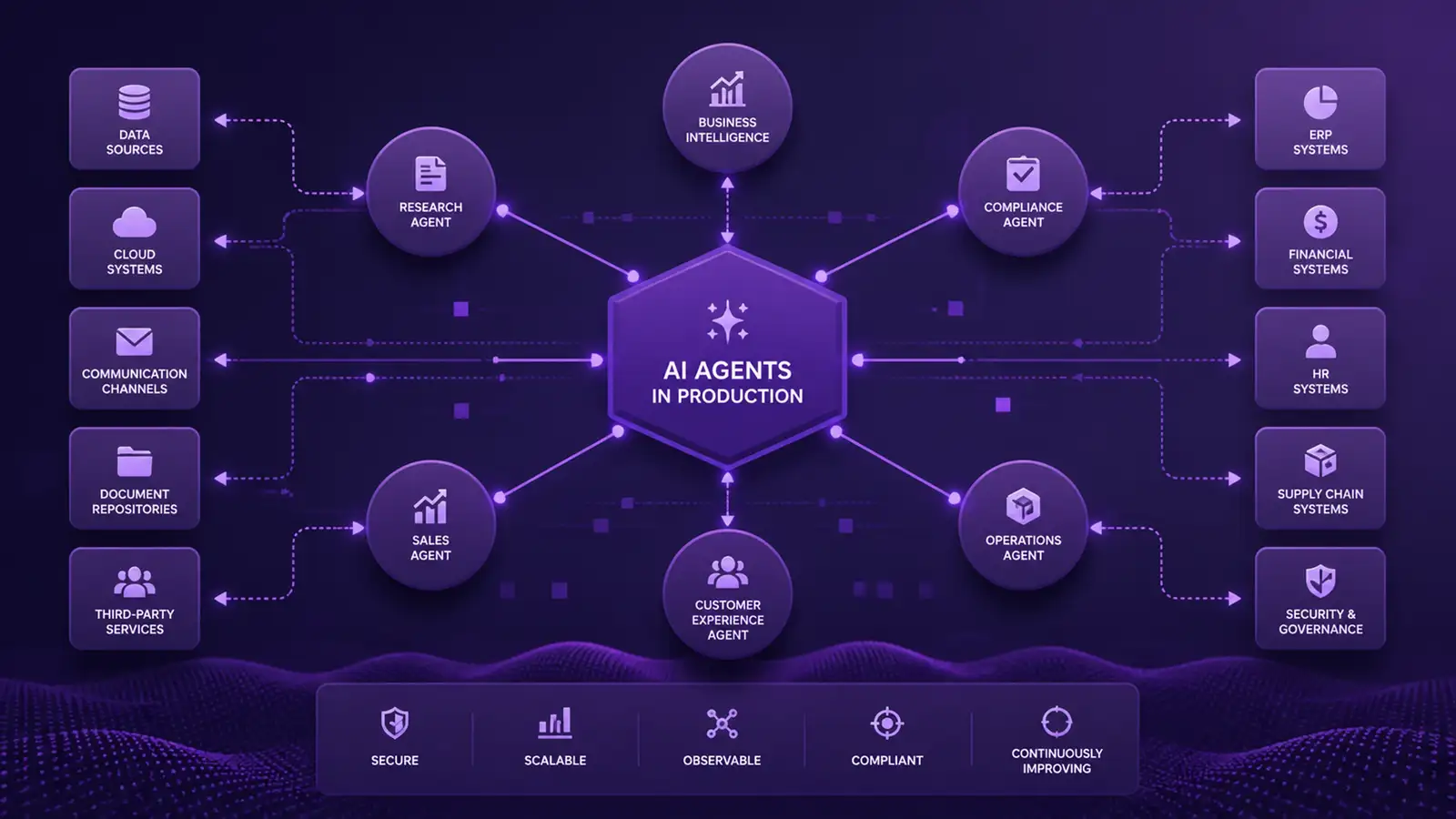
A typical deployment might involve one agent that analyzes patient data for care gaps, another that checks insurance coverage and prior authorization requirements, a third that drafts clinician communications, and a fourth that monitors for compliance with healthcare regulations — all operating as a coordinated system under human supervision.
Why Healthcare Is the Proving Ground
Healthcare is an ideal — and extraordinarily demanding — proving ground for multi-agent AI. The workflows are complex and multi-stakeholder. The data is sensitive and heavily regulated. The stakes, literally, are life and death. If multi-agent AI can work in healthcare, it can work anywhere.
The Innovaccer-AWS approach addresses these challenges through several design principles. First, each agent has a clearly defined scope and cannot exceed its authorized boundary — a clinical decision support agent cannot make billing decisions, and vice versa. Second, all agent interactions are logged and auditable, creating the transparency that healthcare regulators require. Third, human clinicians remain in the loop for all consequential decisions, with agents positioned as augmentation rather than replacement.
The Enterprise Blueprint
The lessons from the Innovaccer-AWS partnership extend well beyond healthcare. Financial services faces similar challenges: complex multi-stakeholder workflows, sensitive data, heavy regulation, and high stakes. Legal services, government administration, and insurance all share these characteristics. The multi-agent architecture that Innovaccer and AWS are developing for healthcare provides a reference design that these other industries can adapt.
The key insight is that multi-agent systems in regulated industries require a fundamentally different architecture than consumer-facing AI chatbots. They need strong boundaries between agent responsibilities, comprehensive audit trails, deterministic fallback behaviors when agents disagree or encounter edge cases, and clear escalation paths to human decision-makers. Building these capabilities into the platform layer — as AWS is doing — rather than expecting each application developer to implement them independently is what will make multi-agent AI viable at enterprise scale.
For enterprise AI leaders, the Innovaccer-AWS partnership is a signal that multi-agent AI is moving from research to reality. The organizations that start building the governance frameworks, integration patterns, and human-in-the-loop workflows that multi-agent systems require will be best positioned as this paradigm matures.
Related Articles

Enterprise AI Agents Are Reaching Production — But Governance and Security Aren't Ready
98% of Enterprise Leaders Would Trust AI Agents in Production — If the Guardrails Exist