NVIDIA's ASPIRE Framework Just Taught Robots to Learn Without Being Told What to Do
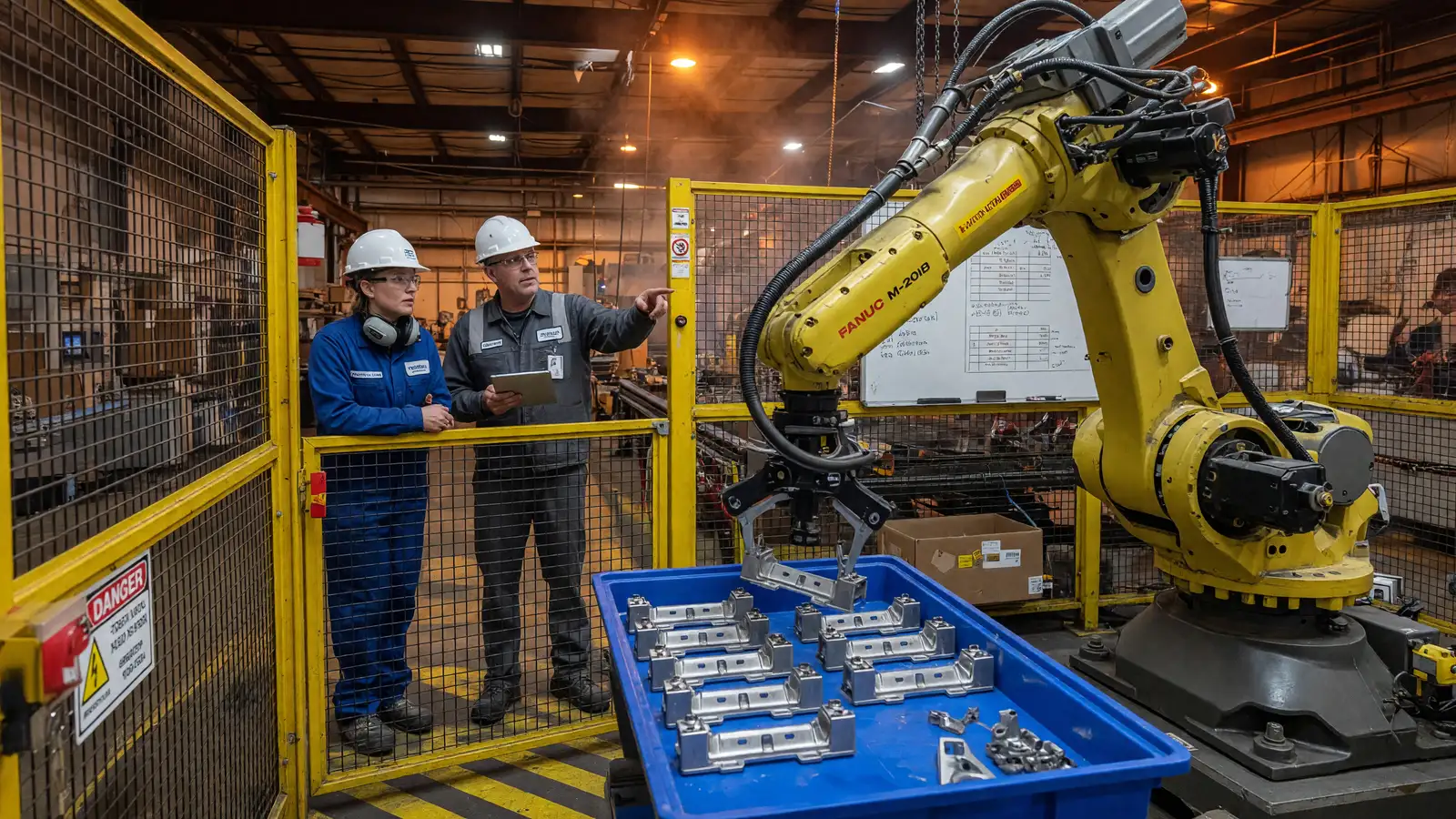
NVIDIA released ASPIRE this week — a self-improving robotics framework that hit 31% zero-shot performance on the LIBERO-Pro benchmark for long-horizon tasks. That number might not sound impressive compared to the 90%+ scores language models post on standardized tests. But for robotics, 31% zero-shot on tasks that involve multiple steps, object manipulation, and environmental variation is a genuine breakthrough. It means robots are starting to figure things out without being explicitly programmed for every scenario.
The core idea behind ASPIRE is simple in principle but hard in execution: give a robot a goal, let it try, let it fail, and let it learn from the failures. Traditional robotics requires engineers to anticipate every possible situation and write explicit control code for each one. That approach works in factories where the environment is controlled and the tasks are repetitive. It breaks down completely in homes, hospitals, warehouses with mixed inventory, or any setting where the robot encounters something it wasn’t programmed for.
ASPIRE changes the paradigm. Instead of programming behaviors, you define objectives. The robot explores, makes mistakes, and improves its policy through repeated attempts. It’s closer to how humans learn physical tasks — you don’t get a manual for how to walk. You try, fall, adjust, and eventually figure it out. ASPIRE gives robots the same learning loop, accelerated by simulation.
The LIBERO-Pro benchmark matters because it tests long-horizon tasks — sequences of actions that depend on each other. Picking up a cup, walking to a table, and placing the cup without spilling involves multiple sub-tasks that have to be chained together. One mistake early in the chain cascades. Historically, robots have been terrible at this kind of sequential reasoning. ASPIRE’s 31% zero-shot rate means the robot is completing nearly a third of these multi-step tasks on the first try, without any task-specific training.
The broader significance is that NVIDIA is building the same kind of platform play in robotics that it built in AI compute. The ASPIRE framework runs on NVIDIA’s simulation and GPU infrastructure. If it becomes the standard way to train robots, NVIDIA captures the entire stack: the chips that run the training, the simulation environment where the learning happens, and the inference hardware that runs the trained policies in production.
Zoomlion, the Chinese construction equipment manufacturer, demonstrated a humanoid robot this week that marks a parallel milestone in embodied AI for industry. Taken together with ASPIRE, the signal is clear: 2026 is the year robotics moved from “we programmed it to do this specific thing” to “it learned to do this thing by itself.” That’s a fundamental shift in what robots can be asked to do and where they can be deployed.
The 31% number is also a reminder of how far there is to go. A robot that fails 69% of the time on complex tasks is not ready for unsupervised deployment. But the trajectory matters more than the absolute number. A year ago, zero-shot performance on these benchmarks was in the single digits. If the improvement rate holds, we’re looking at robots that can handle most common manipulation tasks without explicit programming by 2028. That timeline puts physical AI on roughly the same adoption curve as language models — except the economic impact of machines that can physically do things is arguably larger than machines that can write things.
Related Articles
AI Agents Are Leaving the Lab at Record Speed — and Nobody's Sure They're Ready
Zoomlion's Humanoid Robot Marks a Milestone in Embodied AI for Industry