Zoomlion's Humanoid Robot Marks a Milestone in Embodied AI for Industry
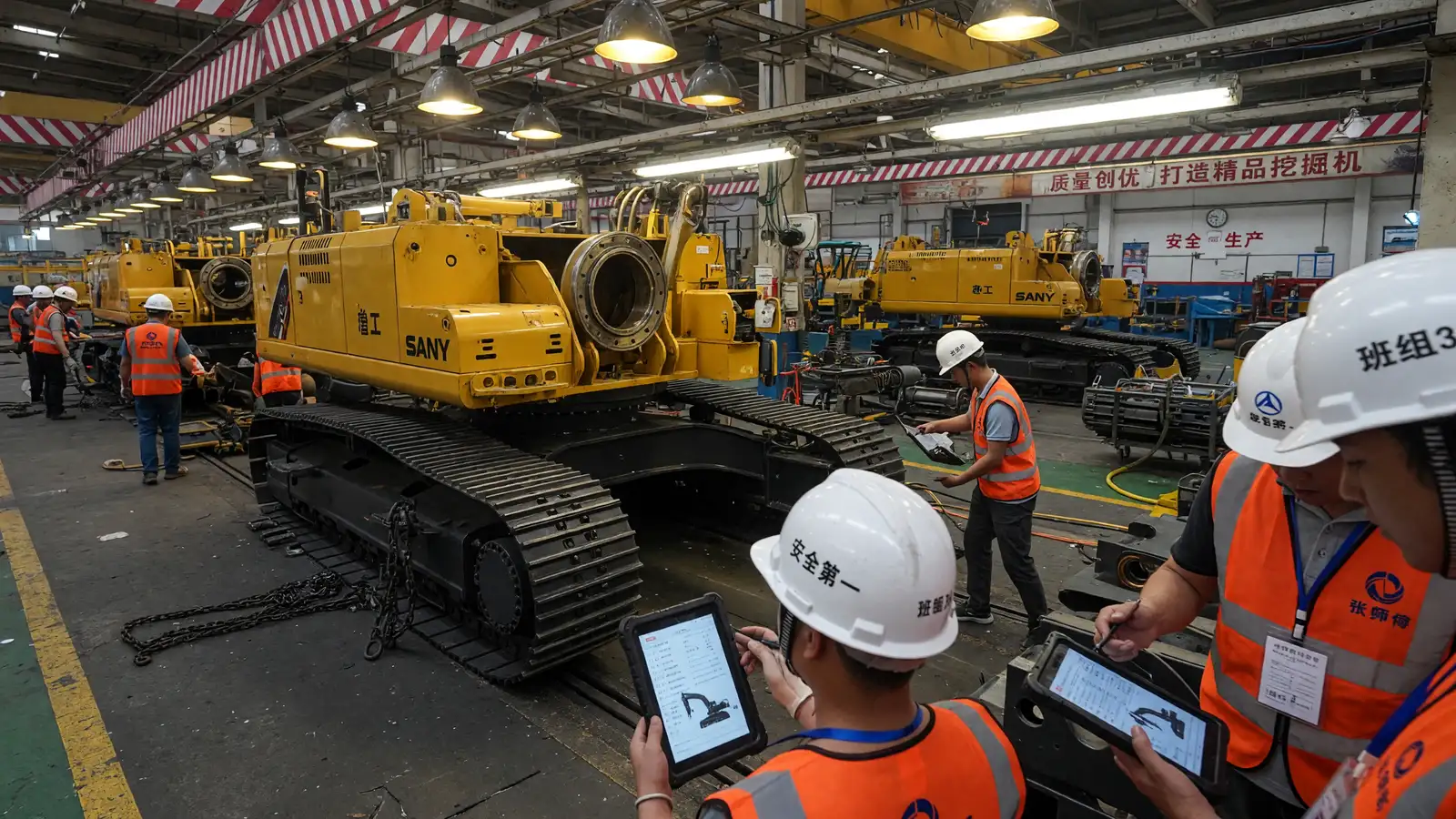
The humanoid robot has been a staple of science fiction for a century and a staple of research labs for decades. But 2026 is the year humanoid robots are transitioning from research projects to industrial deployments, and Zoomlion’s Z01 — showcased at the KOMATEK 2026 construction equipment exhibition — is one of the clearest signals that this transition is happening now.
What the Z01 Can Do
Zoomlion, one of China’s largest construction equipment manufacturers, designed the Z01 for industrial applications — specifically construction and manufacturing environments where human workers currently perform tasks that are dangerous, physically demanding, or difficult to staff. The robot, reported by the Financial Times, demonstrates capabilities in embodied AI — the integration of physical manipulation (walking, grasping, lifting) with AI-powered perception, planning, and decision-making.
The Z01 is not a general-purpose android. It is designed for specific industrial tasks: material handling, equipment inspection, and assistance with construction processes that benefit from a humanoid form factor — the ability to navigate environments designed for humans, use tools designed for human hands, and operate in spaces where wheeled or tracked robots cannot go. The humanoid form factor, long questioned as unnecessarily complex when specialized robots could be designed for specific tasks, is finding its justification in environments where adaptability to human-designed spaces and tools is more valuable than task-specific optimization.
The Embodied AI Convergence
The Z01 represents the convergence of several technology streams. Advances in AI — particularly computer vision for environmental understanding, language models for instruction following, and reinforcement learning for physical skill acquisition — have given robots the cognitive capabilities they previously lacked. Advances in actuators, batteries, and materials have made humanoid robots more capable, longer-running, and more affordable. And advances in manufacturing — particularly China’s deep supply chain for motors, sensors, and electronics — have made sophisticated robots cheaper to produce.
The result is a category of robot that was previously confined to research labs and carefully scripted demonstrations now beginning to appear on construction sites and factory floors. The transition from “impressive demo” to “useful tool” is the most important transition in robotics, and the Z01 appears to be making it.
The Labor Context
The humanoid robot industry’s growth is occurring against a backdrop of labor shortages in construction, manufacturing, and logistics — particularly in countries with aging populations. Japan, South Korea, China, and much of Europe face demographic trends that will reduce the available workforce for physically demanding jobs. Humanoid robots that can perform these jobs are not displacing workers who would otherwise be available — they are filling gaps that demographic trends are creating.
This labor context shapes both the economic case and the social acceptance of humanoid robots. In construction, where skilled trades are increasingly difficult to staff, a robot that can assist with material movement, site inspection, and repetitive tasks is valued as a productivity multiplier for the human workers who remain. In manufacturing, where certain tasks remain stubbornly difficult to automate with traditional industrial robots, a humanoid form factor that can adapt to existing production lines without expensive reconfiguration has genuine economic appeal.
The humanoid robot industry is still in its early stages, and the Z01 — impressive as it is — is a first-generation product that will improve rapidly. But the milestone it represents is significant: the moment when humanoid robots stopped being research demonstrations and started being industrial tools. The implications for construction, manufacturing, and eventually many other sectors of the economy are only beginning to be understood.
Related Articles
NVIDIA's ASPIRE Framework Just Taught Robots to Learn Without Being Told What to Do

76% Stuck Their Agents in Pilot. The Tax Is Human Hours