The AI Boom Is Colliding With Climate Change — and Data Centers Are on the Front Line
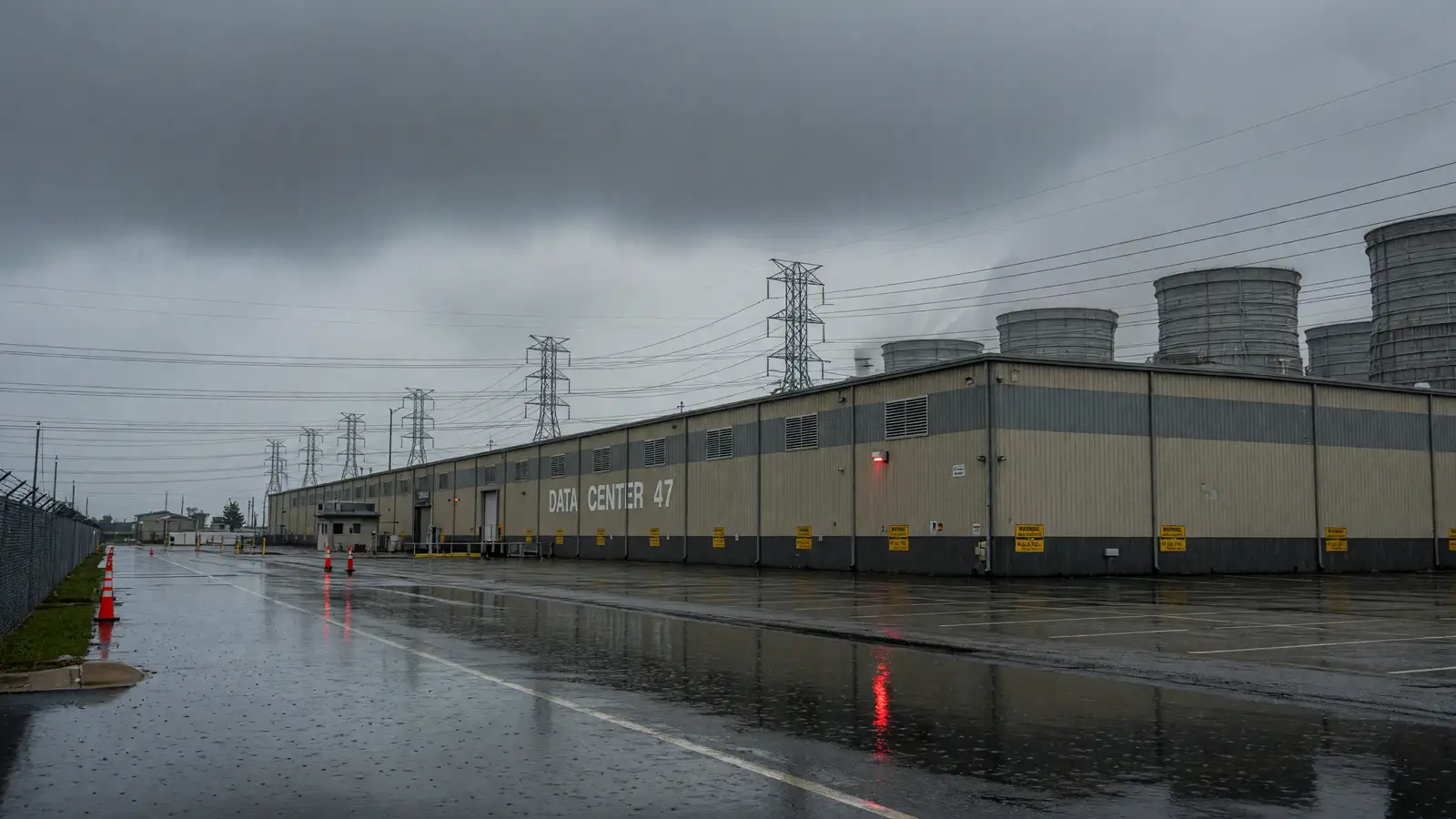
The relationship between AI and climate change has mostly been discussed in one direction: AI’s growing energy consumption and carbon footprint. But CNBC’s reporting on severe weather threats to AI infrastructure reveals that the relationship cuts both ways. Climate change is threatening the data centers that power AI, and the industry’s assumptions about where and how to build computing infrastructure are being challenged by a climate that no longer behaves as historical models predicted.
The Physical Vulnerability
Data centers are remarkably fragile in the face of extreme weather. They require stable temperature and humidity conditions that cooling systems must maintain even as external temperatures rise. They require reliable power that extreme weather events — heat waves, storms, floods, wildfires — increasingly disrupt. They require water for cooling in many designs, and water scarcity driven by drought and changing precipitation patterns threatens operations in water-stressed regions.
The geography of AI infrastructure amplifies these vulnerabilities. Data centers have historically been concentrated in regions with cheap power and favorable climates — the US Pacific Northwest, Ireland, the Netherlands, Singapore. Several of these regions are experiencing climate impacts that were not anticipated when the data centers were built. Heat waves are exceeding the design specifications of cooling systems. Droughts are restricting water access. Flood risks are rising in areas previously considered safe.
The Resilience Imperative
The AI industry’s response to climate vulnerability is evolving on multiple fronts. Data center design is incorporating higher temperature tolerances, more efficient cooling systems, and greater water independence. Site selection is increasingly factoring climate projections into location decisions — not just current conditions but modeled conditions a decade or two in the future, over the expected lifetime of the facility.
Distributed infrastructure is emerging as a resilience strategy. Rather than concentrating computing in a small number of massive facilities, some operators are building networks of smaller, geographically distributed data centers that can shift workloads away from regions experiencing extreme weather events. Edge computing — processing data closer to where it is generated rather than in centralized data centers — aligns with distributed resilience strategies even though its primary drivers are latency and bandwidth rather than climate adaptation.
The Irony and the Opportunity
The AI industry’s collision with climate change contains an uncomfortable irony. AI is both a contributor to climate change — through its energy consumption — and a potential tool for addressing it — through improved climate modeling, grid optimization, and materials discovery. The same technology that is stressing energy grids through data center demand is also being used to make those grids more efficient, to predict extreme weather events with greater accuracy, and to discover materials for more sustainable energy technologies.
Whether AI’s net contribution to climate outcomes is positive or negative depends on choices being made now — about data center energy sources, about infrastructure resilience, about the allocation of AI capabilities toward climate-relevant applications. The AI industry is discovering that climate change is not an externality to be managed through sustainability reports and carbon offsets. It is a physical reality that will shape where AI infrastructure can be built, how reliably it can operate, and what the social license for its continued expansion will be.
Related Articles

2026年6月AI技术全景:从医疗落地到企业重组,人工智能正在重塑哪些行业
Google's AI Buildout Drove a 37% Increase in Electricity Use — The AI Energy Crisis Is Here