Mistral AI's €3 Billion Raise Signals the Open-Source AI Arms Race Is Just Beginning
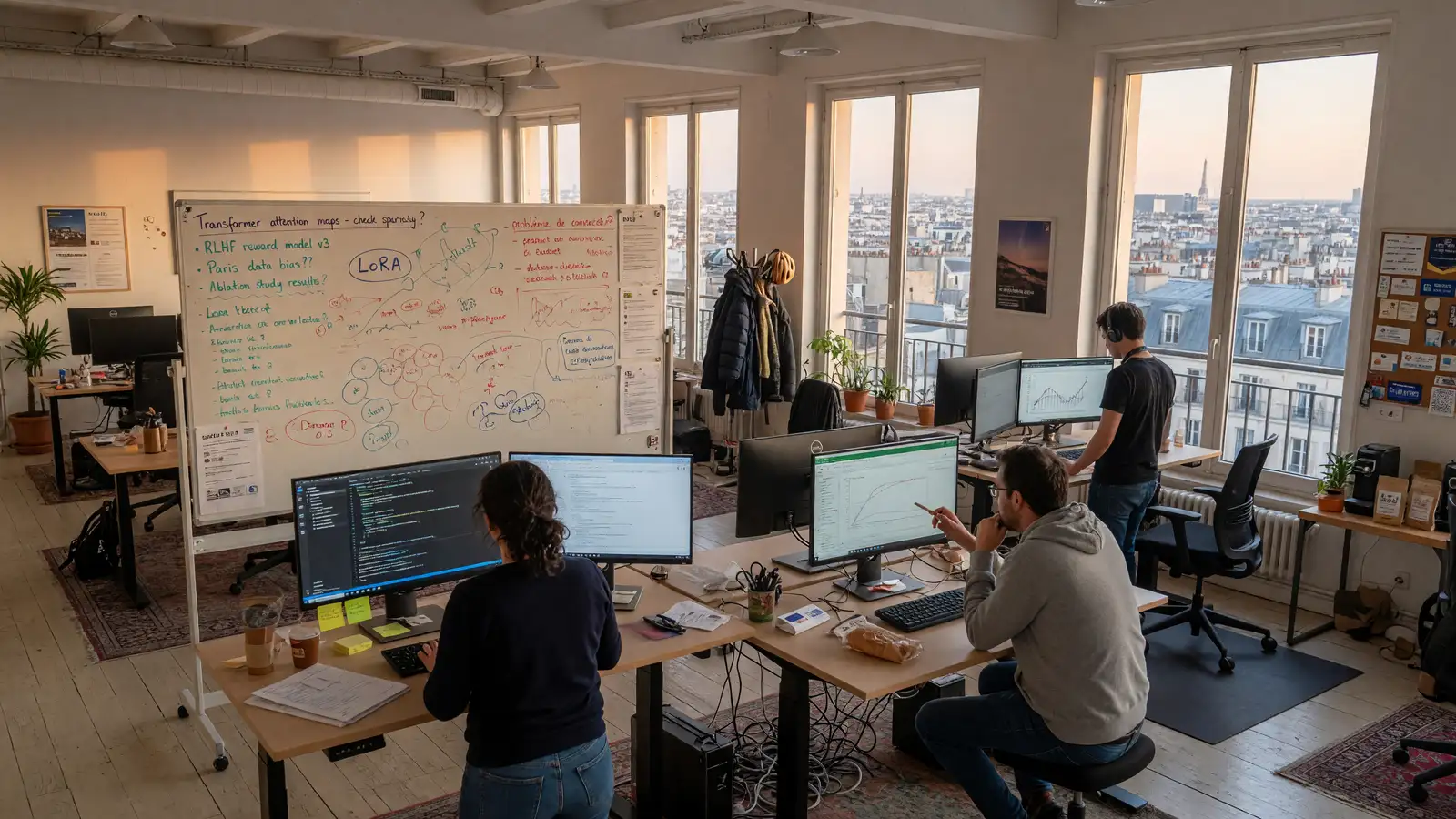
The open-source AI movement just got a €3 billion shot of adrenaline. Mistral AI, the Paris-based startup that has positioned itself as Europe’s answer to OpenAI, is reportedly closing a funding round that values the company at €20 billion — making it not only the most valuable AI company in European history but also a clear signal that the battle between open and closed AI models is far from settled.
The Numbers Behind the Round
According to a TechCrunch report published on June 12, Mistral is in advanced talks to raise approximately €3 billion in fresh capital. The round would catapult the company’s valuation to the €20 billion mark, a staggering increase from its roughly €6 billion valuation following its previous funding round. If completed, this would be the single largest venture capital raise in European technology history.
The scale of the investment reflects a broader market conviction: open-source AI models are not just a philosophical alternative to proprietary systems like GPT and Claude — they represent a commercially viable, and increasingly preferred, path for enterprises building AI infrastructure.
Why Open-Source AI Is Winning Enterprise Mindshare
Mistral’s meteoric rise is not happening in a vacuum. Across the industry, enterprises are showing a marked preference for open-weight models that they can fine-tune, deploy on their own infrastructure, and audit for security vulnerabilities. Several factors are driving this shift.
Data sovereignty is paramount. Financial institutions, healthcare providers, and government agencies cannot send sensitive data to third-party API endpoints. Open-source models running on private cloud or on-premises infrastructure solve this regulatory puzzle. Cost predictability is another factor: API pricing for proprietary models remains volatile and usage-dependent. Organizations running their own fine-tuned open models pay fixed infrastructure costs regardless of query volume. And customization depth matters — fine-tuning a Mistral or Llama model on proprietary data delivers task-specific performance that general-purpose APIs struggle to match.
Mistral’s Strategic Position
Mistral has executed a disciplined strategy that distinguishes it from both its American competitors and other European AI hopefuls. Rather than chasing the largest possible parameter counts, the company has focused on building efficient, deployment-friendly models that punch above their weight class. The Mistral Large 2 model demonstrated competitive performance against models several times its size while maintaining the cost and latency advantages that enterprise customers demand.
The company has also been strategic about distribution. Partnerships with Microsoft Azure and other cloud providers have ensured that Mistral’s models are accessible wherever enterprise customers already run their workloads — a channel strategy that OpenAI pioneered and Mistral has refined for the open-source era.
The Broader Competitive Landscape
Mistral’s raise is not the only data point suggesting an open-source AI inflection point. China’s DeepSeek is reportedly raising $7 billion in its own mega-round. SpaceX recently inked a compute deal with Reflection AI, an open-source lab building competitive models outside the traditional VC-backed ecosystem. Meta continues to invest billions in its Llama model family, and a growing ecosystem of startups is building tooling and deployment platforms around open-weight models — creating a flywheel effect that makes each new open-source release more practically useful than the last.
What This Means for the AI Industry
The Mistral round, if confirmed, validates the hypothesis that open-source AI can compete for the same scale of capital that has flowed to proprietary model developers. It strengthens Europe’s position in a technology race and gives enterprise customers another reason to delay locking into a single proprietary AI vendor. In a world where models are increasingly commoditized and the real value lies in application-layer integration and domain-specific fine-tuning, an open-source ecosystem with multiple viable model providers may prove more resilient than any single proprietary platform.
Related Articles

DeepSeek's $7 Billion Raise Shows China Is Closing the Open-Source AI Gap

76% Stuck Their Agents in Pilot. The Tax Is Human Hours