China's Photonic Quantum Breakthrough Brings Room-Temperature Quantum Computing Closer
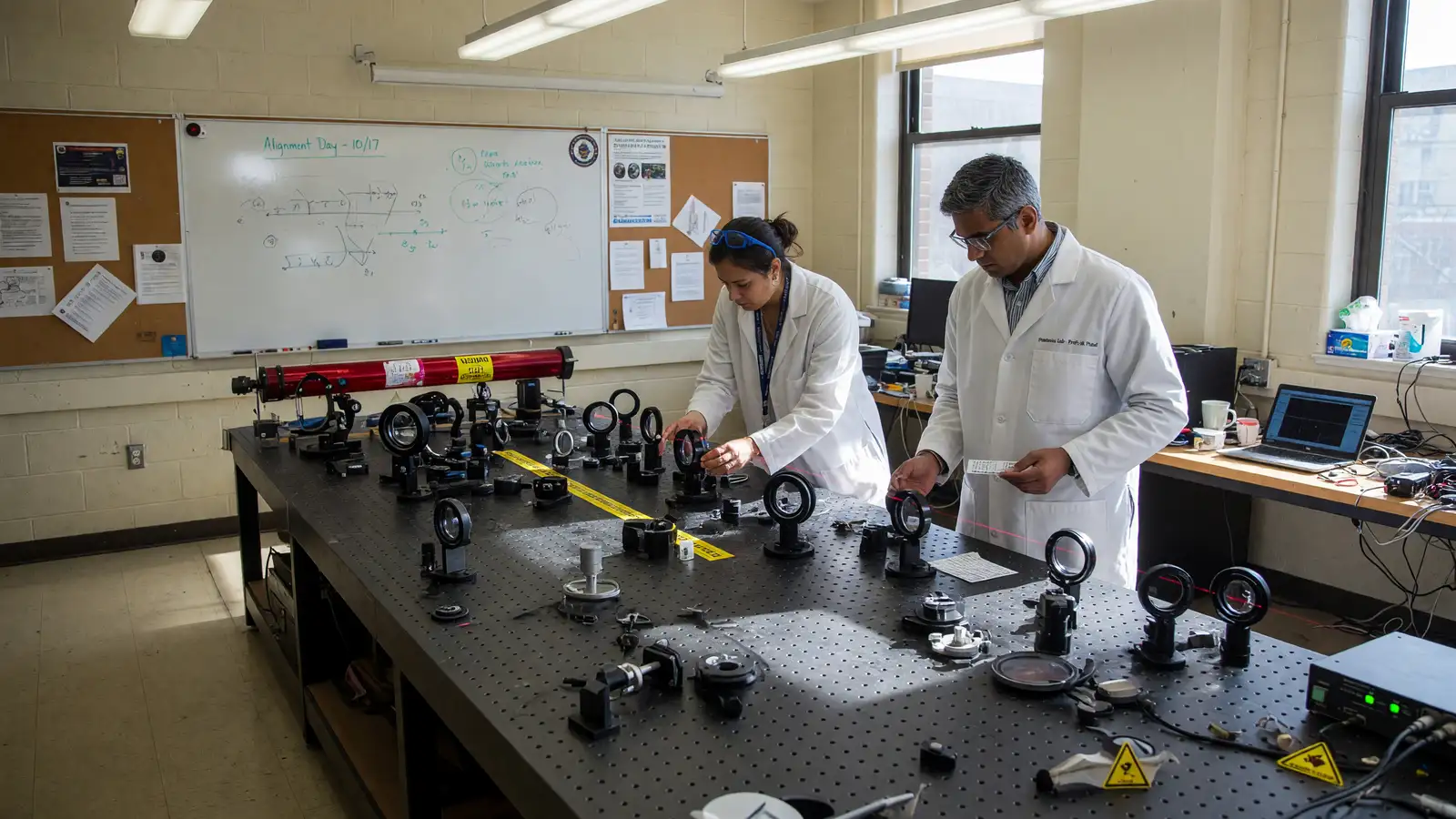
Most quantum computers look like elaborate chandeliers — intricate arrangements of wiring, shielding, and cooling systems designed to maintain qubits at temperatures colder than deep space. The cooling infrastructure alone costs millions of dollars and consumes enormous amounts of energy. A breakthrough from the China Mobile Research Institute, achieving 5-qubit entanglement with 95.6% fidelity using integrated photonics at room temperature, suggests that this might not be the only path forward.
What the Breakthrough Achieves
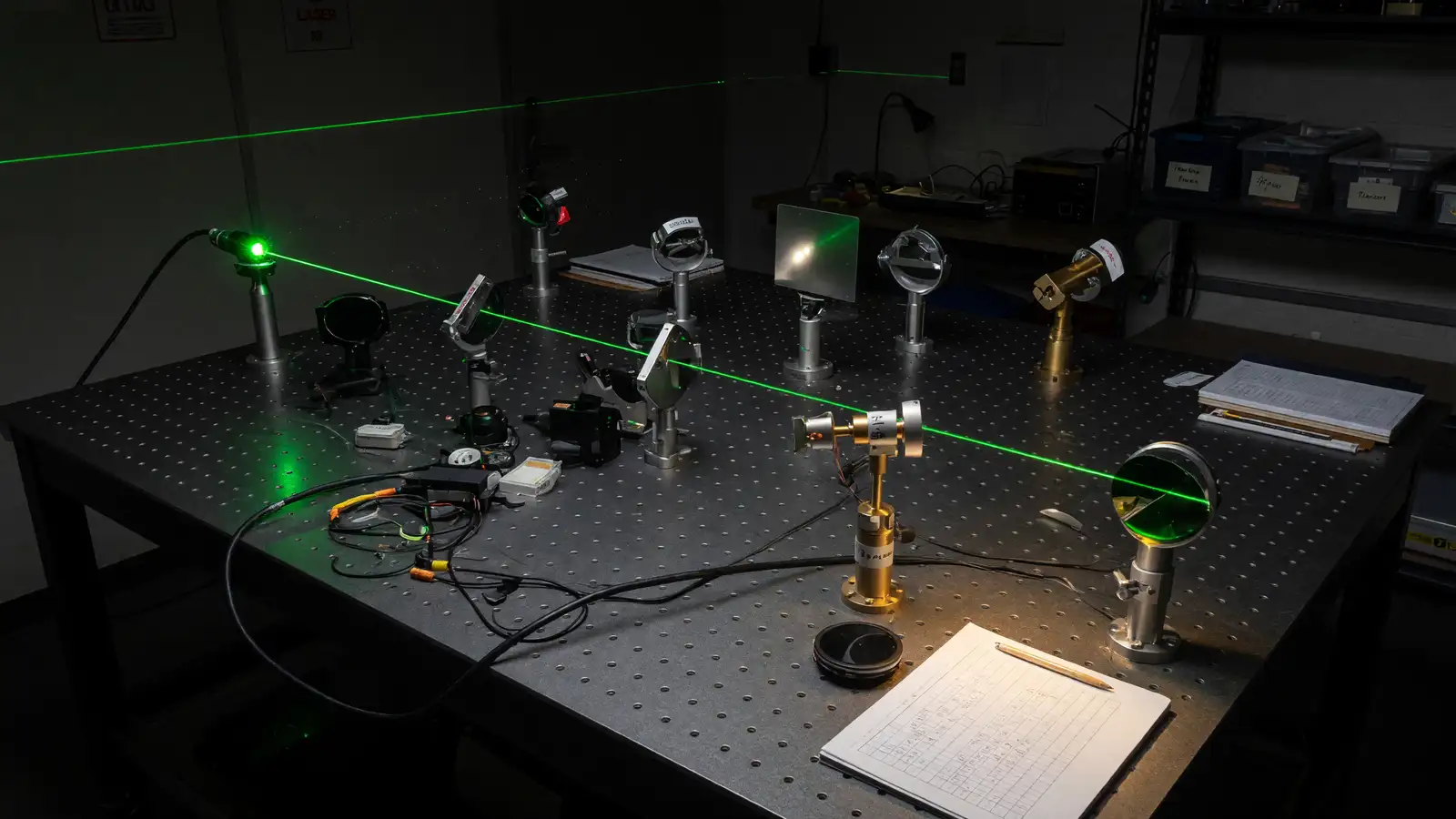
The China Mobile team, as reported by Quantum Zeitgeist, demonstrated a photonic quantum processor that operates at room temperature — no cryogenic cooling required. The system uses integrated photonics, where quantum information is encoded in photons (particles of light) rather than in superconducting circuits or trapped ions. The photons are generated, manipulated, and detected on a chip-scale device, achieving entanglement — the quantum mechanical correlation that gives quantum computers their power — across five qubits with 95.6% fidelity.
The achievement is notable on several dimensions. First, operating at room temperature eliminates the enormous cooling infrastructure that current superconducting quantum computers require, dramatically reducing both capital costs and operating complexity. Second, using integrated photonics — chip-based optical circuits — leverages the same semiconductor manufacturing infrastructure that produces conventional computer chips, creating a path to scalable manufacturing. Third, the 688 Hz entanglement generation rate, while modest by classical computing standards, represents progress toward the clock speeds that practical quantum computers will require.
Photonic vs. Superconducting Approaches
The quantum computing industry has largely converged on superconducting qubits as the leading hardware approach — IBM, Google, and most major quantum hardware companies use superconducting circuits cooled to millikelvin temperatures. Superconducting qubits have achieved the highest qubit counts and the best gate fidelities to date. But the cooling requirement is a fundamental limitation — it is expensive, energy-intensive, and becomes more difficult as qubit counts scale.
Photonic quantum computing offers a fundamentally different set of trade-offs. The advantages — room-temperature operation, compatibility with existing semiconductor manufacturing, natural compatibility with quantum networking — are compelling. The disadvantages — lower gate fidelities, challenges in creating deterministic photon-photon interactions, and less mature fabrication processes — are significant but being addressed through ongoing research.
The China Mobile result does not mean photonic quantum computers are about to surpass superconducting ones. Five qubits with 95.6% fidelity is far from the scale and precision required for practical quantum computation. But it demonstrates that a room-temperature path exists and is making measurable progress — and that progress, if it continues, could reshape the quantum computing hardware landscape.
The Geopolitical Dimension
The China Mobile breakthrough has geopolitical implications that extend beyond the technical achievement. China has invested heavily in quantum technology across multiple approaches — superconducting, photonic, trapped ion, and topological — as part of a national strategy to achieve leadership in quantum information science. The photonic breakthrough demonstrates that Chinese quantum research is producing world-class results across multiple hardware platforms, not just following the superconducting path that dominates Western quantum computing efforts.
For the global quantum computing industry, the diversity of approaches — different countries, different companies, different physical implementations — is healthy. Quantum computing is too important and too uncertain for a monoculture approach. The photonic path that China Mobile is advancing may or may not prove to be the winning architecture, but its existence expands the exploration space and increases the probability that at least one approach will succeed.