China Mobile Just Demonstrated Photonic Quantum Entanglement at 688 Hz — and 95.6% Fidelity
China Mobile’s research arm demonstrated 5-qubit photonic entanglement operating at 688 Hz with 95.6% fidelity, reported by Quantum Zeitgeist on July 4. The numbers matter because they represent progress along an alternative quantum computing path — photonics — that could sidestep the biggest obstacle facing the dominant superconducting approach: the need for extreme cooling.
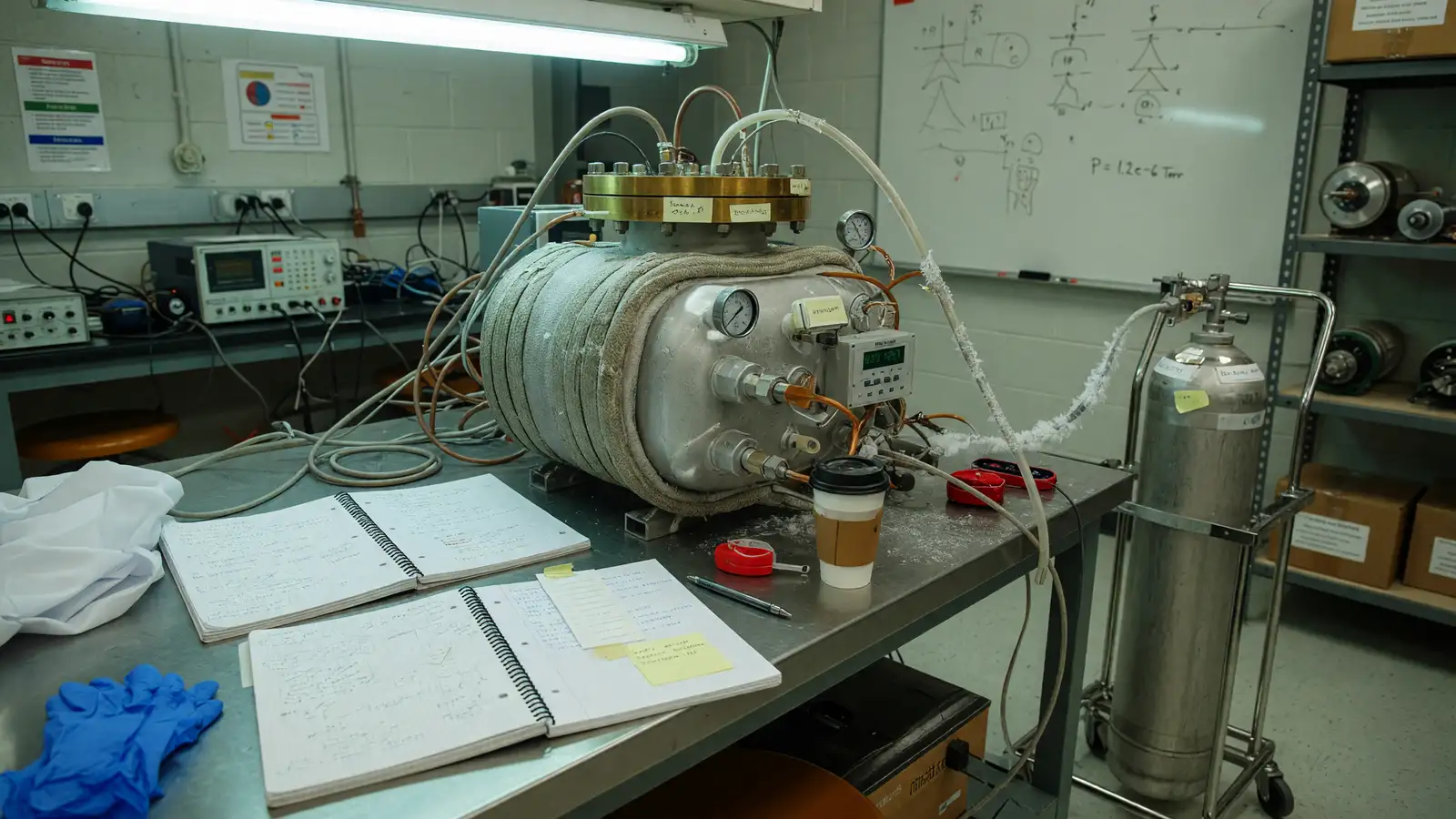
Superconducting quantum computers, the kind built by IBM, Google, and IQM, require temperatures near absolute zero to function. The refrigeration systems are expensive, power-hungry, and physically large. They work — Google’s Sycamore and IBM’s Heron processors have demonstrated genuine quantum advantage on specific problems — but the cooling requirement places a hard limit on where and how quantum computers can be deployed. A room-temperature quantum computer would change the economics of the entire field.
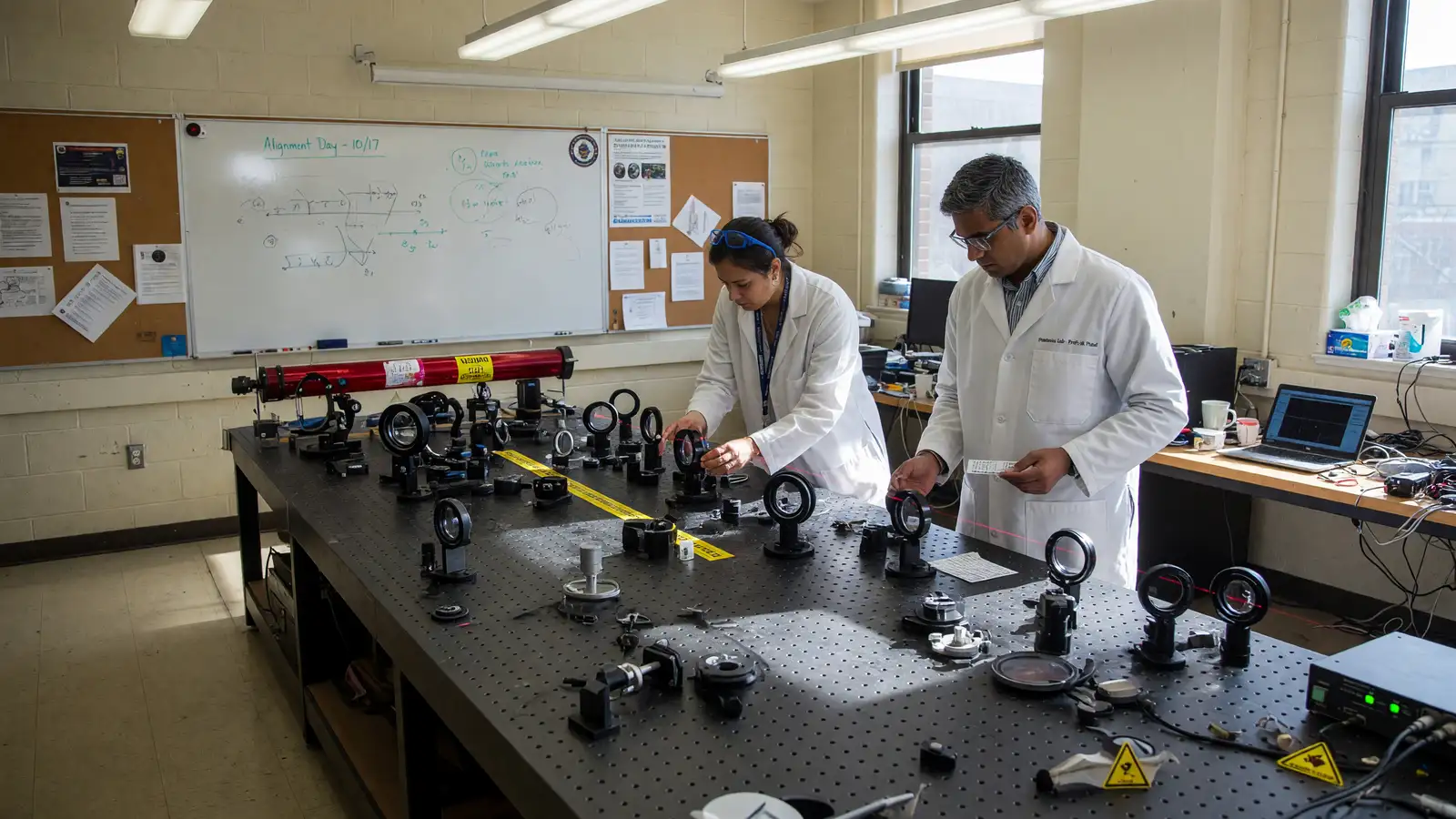
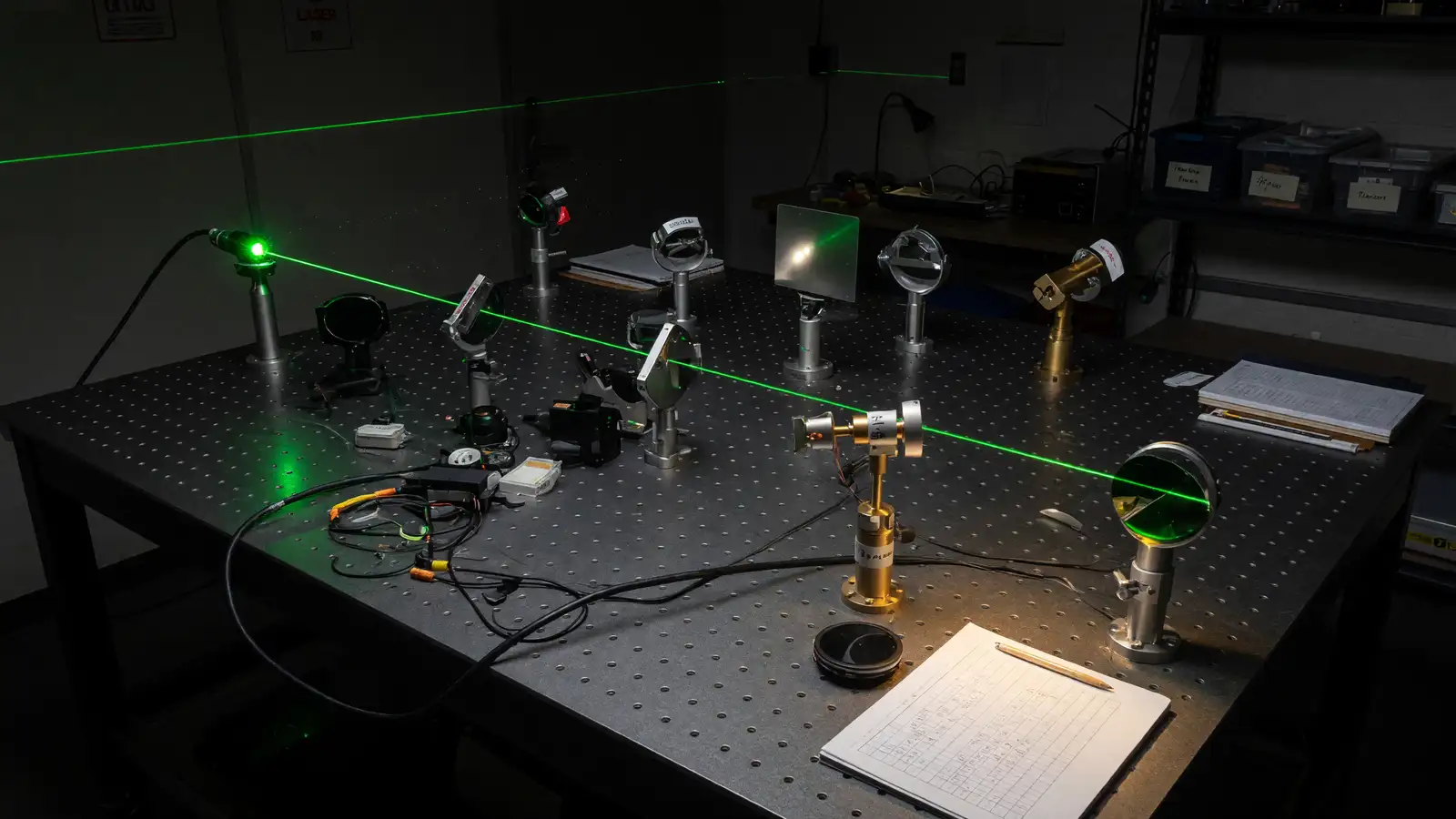
Photonic quantum computing works differently. Instead of trapping qubits in superconducting circuits, it encodes quantum information in particles of light — photons — and manipulates them using optical components like beam splitters and phase shifters. Photons don’t need to be cooled. They don’t interact strongly with their environment, which reduces decoherence — the process by which quantum states degrade and lose their computational power. The trade-off is that photons are harder to entangle and control than superconducting qubits. China Mobile’s demonstration of 5-qubit entanglement at useful fidelity suggests that trade-off is becoming more favorable.
The 688 Hz number — the rate at which entangled states are generated — is modest compared to the gigahertz clock speeds of classical processors, but it’s a significant improvement over previous photonic demonstrations. The 95.6% fidelity — the accuracy with which the entangled state matches the intended quantum state — is above the threshold for error correction, meaning error-corrected photonic quantum computation is theoretically within reach.
China Mobile’s involvement is notable for a different reason. The company is a telecommunications giant, not a quantum computing startup or academic lab. Its interest in photonic quantum computing is strategic: photons are the natural medium for quantum communication and networking. If the same technology can be used for both quantum computation and quantum communication, China Mobile has a path to building quantum infrastructure that spans both domains. The quantum internet — a network that transmits quantum states between distant nodes — runs on photons. A quantum computer that also runs on photons eliminates the need to convert between photonic qubits for transmission and superconducting qubits for computation.
The geopolitical dimension is unavoidable. China’s quantum computing investments span superconducting, photonic, and topological approaches, with the government funding research at a scale that’s hard to match. The US has IBM, Google, and a cluster of well-funded startups. Europe has IQM and a strong academic research base. But China’s centralized approach — state funding, telecom company research labs, and academic partnerships — is producing results across multiple quantum computing modalities simultaneously. The photonic breakthrough at China Mobile is one data point in a broader pattern of Chinese quantum acceleration.
The practical timeline is still measured in years. 5 qubits is not enough to do useful computation. Scaling photonic quantum computers to hundreds or thousands of qubits requires solving fabrication challenges that are still in early stages. But the direction is clear: photonic quantum computing is no longer the long-shot alternative. It’s a credible path to practical quantum computers, and China Mobile just moved the ball down the field.