Boeing Just Completed a Quantum Lab Test Ahead of Its 2027 Space Flight
Quantum networking — the ability to transmit quantum information between distant nodes — has long been the most ambitious frontier of quantum technology. While quantum computing has captured public attention and investment, quantum networking may ultimately prove more transformative, enabling fundamentally new capabilities in secure communication, distributed quantum computing, and sensor networks. Boeing’s announcement that it has completed a critical quantum lab test ahead of a planned 2027 space flight demonstration suggests this future is approaching faster than expected.
The Boeing Test
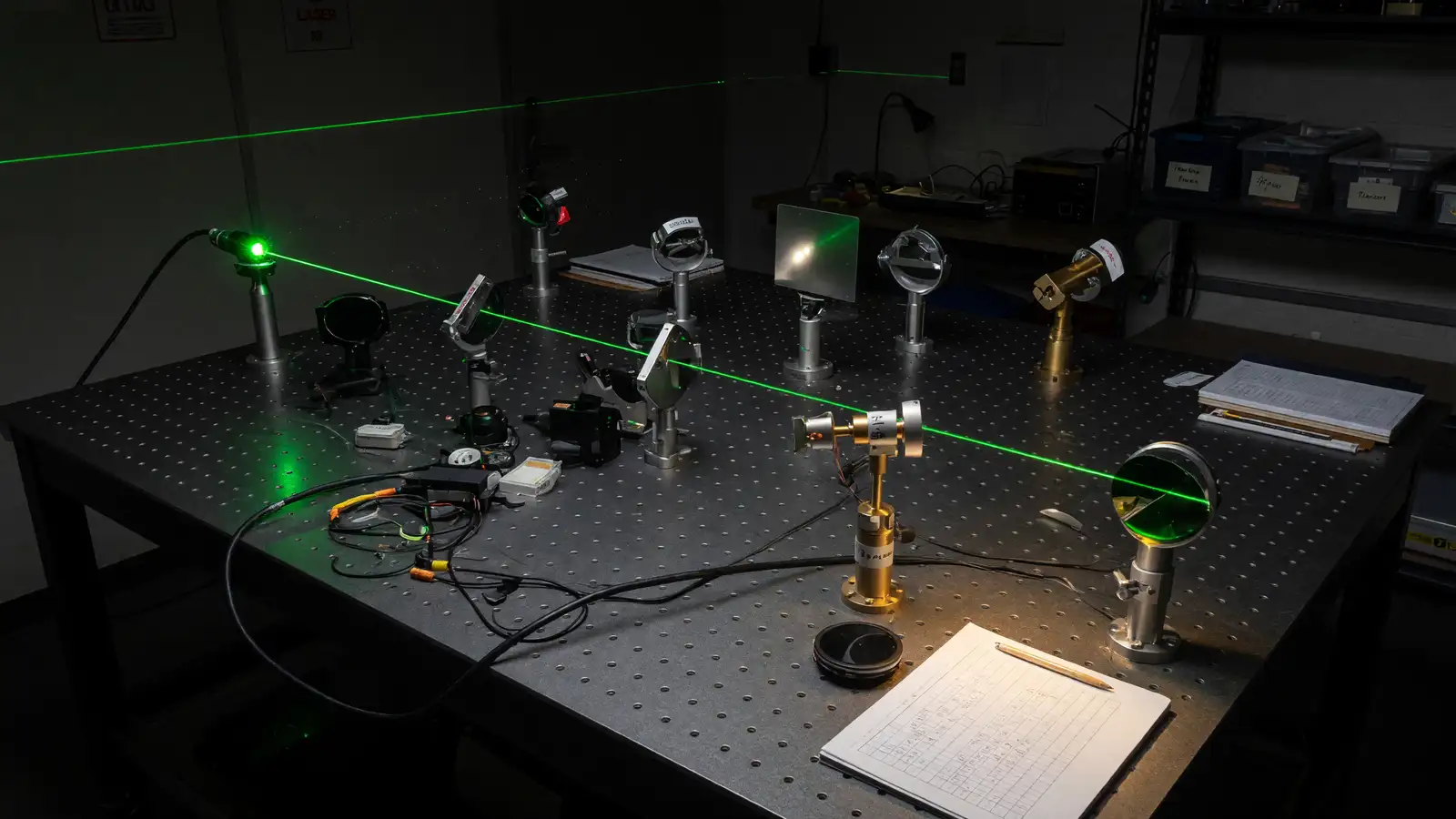
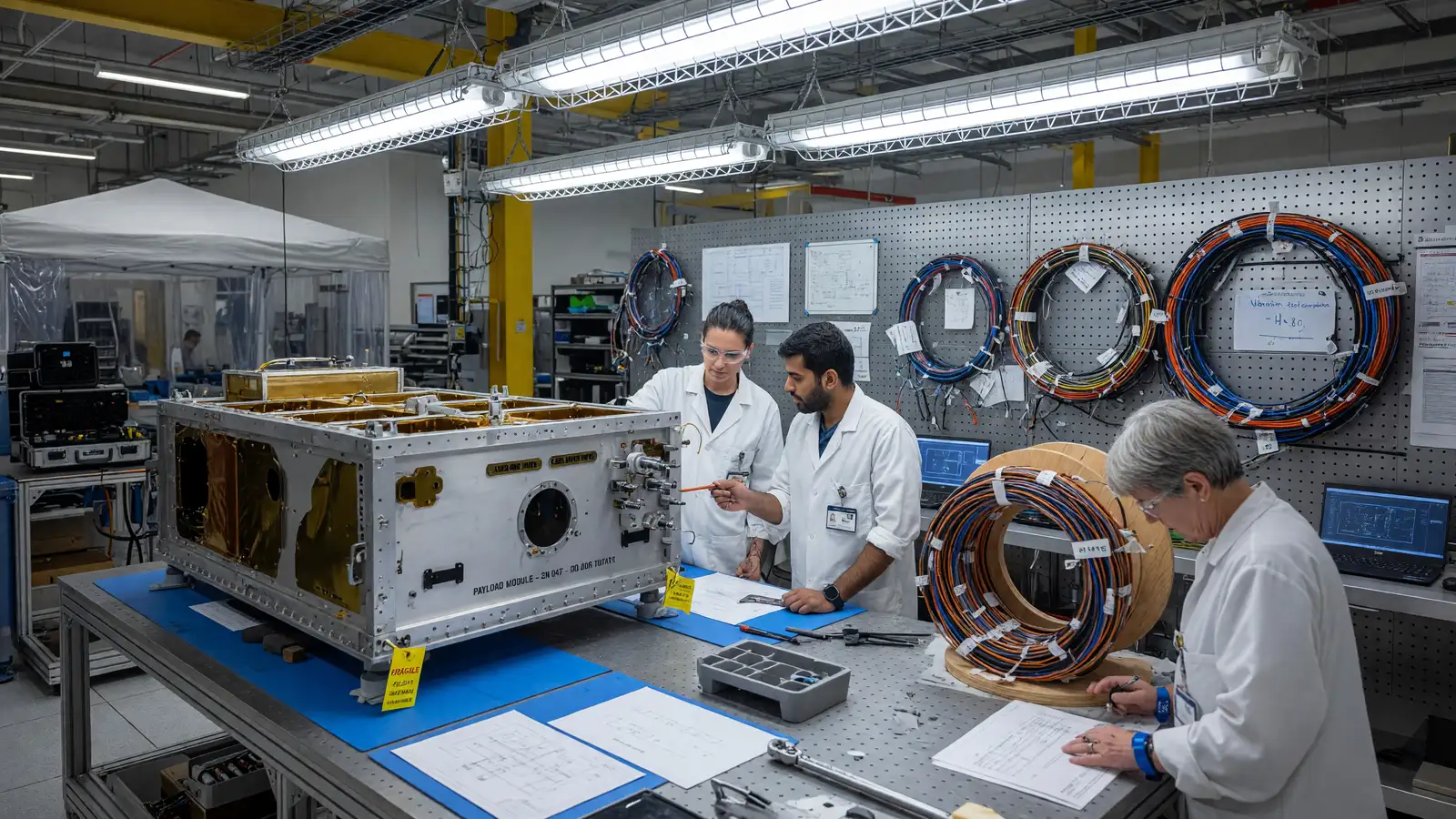
Payload Space reported in June 2026 that Boeing has completed a quantum communication laboratory test that paves the way for an orbital demonstration scheduled for 2027. The test involved generating, manipulating, and detecting entangled photon pairs — the fundamental resource for quantum communication — in an environment designed to simulate the conditions of a space flight.
The significance of the test is not just technical but architectural. Quantum communication on Earth faces fundamental distance limitations — quantum signals degrade as they travel through optical fiber, and quantum repeaters (devices that could extend quantum communication range) are still in early research stages. Space-based quantum communication bypasses these limitations by transmitting quantum signals through the vacuum of space, where they can travel vast distances with minimal degradation.
Why Quantum Networking in Space Matters
Space-based quantum networking has several compelling applications. The most immediate is ultra-secure satellite communication. Quantum key distribution (QKD) — a technique that uses quantum mechanical principles to generate encryption keys that are theoretically impossible to intercept without detection — has been demonstrated on Earth and between ground stations and satellites. Boeing’s 2027 flight aims to advance these capabilities toward operational readiness.
Beyond secure communication, space-based quantum networking could enable distributed quantum sensing — networks of quantum sensors on satellites that collectively achieve sensitivity far beyond what any individual sensor could manage. This has applications in gravitational field mapping, climate monitoring, and national security.
In the longer term, space-based quantum networks could form the backbone of a future quantum internet — a global infrastructure for transmitting quantum information that would connect quantum computers, quantum sensors, and quantum communication systems into a coherent network.
The Competitive Landscape
Boeing is not alone in pursuing space-based quantum networking. China has demonstrated satellite-based QKD with its Micius satellite program, establishing a significant lead in operational space-based quantum communication. European space agencies are pursuing their own quantum communication initiatives. The United States, through both government programs and private-sector efforts like Boeing’s, is working to close the gap.
The competitive dynamics are reminiscent of the early space race — with the added dimension that quantum communication capabilities have direct national security implications. The ability to communicate with theoretically unbreakable encryption, or to detect attempts at interception with physical certainty, would be a significant military and intelligence advantage.
For the quantum technology industry, Boeing’s 2027 flight plan is a concrete milestone on the path from laboratory demonstrations to operational systems. Quantum networking may not generate the same excitement as quantum computing’s quest for supremacy, but its practical impact — on secure communication, sensor networks, and eventually a quantum internet — may arrive sooner.