Brain-Computer Interfaces Just Helped an ALS Patient Return to Full-Time Work
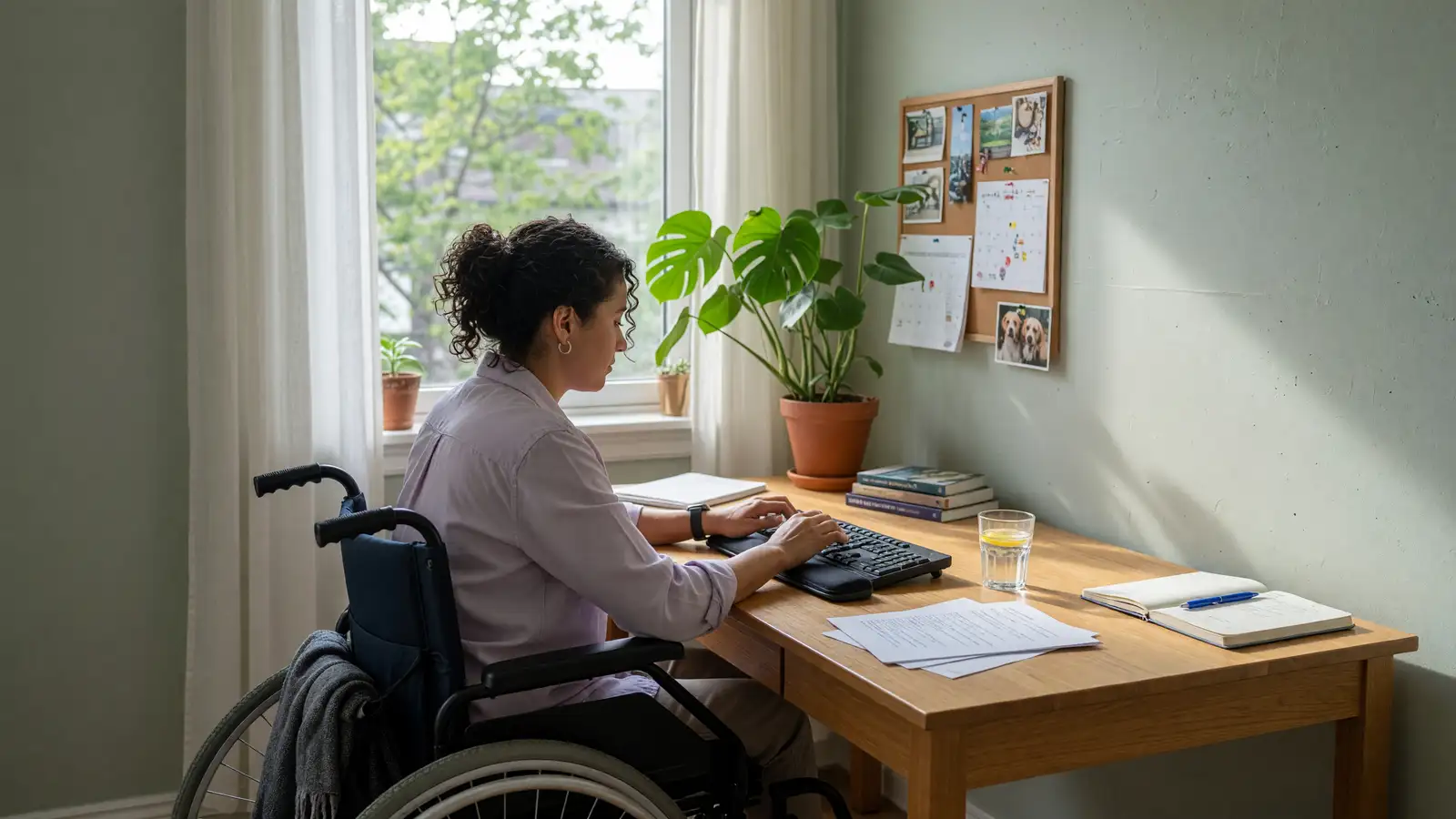
The most compelling technology stories are not about what the technology can do in a lab — they are about what it enables people to do in their lives. A brain-computer interface (BCI) that has enabled a person with ALS who lost the ability to speak to return to full-time employment, reported by The Register, is precisely that kind of story. And it signals that BCI technology is crossing the threshold from research demonstration to practical assistive technology.
How the System Works
The BCI system that enabled the ALS patient to return to work combines several technologies. A neural implant — a small array of electrodes placed on the surface of the brain — detects the neural activity associated with attempted speech. AI algorithms decode this neural activity into intended words and sentences. The decoded text is displayed on a screen and can be spoken aloud by a speech synthesizer, enabling communication at speeds approaching natural conversation.
The breakthrough is not in any single component — neural implants, AI decoding, and speech synthesis are all established technologies — but in their integration into a system that is reliable enough, fast enough, and usable enough for sustained daily use in a professional context. The patient is not just communicating basic needs; they are participating in meetings, writing emails, and performing knowledge work — activities that require speed, accuracy, and endurance that previous BCI systems could not reliably provide.
The AI Connection
AI is the enabling technology that makes modern BCIs practical. The neural signals that BCIs detect are noisy, variable, and incredibly complex. Extracting intended speech from this neural cacophony is a pattern recognition problem of enormous difficulty — exactly the kind of problem that modern AI, particularly deep learning, excels at solving.
The AI models that decode neural signals improve over time through a process of co-adaptation: the user learns to produce more distinct neural patterns, and the AI learns to interpret those patterns more accurately. The result is a system that gets better with use, gradually approaching the speed and accuracy of natural communication. This adaptive capability — the system learning from the user as the user learns to use the system — is what distinguishes modern BCIs from earlier assistive technologies.
The Path to Broader Access
The ALS patient’s return to work is a powerful demonstration of BCI’s potential, but the technology remains far from broadly accessible. Neural implants require brain surgery — a procedure with non-trivial risks that is currently justified only for people with severe disabilities who have exhausted other options. The cost of the implant, the surgery, and the ongoing technical support is enormous. And the regulatory pathway for BCI devices is still being developed.
Non-invasive BCIs — systems that detect neural activity through the scalp rather than through implanted electrodes — offer a less capable but more accessible alternative. These systems, typically using electroencephalography (EEG), cannot achieve the signal quality of implanted electrodes, but they avoid the risks and costs of surgery. For applications where lower bandwidth is acceptable — basic communication, environmental control, computer cursor movement — non-invasive BCIs may provide a practical path to broader access.
The ALS patient’s story is both a milestone and a challenge. A milestone because it demonstrates what BCI technology can achieve today. A challenge because it highlights how far the technology has to go before it can achieve what it promises: restoring communication, mobility, and independence to the millions of people whose neurological conditions have taken them away.