AI Industry Applications: How Artificial Intelligence Is Transforming Business in 2026
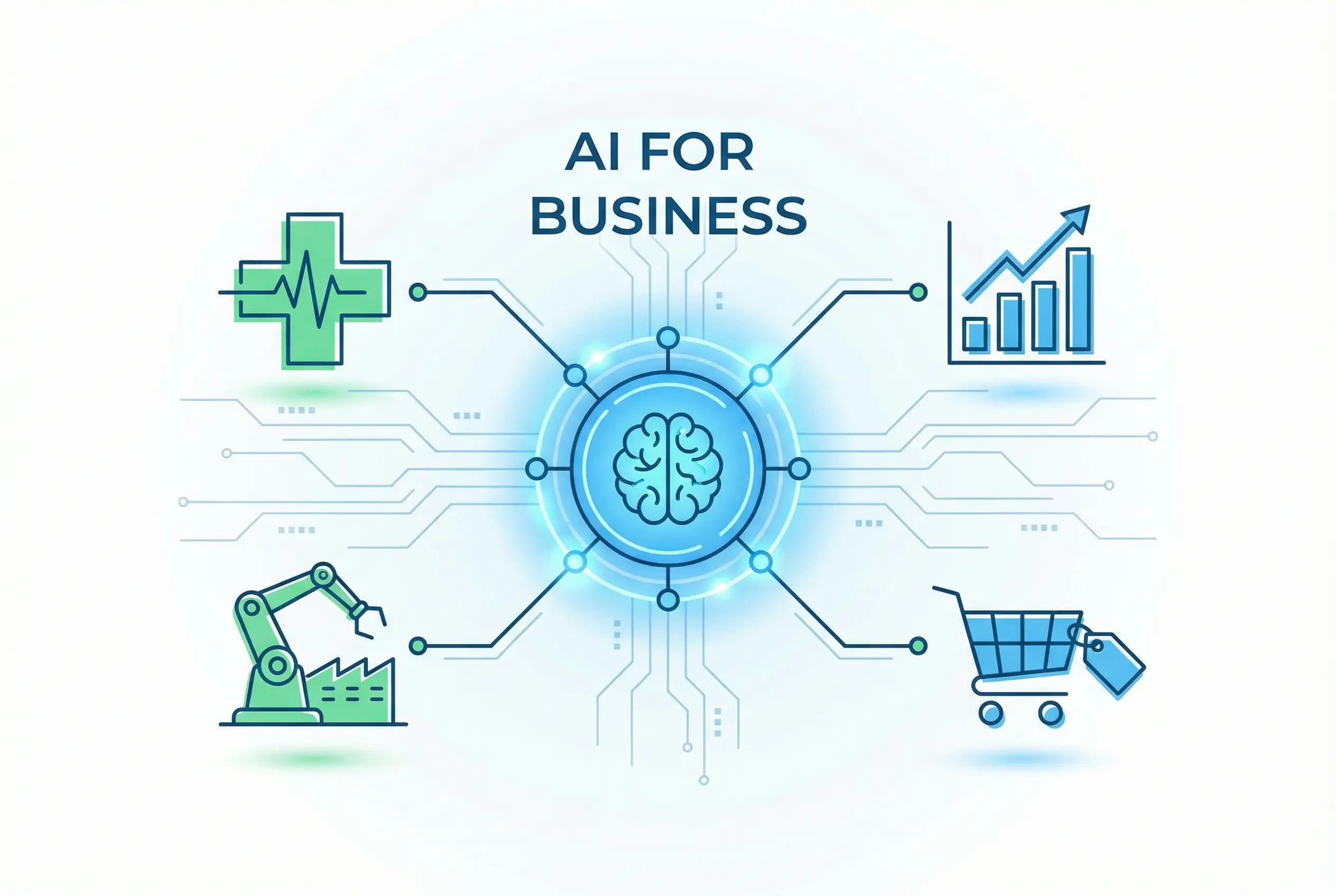
Artificial intelligence has moved beyond the hype cycle into real business value. In 2026, organizations across every industry are deploying AI not to experiment, but to solve specific problems and drive measurable outcomes. From detecting diseases earlier to preventing financial fraud to optimizing supply chains, AI applications are delivering results that justify the investment.
This guide covers the most impactful AI use cases transforming industries today. Whether you’re evaluating AI investments, implementing systems, or just curious about what’s possible, you’ll find practical insights from real-world deployments.
Healthcare and Life Sciences
Healthcare has seen some of the most tangible AI applications, with direct impacts on how care is delivered.
Medical Imaging and Diagnostics
AI systems now analyze medical images with accuracy matching or exceeding human specialists. Radiologists use AI to detect cancers in mammograms and CT scans, often identifying subtle patterns that could be missed in busy practices. Pathologists apply AI to examine tissue samples, speeding up diagnosis while maintaining accuracy.
The advantage is consistency. AI doesn’t get tired after reading dozens of scans. It applies the same attention to the last image as the first, which matters when early detection significantly impacts treatment success.
Drug Discovery and Development
The traditional drug discovery process takes over a decade and costs billions. AI is compressing this timeline. Machine learning models analyze molecular structures to predict which compounds might work against specific diseases, narrowing the field of candidates that need physical testing.
In 2026, several AI-designed drugs have reached clinical trials. Pharmaceutical companies say AI has cut early-stage drug discovery time by 30-50%.
Patient Engagement and Administrative Efficiency
Beyond clinical applications, AI improves how healthcare systems operate. Chatbots handle appointment scheduling and basic patient inquiries. Predictive models forecast no-show rates, helping clinics optimize scheduling. Natural language processing extracts information from unstructured clinical notes, making data available for research and quality improvement.
Financial Services
Financial institutions were early AI adopters, and their implementations have matured significantly.
Fraud Detection and Prevention
Traditional fraud detection relied on rules-based systems that generated many false positives—legitimate transactions declined, annoying customers. AI models analyze transaction patterns in real-time, learning each customer’s behavior and flagging anomalies that truly indicate fraud.
The outcome is fewer false positives, faster detection of actual fraud, and reduced losses. Major banks say AI-driven fraud detection catches 20-30% more fraudulent transactions than previous systems.
Risk Assessment and Credit Decisions
AI evaluates creditworthiness using far more data points than traditional models. It considers payment histories, cash flow patterns, and even alternative data sources to assess risk more accurately. This has expanded access to credit for individuals and businesses underserved by conventional scoring methods.
For lenders, the payoff is reduced default rates. For borrowers, it’s faster approvals and sometimes better terms.
Algorithmic Trading and Portfolio Management
Investment firms use AI to analyze market data, identify patterns, and execute trades at speeds impossible for humans. These systems process news, social media, and market signals to make investment decisions in milliseconds.
It’s not without risks—AI trading contributed to some market flash crashes—but quantitative funds increasingly view AI as essential infrastructure for staying competitive.
Manufacturing and Logistics
The manufacturing sector is undergoing a transformation driven by AI and related technologies.
Predictive Maintenance
Equipment failures are expensive—both for repairs and lost production. AI models analyze sensor data from machinery to predict when parts will fail, enabling maintenance just before problems occur rather than on a fixed schedule or after breakdowns.
Factories implementing predictive maintenance report 20-35% reductions in downtime and 25-40% maintenance cost savings. The math is simple: spend a little on monitoring and prediction, avoid a lot on emergency repairs and production stops.
Quality Control and Defect Detection
Computer vision systems inspect products on assembly lines, identifying defects that human inspectors might miss. These systems work continuously without fatigue, maintaining consistent quality across high-volume production.
The economics are compelling. One defective product reaching a customer can cost far more than the AI system that caught it. In industries like automotive and electronics, where quality directly impacts safety, AI-powered inspection has become standard.
Supply Chain Optimization
AI predicts demand more accurately, optimizes inventory levels, and identifies the most efficient shipping routes. Supply chain disruptions that devastated businesses in recent years have accelerated AI adoption as companies seek more resilient operations.
The shift is toward AI-powered “control towers” that provide end-to-end visibility and recommend actions across global supply networks.
Retail and E-commerce
Retailers are using AI to personalize shopping experiences and optimize operations.
Personalized Recommendations
Every major e-commerce platform uses AI to recommend products. These systems analyze browsing history, purchase patterns, and what similar customers bought to suggest items likely to interest each shopper.
The business impact is real. Amazon says approximately 35% of purchases come from recommendations. Even small improvements in recommendation accuracy translate to substantial revenue gains at scale.
Inventory and Demand Forecasting
Retailers use AI to predict which products will sell, in what quantities, and at which locations. This reduces both stockouts and overstock—optimizing working capital while ensuring products are available when customers want them.
The complexity is enormous: seasonal patterns, local events, weather forecasts, and promotional plans all influence demand. Machine learning models handle these factors far better than traditional forecasting methods.
Customer Service Automation
AI chatbots handle routine customer inquiries—order status, returns, product questions—freeing human agents to focus on complex issues that require empathy and creative problem-solving.
The technology has improved substantially. Today’s AI assistants handle more queries successfully and feel more natural in conversation. Customer satisfaction scores for AI-assisted service often match or exceed traditional channels when implemented well.
Getting Started with AI in Your Industry
If you’re considering AI applications for your organization, a few principles apply across industries.
Start with Specific Problems
The most successful AI implementations solve specific problems, not abstract notions of “being AI-powered.” Identify pain points where better predictions, automation, or analysis would deliver clear value.
Build Data Infrastructure First
AI systems need data. Before deploying machine learning models, ensure your data is collected, cleaned, and accessible. Many organizations find that improving data quality delivers value even before adding AI.
Think About Integration
AI doesn’t operate in isolation. Consider how AI outputs will integrate with existing systems and workflows. The business value comes from decisions and actions, not just model predictions.
Start Small, Scale Fast
Pilot projects with limited scope let you learn without major risk. Successful pilots build organizational confidence and provide proof points for broader investment.
The Road Ahead
AI applications will continue expanding as the technology improves and organizations become more sophisticated in deployment. The organizations seeing the most success aren’t those with the most advanced AI—they’re those that apply AI thoughtfully to problems where it delivers clear value.
The question isn’t whether AI will transform your industry. It’s how quickly you can find the applications that work for your specific context and build the capabilities to implement them effectively.
Related Articles

Microsoft's Copilot Super App Meters the Agents
AI's Convergence Moment: Three Trends Colliding in July 2026 That Rewrite the Rules