Agentic AI Revolution 2026: How AI Agents Are Reshaping Enterprise Work

The shift from passive AI to autonomous agents
For years, artificial intelligence has been primarily reactive. You ask a question, AI responds. You provide a prompt, AI generates content. This paradigm is fundamentally changing in 2026.
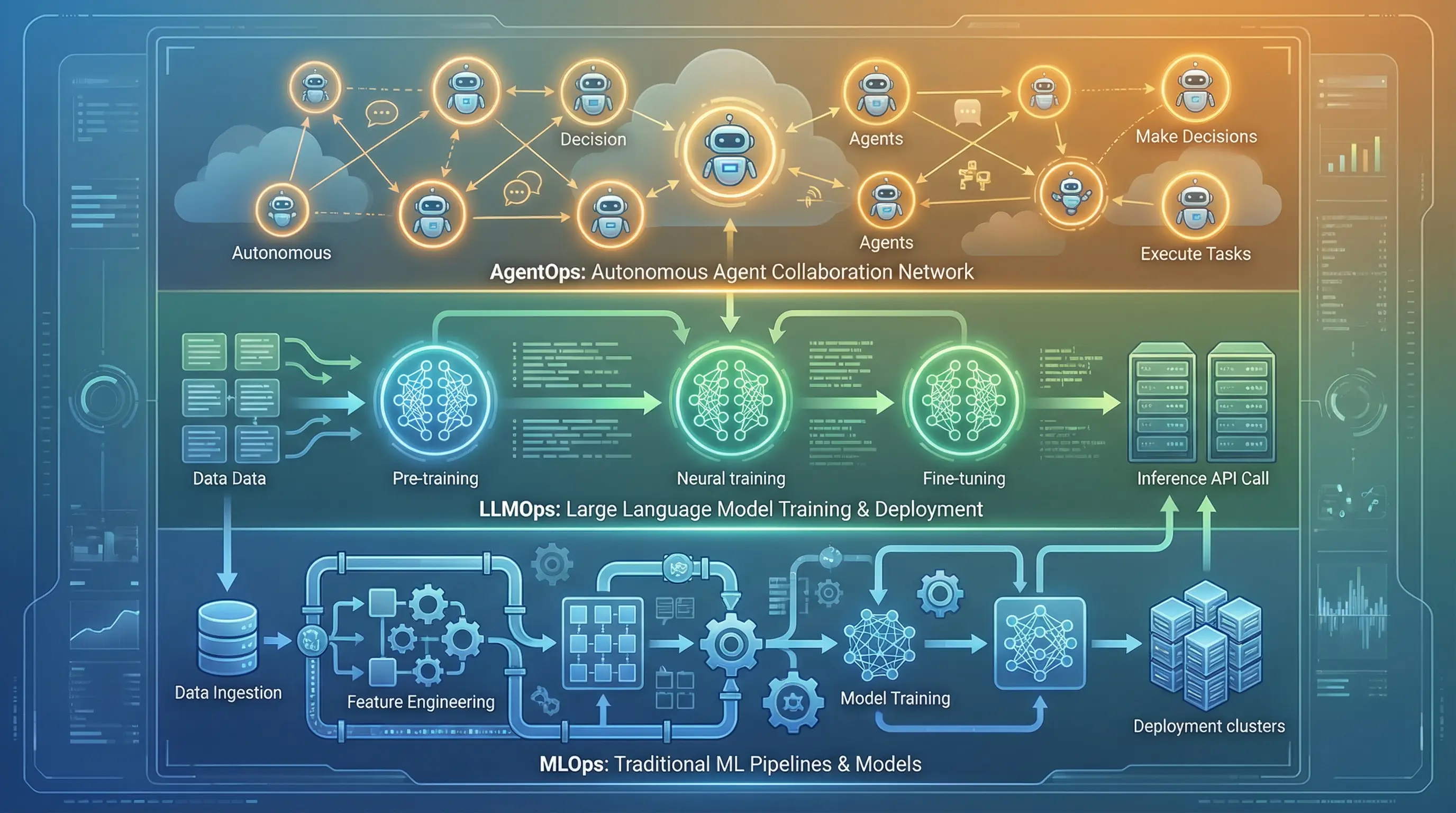
Agentic AI represents a shift from reactive systems to autonomous systems that can independently reason, plan, and execute multi-step workflows. Unlike traditional AI that waits for instructions, agentic AI takes action on your behalf.
Oracle defines agentic AI as systems designed to “autonomously plan, execute, and adapt to make autonomous decisions” without constant human intervention.
Why 2026 is the year of agentic AI
The enterprise AI landscape has reached a tipping point. Global spending on AI systems is expected to reach $300 billion by 2026. Several factors are driving this growth:
- Large Language Models have matured: LLMs now have the reasoning capabilities needed for complex task decomposition
- Tool integration has improved: AI agents can interact with software, APIs, and data sources
- Business demand is clear: Companies want AI that does work, not just answers questions
However, the transition is not without challenges. Analysts estimate that over 40% of agentic AI projects will be cancelled by the end of 2027 due to escalating costs and unclear business value.
How agentic AI works
Agentic AI systems combine several capabilities:
1. Autonomous Planning
Agents break down complex goals into actionable steps. Instead of processing a single prompt, an agent might create a multi-step plan, execute it, and adjust based on results.
2. Tool Use
Modern agents can interact with external systems. They can:
- Search the web for information
- Execute code
- Access databases
- Send emails
- Control software applications
3. Memory and Context
Agents maintain context across interactions. They remember previous decisions and use that information to improve future actions.
4. Adaptive Execution
When obstacles arise, agents can adjust their approach. They evaluate outcomes and modify their strategy without human intervention.
Real-world applications
Enterprise Automation
Companies like Automation Anywhere are leading the charge with platforms that can automate up to 80% of work through AI agents that adapt and orchestrate in real time. These systems handle:
- Customer service workflows
- Document processing
- Data entry and validation
- Report generation
Software Development
Agentic AI is transforming how developers work. Agents can now:
- Write and debug code autonomously
- Execute multi-step development tasks
- Navigate applications and websites
- Perform complex testing scenarios
Business Process Automation
Platforms like DeepOpinion enable enterprises to create AI agent apps that automate business operations without extensive coding expertise. Their straight-through processing has achieved more than double previous efficiency rates.
The agentic operating framework
Successful implementation requires a structured approach. The Agentic Operating Framework provides a playbook to design, build, and run human and AI operations:
- Define clear objectives: What specific outcomes should agents achieve?
- Establish governance: How will humans oversee agent actions?
- Measure outcomes: What metrics determine success?
- Iterate and improve: How will systems learn from experience?
Challenges and considerations
Despite the promise, organizations face significant hurdles:
Cost Management
Agentic AI projects can quickly escalate in complexity and cost. Starting with clear ROI projections is essential.
Risk Control
Autonomous systems require robust safeguards. What happens when agents make mistakes? How do you prevent unintended actions?
Business Value Clarity
Many projects fail because they solve problems that don’t need solving. Identifying high-impact use cases is critical.
Integration Complexity
Connecting agents to existing enterprise systems demands careful planning and technical expertise.
The future of human-AI collaboration
The goal is not to replace humans but to create powerful partnerships. In the agentic paradigm:
- Humans provide judgment and creativity
- Agents handle execution and repetition
- Together, they achieve more than either could alone
This shift represents the next chapter in enterprise automation. Organizations that master human-AI collaboration will gain significant competitive advantages.
Getting started with agentic AI
If you’re considering agentic AI for your organization, here are practical steps:
- Start small: Begin with a specific, well-defined use case
- Build expertise: Invest in training your team on agentic workflows
- Establish governance: Create clear policies for agent behavior and human oversight
- Measure everything: Track costs, outcomes, and efficiency gains
- Iterate quickly: Learn from early deployments and adjust your approach
Summary
Agentic AI is transforming enterprise work in 2026. These autonomous systems can reason, plan, and execute complex workflows with minimal human intervention. While challenges exist, the potential benefits are substantial.
The key to success lies in starting with clear objectives, establishing robust governance, and maintaining focus on measurable business outcomes.
Next steps:
- Explore agentic AI platforms suitable for your industry
- Identify high-impact use cases within your organization
- Build a pilot program with clear success metrics
- Invest in training for your teams
Related articles: