How Quantum Computing Is Leaving the Lab: Practical Breakthroughs That Matter in 2026
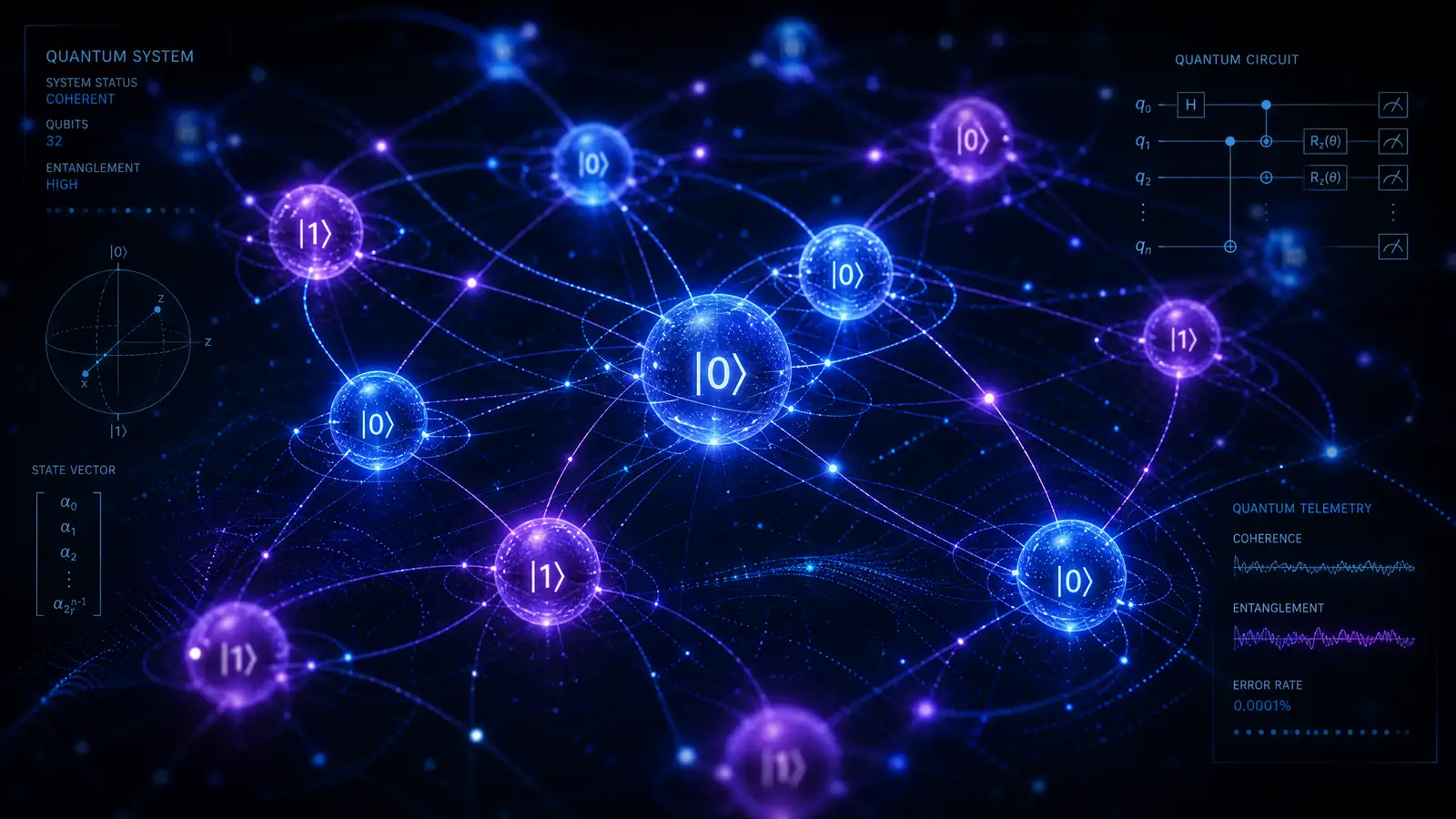
If your mental model of quantum computing is still “giant machine in a physics lab that might, someday, break encryption,” it’s time for an update. The technology hasn’t cracked every hard problem on earth yet, but it has crossed a threshold that matters: real companies are getting measurable results from it right now.
What Changed in 2026
The shift is quiet but visible across multiple industries. Chuck Brooks noted in a recent Forbes analysis that the conversation has moved from “when will quantum be useful?” to “where should we deploy it first?” The answer, it turns out, is closer than most people think.
Battery Materials Research
Companies running quantum simulations for battery chemistry are reporting 30 to 50 percent faster discovery cycles compared to classical methods alone. That’s not a theoretical projection — it’s a measured speedup in how quickly new cathode and electrolyte combinations are identified and tested. For an industry racing to find better energy storage, that margin is the difference between launching a product in 2028 versus 2031.
Logistics Optimization
Early quantum optimization experiments for real-world routing and supply chain logistics are showing 5 to 20 percent efficiency gains over classical heuristics. In industries where fuel costs run into the billions, a single-digit percentage improvement is worth millions. The quantum advantage here isn’t absolute — classical algorithms still handle the bulk of the computation — but the quantum piece is picking up where classical methods plateau.
Quantum Sensing
Commercial quantum sensing applications in timing and navigation are already underway. The implication is straightforward: devices that can navigate accurately in GPS-denied environments, from underground mining to deep-sea exploration, without needing satellite signals. It’s a niche capability today, but the trajectory suggests broader applications in autonomous vehicles and precision agriculture within a few years.
The Organizations That Are Starting Now
Jonathan Reichental wrote recently about what he calls the “surprising way organizations are beginning their quantum journey.” The pattern is consistent: companies that treated quantum as purely experimental two years ago are now running proof-of-concept programs. The hesitation has shifted from “is this real?” to “how do we prepare?”
That preparation usually looks like this:
- Talent building. Hiring at least one person who understands both the domain problem and quantum’s capabilities.
- Data readiness. Quantum algorithms need clean, well-structured input data. Organizations are investing in data pipelines specifically so they can run meaningful quantum experiments.
- Cloud access. IBM, AWS, and Azure all offer quantum computing access through their cloud platforms. Most proof-of-concepts start there, not with on-premises hardware.
The Hardware Race
Behind the software and algorithms, the hardware competition is accelerating. A few recent milestones:
- Pasqal inaugurated Italy’s first neutral-atom quantum computer, their third system in Europe.
- Alice & Bob introduced their Helium platform for quantum error correction and logical qubit research — the kind of work that makes quantum computers actually reliable.
- IQM integrated their NOX quantum computer with the Leonardo supercomputer in Italy, creating a hybrid quantum-classical system.
- HKU researchers developed a cryogenic neuromorphic chip designed for quantum computing and deep-space applications, bridging two fields that don’t usually overlap.
The diversity of approaches — neutral atoms, superconducting qubits, neuromorphic integration — tells you something important: nobody knows which hardware approach will win yet, and that’s exactly where you want to be as an observer. Competition drives progress.
Why Waiting Is the Bigger Risk
Reichental’s point about waiting bears repeating. Uncertainty around quantum computing is shrinking, not growing. As investment increases, capabilities improve, and use cases become clearer, the window for organizations to build quantum literacy without falling behind is narrowing.
That doesn’t mean every company needs a quantum strategy today. But it does mean that treating quantum computing as a “future technology” — something to monitor from a distance and evaluate when it’s “ready” — is becoming a liability. The companies that will have a quantum advantage in five years are the ones running experiments now.
What to Watch Next
The most interesting near-term developments aren’t about raw qubit counts. They’re about:
- Error correction. Reliable logical qubits are the gating factor for everything else. Alice & Bob’s Helium platform is one signal that this work is maturing.
- Hybrid architectures. The IQM-Leonardo integration points to a future where quantum and classical systems work together, not in competition.
- Domain-specific applications. Quantum for drug discovery, quantum for climate modeling, quantum for financial risk — the wins will come from narrowing the focus, not trying to solve everything at once.
Quantum computing in 2026 isn’t the revolution some predicted it would be by now. But it’s also not the disappointment that the hype cycle narrative suggests. It’s something more interesting: a technology that’s quietly becoming useful in ways that matter to people who aren’t physicists.
Sources: