Quantum Computing in 2026: The 98-Qubit Breakthrough and What It Means for Commercial Applications
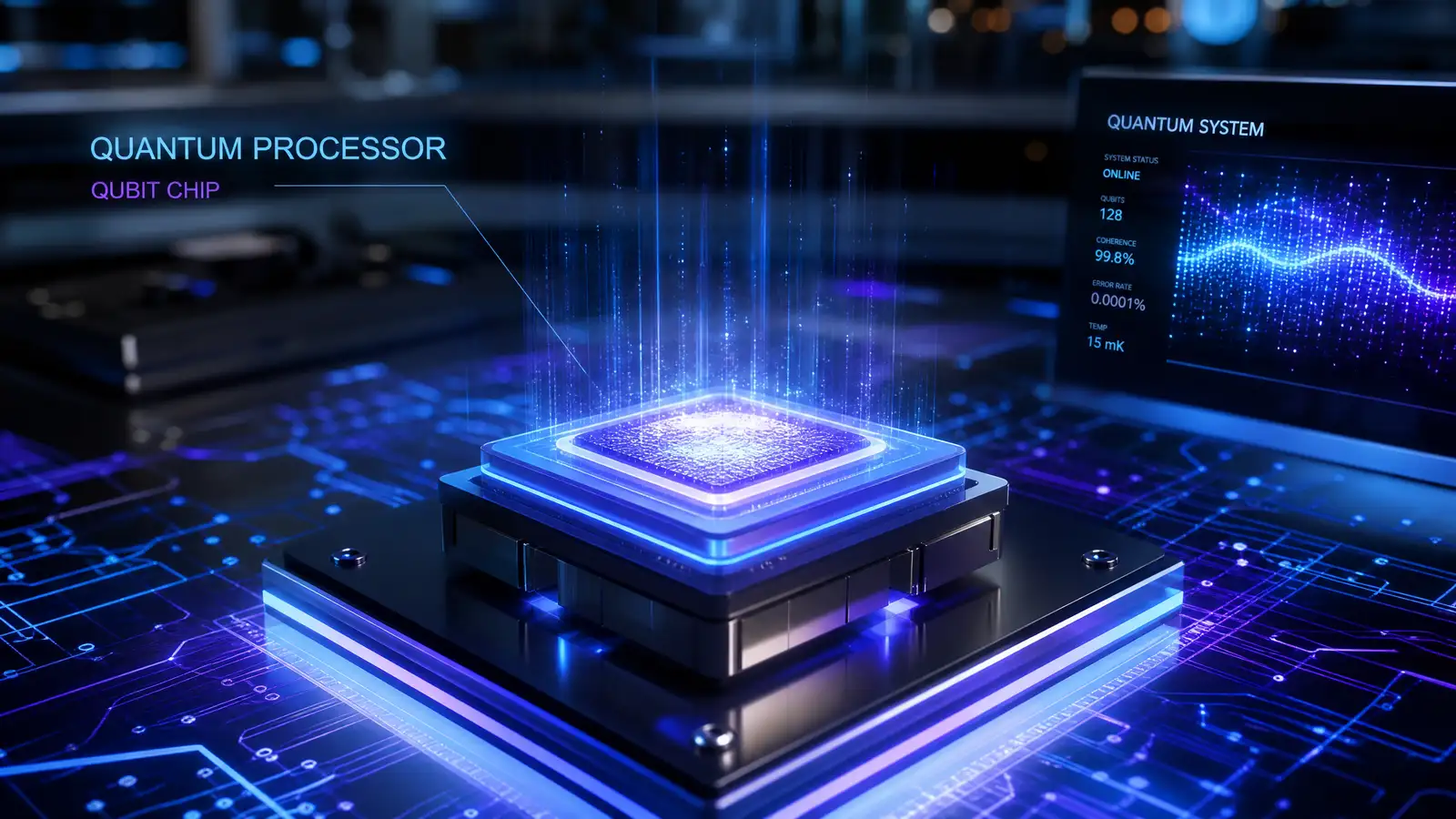
The quantum computing timeline has always felt like a moving target. Every year, researchers promised we were “five years away” from practical quantum advantage. Then 2026 happened, and suddenly that timeline snapped into focus.
On June 17, Nature published a paper that quietly changed the game: a 98-qubit trapped-ion quantum computer with all-to-all connectivity. Three days later, Amazon went on record forecasting real quantum problem-solving capability by 2031 to 2032. Two data points. Same conclusion. The gap between “experimental curiosity” and “commercial tool” is narrowing faster than most tech leaders expect.
The 98-Qubit Milestone
Here’s what makes the Nature paper significant. Previous trapped-ion systems struggled with scalability — the architecture gave you incredible qubit quality and connectivity, but scaling beyond 50 qubits meant managing crosstalk and control complexity that most teams couldn’t handle.
The new system doesn’t just hit 98 qubits. It maintains all-to-all connectivity across every single one. That’s the difference between having a hundred brilliant people in a room who can only whisper to their neighbor, and having a hundred brilliant people who can all talk to each other simultaneously. For quantum algorithms, connectivity isn’t a nice-to-have — it’s the difference between polynomial and exponential speedup for certain problem classes.
The paper’s authors achieved this through an improved junction surface ion trap design, building on decades of incremental work. The result isn’t a lab curiosity. It’s a system architecture that points directly toward the next generation of commercial quantum hardware.
Amazon’s 2031-2032 Forecast
Amazon’s prediction matters because it comes from a company that actually has to ship products. AWS’s quantum computing initiative isn’t an academic exercise — it’s a bet on enterprise demand. When Amazon says “2031 to 2032,” they’re not guessing. They’re working backward from customer conversations, internal testing, and the hardware roadmap they’re funding.
The forecast is specific: quantum problem-solving, not quantum supremacy. Amazon isn’t promising a machine that outperforms classical supercomputers on abstract benchmarks. They’re predicting a system that solves real business problems faster or cheaper than classical alternatives. That’s a much more practical bar — and a much more useful one.
The Manufacturing Side: 97% Yield Validation
While the research papers grab headlines, a less-visible milestone happened around the same time. QTREX Quantum’s AME technology achieved 97% yield validation at one of the largest U.S. interconnect manufacturers.
If you’re not in the hardware space, this might sound like jargon. Here’s the translation: quantum computers need specialized interconnects to route signals between components at cryogenic temperatures. Getting 97% yield means the manufacturing process is maturing from “craft production” to something approaching industrial scale. Without reliable manufacturing, no quantum roadmap matters.
The Academic Pipeline: Variational Quantum Algorithms
A second Nature paper (in a partner journal, June 19) demonstrated an end-to-end workflow for executing a classically bootstrapped variational quantum algorithm on an academic quantum computer. Variational algorithms are the workhorses of near-term quantum computing — they combine classical optimization with quantum circuits to solve problems on imperfect hardware.
The paper’s significance isn’t the algorithm itself. It’s the workflow. An end-to-end pipeline from problem specification to execution on real hardware is what turns quantum computing from a research activity into an engineering discipline. Companies that want to use quantum computers in 2030 need exactly this kind of toolchain.
What This Means for 2026–2030
The convergence of these developments paints a picture:
Hardware is scaling. The 98-qubit system proves trapped-ion architecture can scale past the 50-qubit barrier while maintaining the connectivity that makes it useful.
Manufacturing is maturing. 97% yield at an interconnect manufacturer means the supply chain is building the components needed for broader deployment.
Toolchains are emerging. The variational algorithm workflow paper shows the software layer catching up to the hardware.
Commercial timelines are solidifying. Amazon’s forecast gives enterprise leaders a date to plan around.
None of this means you should buy quantum computing stocks tomorrow. The technology still faces enormous challenges in error correction, cooling requirements, and algorithm development. But the narrative has shifted from “if” to “when” — and “when” is looking less like a decade away and more like the end of this decade.
Who Should Pay Attention Now
If you work in optimization-heavy industries — logistics, finance, drug discovery, materials science — you should have a quantum strategy on paper by the end of 2026. Not a deployment plan. A strategy. The companies that successfully adopt quantum computing won’t be the ones who scramble in 2030. They’ll be the ones who spent 2026 and 2027 identifying which of their problems are quantum-suitable, building internal expertise, and establishing relationships with hardware providers.
If you work in other industries, watch the timeline. When AWS or Azure starts offering quantum instances that solve a problem you actually have, the adoption curve will steepen quickly.
The Bottom Line
Quantum computing in 2026 feels like the internet in 1995. The technology works. The use cases are emerging. The manufacturing base is forming. The only question left is how fast the gap between research lab and production deployment closes.
Amazon thinks it’s five to six years. The hardware developments from this week suggest they might be conservative.