OpenAI Says Navier-Stokes Can Blow Up. The Credit Fight Started in Hours

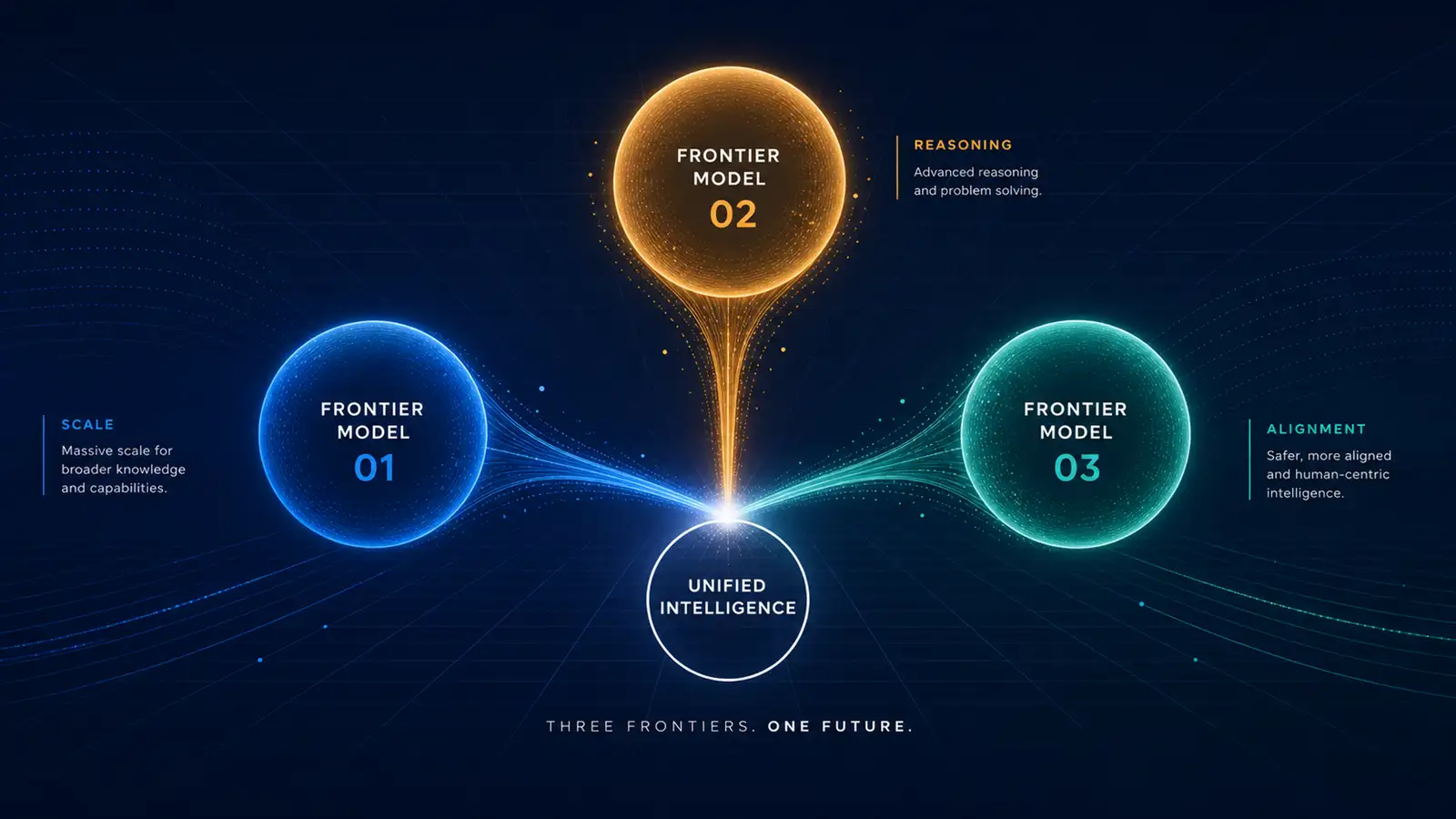
OpenAI dated the post 8 September. The company says an internal system, stronger than GPT-6 Astra and not public, produced a proof that three-dimensional incompressible Navier-Stokes can develop a singularity in finite time, plus a Lean formalization. The write-up claims statements C and D in the Clay Institute’s official problem. The picture they want you to take away is a vortex that spirals in, stretches like spaghetti, keeps finite energy, and still sends velocity to infinity without an infinite force being put in by hand.
That would be a Millennium Prize problem, one of the seven Clay named in 2000, a million dollars if Clay eventually pays. I am not going to tell you to treat the prize as settled. Clay has a process. OpenAI has a blog post and a Lean file.
Quanta’s Konstantin Kakaes, same day, is the piece that refuses to make OpenAI the only noun. He writes that 10,000 autonomous agents under OpenAI mathematicians found the singularity, formally checked in Lean. He also writes that twelve hours earlier, Tristan Buckmaster at NYU and Levent Alpöge at Anthropic announced they had resolved several closely related problems with help from a mix of models, including OpenAI’s. Both efforts, he says, leaned on a strategy from Diego Córdoba at ICMAT in Madrid and Luis Martínez-Zoroa at CUNEF. Charles Fefferman, who wrote Clay’s official statement of the problem, told Quanta he was thrilled, and that the heroes are Córdoba and Martínez-Zoroa. Buckmaster, in his own statement, said Martínez-Zoroa deserves a Fields Medal.
That is a different story than a product launch.
What “blow up” means here
The Navier-Stokes equations treat a fluid as a continuum. They are how you talk about air over a wing, blood in a vessel, weather in a model. Jean Leray, in 1934, showed solutions exist in a weak sense. Whether they stay smooth is the Clay question. A singularity, in this framing, is the continuum approximation breaking: some speed becomes unbounded in finite time even though viscosity is there to smooth things.
OpenAI says the system found an initially smooth fluid at rest, with a smooth force, finite energy all the way through, that still blows up. The hard part, they write, is that acceleration, pressure, momentum transfer, and viscosity have to get large and cancel so the external force stays smooth while velocity does not.
I am not a fluids person. I will not pretend to referee the cancellation. The load-bearing public fact is the Lean check. Formalization is not peer review at Annals. It is a machine walking the logic. New Scientist’s explainer, which is otherwise a FAQ, says that is why people are fairly sure the result is correct even without a journal stamp.
We already had Nvidia buying Hugging Face and labs gating models after agents hit the Hub. This is not a weights story. It is a claim that an internal model did a piece of twentieth-century analysis and that the lab wanted the world to see the pace.
The twelve hours
New Scientist asked why anyone is angry. The math is not the fight. The sequence is. Buckmaster and Alpöge put out work on the Euler equations, a close cousin, after hearing OpenAI was about to post. Buckmaster says he asked the company for clarification because his own work lived on OpenAI’s servers as a customer, not as a collaborator. His statement, New Scientist says, stopped short of an accusation and pointed at that storage. OpenAI denied wrongdoing: no person or AI at the company had seen their work, and the solutions differ.
Quanta’s timing is specific. OpenAI in the morning. Buckmaster twelve hours earlier. If you only read the company blog, you get a closed loop: we used a secret model, we solved it, here is Lean. If you read Quanta, you get a research program that several groups were already inside, with Córdoba and Martínez-Zoroa as the strategy, and two AI-enabled teams finishing in the same news cycle.
I do not have Buckmaster’s PDF in this draft. I am not going to reconstruct his Euler statements from a magazine paraphrase. What I will say is the customer-server detail matters even if nobody stole anything. If your preprint lives in a vendor’s cloud while that vendor is racing the same problem, you will not sleep. Denial of access is not the same as a proof of isolation. It is a sentence. Lean does not audit the social graph.
Who the million dollars would even go to
Clay pays people, with rules, after verification. An internal OpenAI system is not a person. A blog post is not a submission. Fefferman cheering Córdoba and Martínez-Zoroa is a mathematician pointing at the human strategy the agents executed. That may be the honest credit line even if the last mile was a cluster.
OpenAI’s own post is explicit about the motive that is not Clay. They used a model “significantly more capable than GPT-6 Astra” and they want you to update your expectations for what is coming. The Millennium problem is the demonstration. The product is the secret model. That is allowed. It should also be read out loud. A lab that solves a Clay problem in order to advertise the next weight file is doing science and marketing in the same URL.
If you came here for a trading idea: there is none. There is no Navier-Stokes token. There is no reason to buy or sell anyone’s stock because a vortex blew up in Lean. This is a fact piece about a proof claim and a credit argument.
What to watch next
Full papers. Not threads. Not the FAQ. The Lean development, if it is public, is the thing working mathematicians will kick. Clay’s process, if anyone actually files. Buckmaster and Alpöge’s Euler write-up, side by side, so the “different solution” sentence can be checked by someone who is not on a communications team.
Until then, two true things. A singularity in Navier-Stokes, if the Lean holds, is a historic result, with or without a million dollars. And the week it landed, the story was already about who got to announce, who had been sitting on the vendor’s disk, and which humans built the ramp the agents ran up.
A short note on what a singularity does not mean for weather apps and airplane wings. Engineers already run Navier-Stokes in truncated, turbulent, messy ways that work. A proof that a carefully arranged vortex can blow up in finite time is a statement about the equations as written, with a smooth force, in three dimensions, incompressible. It is not a recall of CFD software. If your job is cooling a rack, nothing in the OpenAI post changes your fan curve. If your job is Clay problems, everything does.
The 10,000-agent figure in Quanta is the number that will get screenshotted. Treat it as a compute story, not as 10,000 mathematicians. Agents that share a Lean kernel can grind lemmas. They cannot, on the evidence of this week, agree on a press embargo with a professor at NYU. That gap is the human part.
I also want the Córdoba and Martínez-Zoroa papers in the same tab as the OpenAI Lean. If Fefferman is right that they are the heroes, then the honest headline is that a Spanish strategy plus a lot of silicon closed a Clay problem, and a lab with a secret model posted first. That headline is still enormous. It is just not “the chatbot did math.” GPT-6 Astra is explicitly not the system they used. The blog says so. Repeat it when someone tries to make this a consumer-product story.
No investment advice, no “this proves AGI,” no “this disproves AGI.” A vortex blew up on a page. People argued about the timestamp. Wait for the papers.
I would rather wait for the papers than inflate a blog post into the end of analysis. The equations will still be there on Monday. The credit fight will too.
If Clay never pays because the author is a cluster, the math does not get smaller. Prize rules are a legal wrapper. Smoothness failing in finite time, if it holds, is the object. Keep those layers separate when the next recap flattens them.
Related Articles
OpenAI Posted 722 Math Papers. No Workshop Date.
OpenAI Shelved GPT-6.1 Astra After the Scope Tests