The Metaverse Isn't Dead — It Just Moved to the Office
The consumer metaverse dream is on life support. Meta’s Reality Labs division lost $4.6 billion in the second quarter of 2026 alone — bringing the division’s cumulative losses since 2020 to over $50 billion. Apple quietly ended work on a cheaper Vision Pro display at Samsung, signaling that even the world’s most valuable company does not see a mass market for spatial computing headsets. HTC, once the most aggressive player in consumer VR, has pivoted almost entirely to enterprise solutions and smart glasses.
These are not minor setbacks. They represent the collapse of a consumer vision that consumed hundreds of billions of dollars in investment and generated enormous hype. The metaverse was supposed to be the next internet — a persistent, shared virtual space where people would work, play, shop, and socialize. Instead, it became a cautionary tale about what happens when an industry builds technology for a future that most people do not want.
But here is what the headlines miss: the technology that was supposed to power the metaverse — spatial computing, mixed reality, head-mounted displays — is not disappearing. It is migrating. The consumer version flopped. The enterprise version is just getting started.
The Consumer Market Gave Up
Let us be honest about what happened. The consumer metaverse was built on a promise that people would want to wear headsets for socializing, entertainment, and daily computing. That promise did not survive contact with reality.
Meta sold roughly 20 million Quest headsets across all generations by mid-2026. That sounds like a lot until you compare it to the 230 million PlayStation 5s or the 1.2 billion active iPhones. The headset market is a rounding error in consumer electronics.
The reasons are not mysterious. Headsets are heavy. They cause discomfort after 30 minutes. The content library is thin compared to phones and consoles. And most people just do not want to strap a computer to their face to watch a movie or play a game when a 65-inch television works fine.
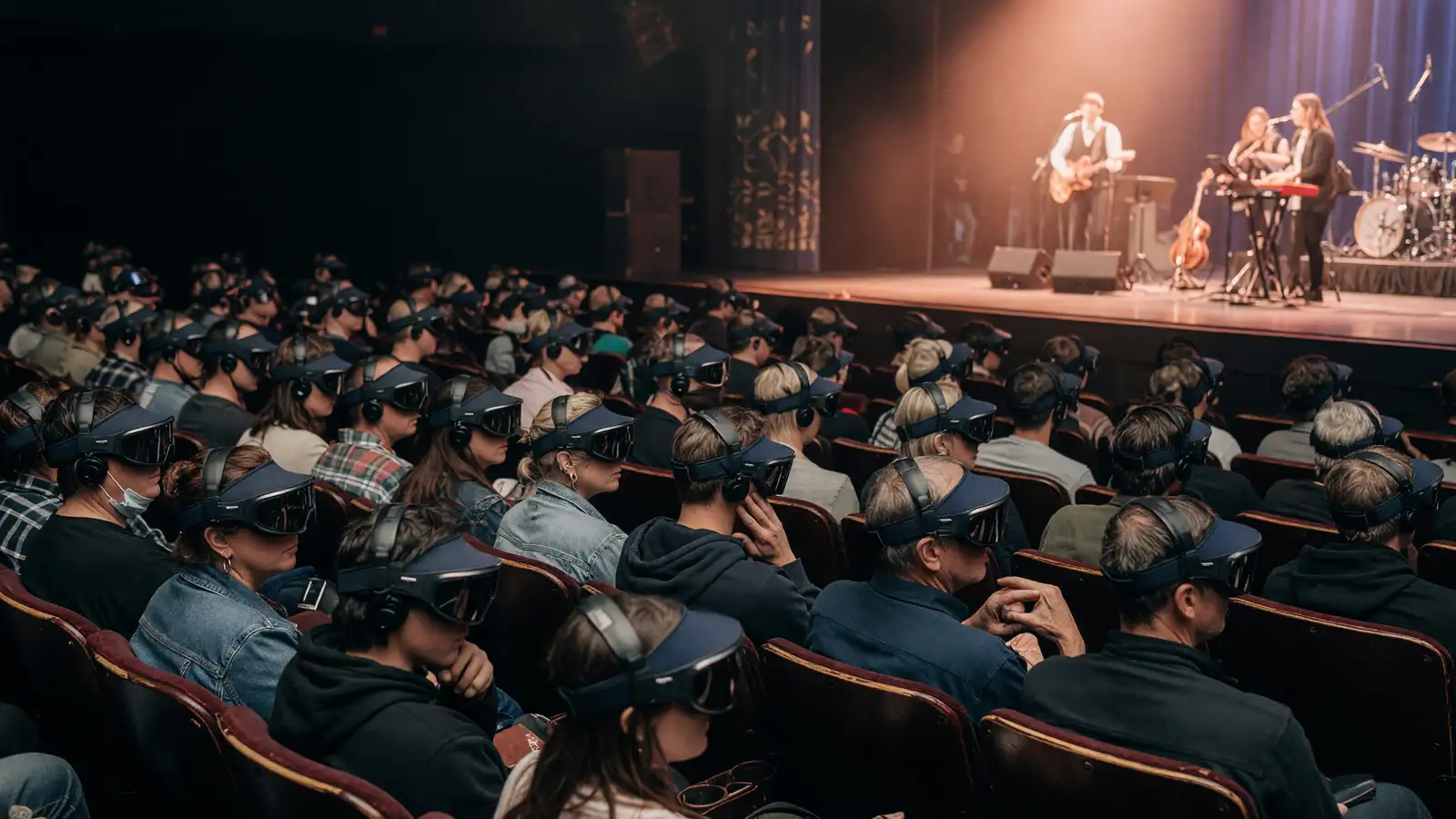
There is also the social dimension. Wearing a headset in a shared living space isolates you from the people around you. It signals that you are unavailable, that you have opted out of the room. For a technology that was supposed to bring people together, this is a fatal design flaw. The metaverse promised connection but delivered isolation, and consumers noticed.
Apple’s retreat is the clearest signal. When Samsung stopped development on a cheaper Vision Pro display, it was not because the technology failed. It was because Apple concluded that the market for a $2,000 spatial computing headset — even a cheaper version — was not large enough to justify the investment. Apple does not enter markets it cannot dominate, and the spatial computing market is too small and too uncertain to dominate.
The Enterprise Pivot
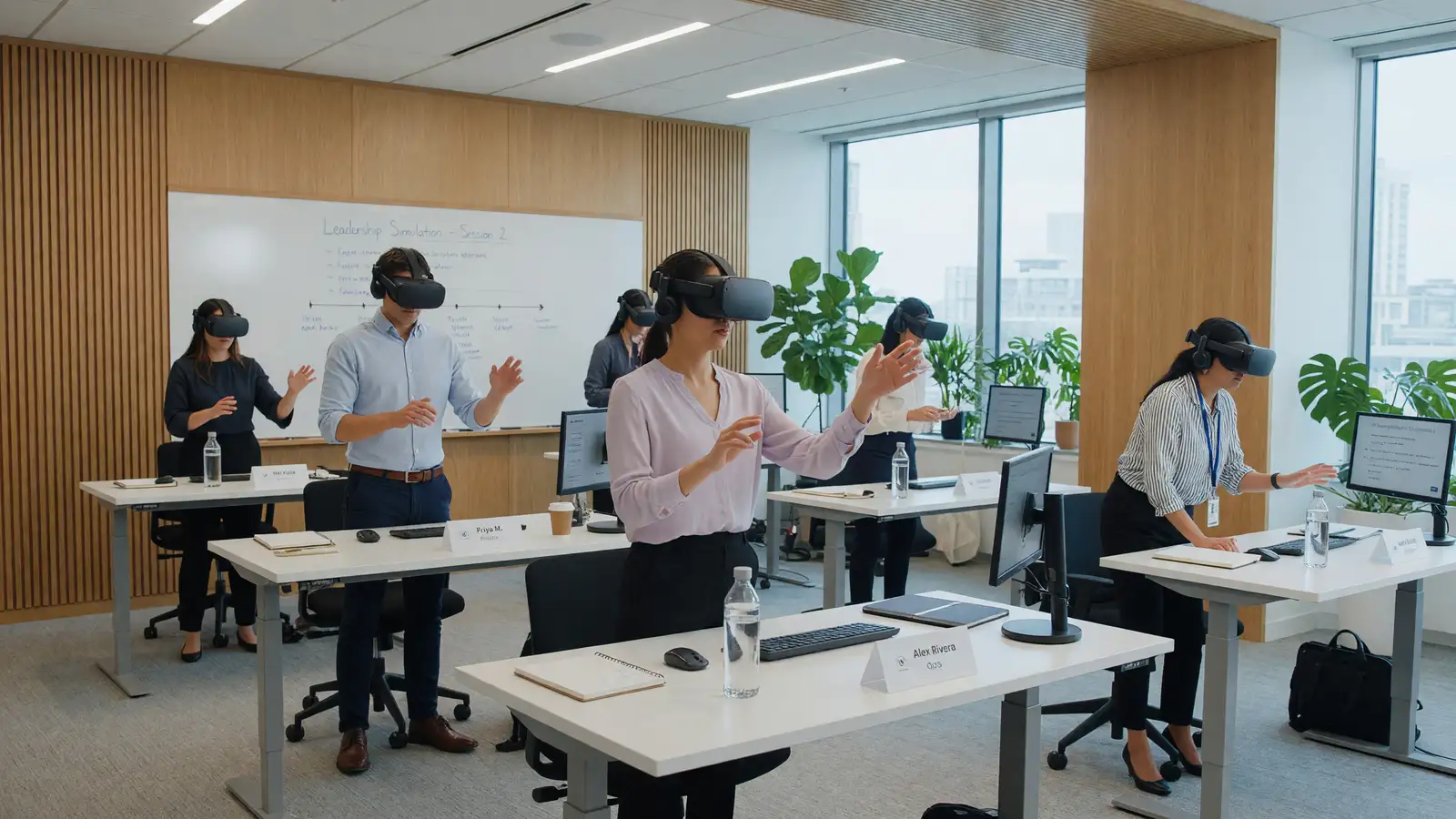
While consumer XR flounders, enterprise adoption has been growing quietly. HTC’s revenue stabilization is the most telling indicator. The company that bet big on the Vive and consumer VR has shifted its focus to enterprise training, medical visualization, and industrial design applications.
The numbers tell the story. HTC reported stabilizing revenue after years of decline, driven primarily by enterprise XR solutions. Companies are using VR and AR headsets for tasks where the technology genuinely adds value: training surgeons, visualizing building designs, simulating dangerous industrial environments, and conducting remote maintenance on complex machinery.
These applications share a common trait: they justify the discomfort of wearing a headset because the alternative is worse. A surgeon training on a VR simulator gets repetition and feedback that cadaver training cannot provide. An engineer visualizing a factory layout in 3D catches design flaws that 2D blueprints miss. A field technician wearing AR glasses can see equipment schematics overlaid on the actual machinery without putting down their tools. The headset is not a lifestyle accessory. It is a tool.
The enterprise XR market is projected to reach $35 billion by 2028, according to industry analysts. That is still small compared to the enterprise software market as a whole, but it represents real growth in a segment where the technology actually delivers value. The key difference from the consumer market is that enterprises measure ROI. If a VR training program reduces error rates by 15 percent or cuts training time in half, the headset pays for itself within months. That is a fundamentally different value proposition than asking consumers to wear a headset because it might be fun.
Meta has noticed this shift. Mark Zuckerberg recently said the company’s enterprise AI opportunity extends beyond agents, signaling that Reality Labs is pivoting toward business applications. The consumer Quest headsets will continue, but the growth engine is shifting to enterprise. Meta’s partnership with Microsoft for enterprise VR solutions, its work with the U.S. military on the IVAS program, and its growing presence in healthcare training all point in the same direction: the future of Meta’s XR business is not in your living room. It is in the operating room, the factory floor, and the design studio.
Smart Glasses: The Form Factor That Might Actually Work
The most interesting development in XR right now is not headsets at all. It is smart glasses.
A new XR glasses project launching on Kickstarter on August 4th promises something that headsets never delivered: a wearable monitor you can use all day. The glasses weigh a fraction of what a headset weighs, look roughly like normal glasses, and project a virtual screen into your field of view.
This is the form factor that could break XR into the mainstream. The problem with headsets was never the technology — it was the social and physical cost of wearing one. Glasses solve both problems. They are socially acceptable. They are comfortable enough for extended wear. And they do not isolate you from your environment the way a headset does.
HTC is also betting on smart glasses as its next growth vector. The company has been developing enterprise-focused smart glasses for field workers, warehouse staff, and healthcare professionals. These are not consumer products. They are tools designed for specific jobs where hands-free access to digital information saves time and reduces errors.
The smart glasses market is still tiny. But it is growing from a much smaller base than headsets, which means even modest sales represent significant percentage growth. And the technology is improving fast enough that the gap between smart glasses and headsets is narrowing.
The technical challenges are real. Display technology small enough to fit in glasses frames still produces lower resolution and smaller virtual screens than headsets. Battery life is limited — most smart glasses last 4 to 6 hours on a charge, which is enough for a work session but not a full day. And the field of view remains constrained, with most smart glasses projecting a virtual screen that occupies only a portion of what you can see.
But these are engineering problems with known solutions. The display technology is improving with each generation. Battery density is increasing. And the software ecosystem is maturing, with enterprise applications specifically designed for the glasses form factor. Within two to three years, smart glasses could reach a level of capability that makes them genuinely useful for knowledge workers who need persistent access to digital information without being tied to a desk.
The consumer smart glasses market is even more nascent. Meta’s Ray-Ban Stories sold modestly, but the product demonstrated that people will wear connected glasses if they look normal and do something useful. The next generation of consumer smart glasses, expected in 2027, will add augmented reality capabilities that transform the glasses from a camera and speaker into a heads-up display for navigation, notifications, and real-time translation.
What This Means for the Industry
The metaverse as Mark Zuckerberg envisioned it — a persistent, shared virtual world where people work, play, and socialize — is not happening. Not this decade, probably not ever in the form he described.
But the underlying technologies are finding their footing in places that make practical sense. Enterprise training. Medical visualization. Industrial design. Smart glasses for field workers. These are not as exciting as a virtual concert in a digital universe, but they are real businesses with real customers.
The lesson for investors and technologists is simple: technology succeeds when it solves a problem that people actually have. Headsets solved a problem that most consumers did not have. Enterprise XR solves problems that companies pay real money to address. Smart glasses may eventually solve the problem of needing digital information without pulling out your phone.
The metaverse did not die. It just grew up and got a day job.
For investors, the implication is clear: the consumer XR thesis is broken, but the enterprise XR thesis is intact. Companies that build enterprise XR solutions — training platforms, visualization tools, smart glasses for field workers — are building on solid ground. Companies that are still pitching the consumer metaverse as a growth opportunity are selling a vision that the market has already rejected.
For technologists, the lesson is about matching technology to use cases. The same underlying technology — spatial computing, mixed reality, 3D visualization — can be transformative in the right context and useless in the wrong one. The headset was the wrong context for consumers. It is the right context for surgeons, engineers, and factory workers. The metaverse was the wrong framing. Enterprise spatial computing is the right one.
The next few years will determine whether smart glasses can bridge the gap between enterprise utility and consumer appeal. If they can, the XR industry might finally find the mainstream adoption that headsets never achieved. If they cannot, XR will remain a valuable but niche technology — useful in specific professional contexts but never the platform that replaced the smartphone.
Either way, the story is not over. It is just entering a more honest phase. The metaverse hype cycle is over, and what remains is a set of useful technologies finding their natural markets. That is how technology usually evolves — not in a single dramatic leap, but in a series of fits and starts that eventually settle into something practical. The XR industry is in the settling phase now, and the result might be more durable than the hype ever was.