The Metaverse: Building Immersive Digital Worlds
The metaverse has captured imaginations worldwide, promising a future where digital and physical realities seamlessly blend. This vision of persistent, shared virtual worlds represents the next evolution of the internet, transforming how we work, play, socialize, and create.
Defining the Metaverse
The metaverse isn’t a single technology or platform but rather a convergence of virtual worlds, augmented reality, and persistent online spaces. It’s an interconnected network of 3D virtual environments where users can interact with each other and digital objects in real-time, using avatars to represent themselves.
Unlike traditional websites or apps that you visit temporarily, the metaverse persists continuously. Events happen whether you’re present or not, and the world evolves based on collective user actions. This persistence creates a sense of place and community that static digital experiences cannot match.
The concept draws inspiration from science fiction, particularly Neal Stephenson’s 1992 novel “Snow Crash,” which coined the term. However, today’s metaverse implementations are becoming increasingly sophisticated, moving beyond fiction toward practical reality.
Core Technologies
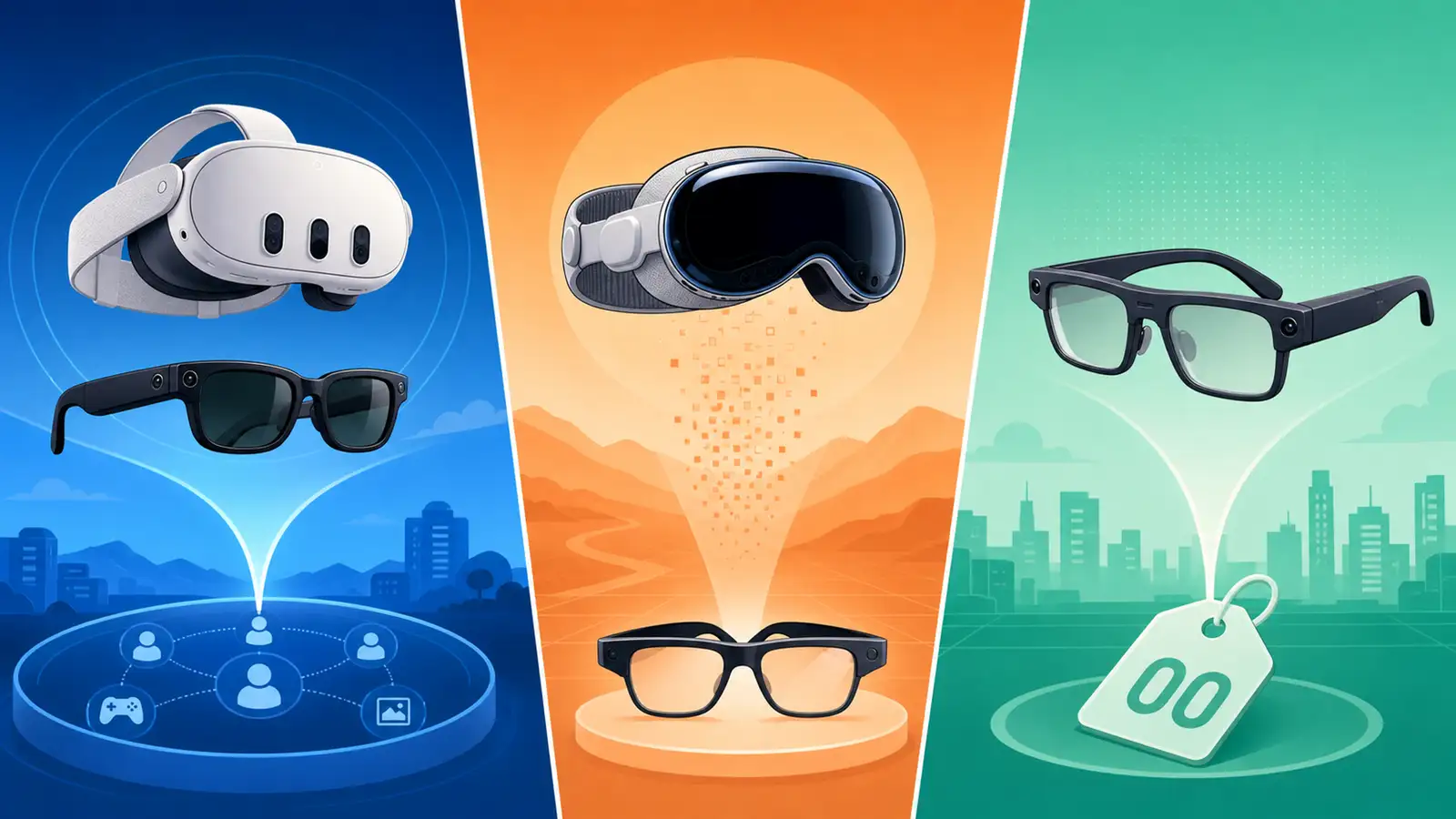
Virtual reality headsets provide the most immersive metaverse experiences. Modern VR devices like Meta Quest, PlayStation VR, and Valve Index offer high-resolution displays, precise motion tracking, and intuitive controllers that translate physical movements into virtual actions.
These headsets create a sense of presence by filling your field of vision with virtual environments and tracking head movements to update the view naturally. Hand tracking and haptic feedback enhance immersion by allowing natural interactions with virtual objects.
Augmented reality overlays digital information onto the physical world through devices like smartphones, tablets, or specialized glasses. AR enables metaverse experiences that enhance rather than replace reality, allowing digital and physical elements to coexist.
Spatial computing technologies understand and map physical spaces, enabling virtual objects to interact realistically with real environments. This technology powers features like virtual furniture placement in home design apps or multiplayer AR games that use your actual surroundings as the playing field.
Social Experiences
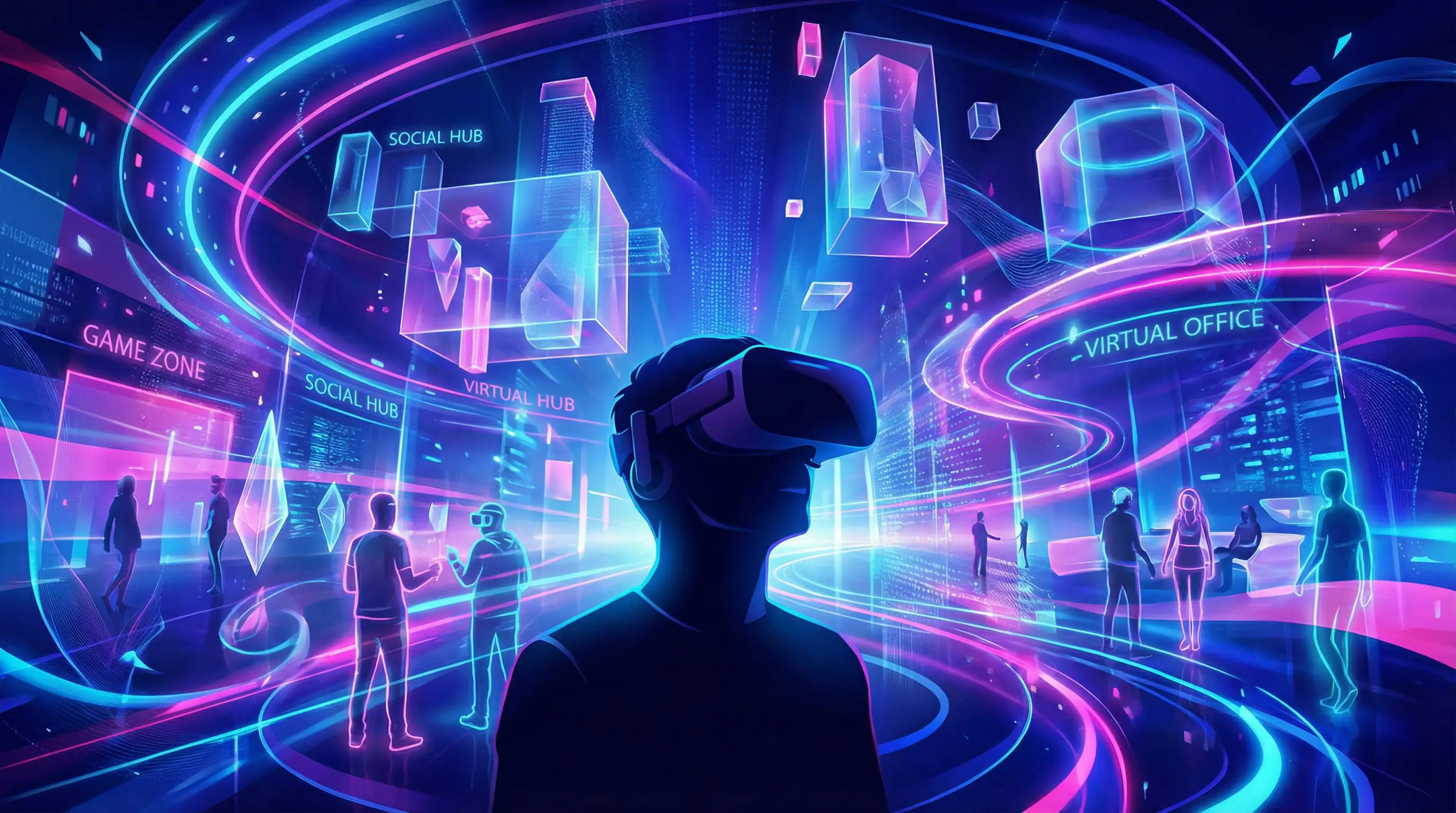
Social interaction forms the heart of the metaverse. Virtual worlds like VRChat and Rec Room enable people to meet, socialize, and participate in activities together regardless of physical location. Users create custom avatars, explore user-generated worlds, and form communities around shared interests.
These platforms demonstrate how virtual presence can create genuine social connections. Body language, spatial audio, and shared experiences contribute to a sense of togetherness that text-based communication cannot replicate. Friends separated by continents can feel like they’re in the same room.
Virtual events have become increasingly sophisticated. Concerts in Fortnite and Roblox have attracted millions of attendees, offering experiences impossible in physical venues. Conferences and meetings in VR provide networking opportunities and engagement that video calls lack.
Economic Systems
The metaverse is developing its own economy, with virtual goods, services, and real estate commanding real-world value. Users spend billions annually on digital items like avatar clothing, virtual land, and in-game assets.
Blockchain technology and NFTs enable true ownership of digital assets. Unlike traditional games where items belong to the platform, blockchain-based metaverse platforms allow users to own, trade, and transfer their virtual possessions freely. This creates new economic opportunities for creators and investors.
Virtual real estate has become particularly valuable in platforms like Decentraland and The Sandbox. Prime locations command prices comparable to physical real estate in some cities. Businesses are establishing virtual storefronts, and brands are hosting events in these digital spaces.
Creators can monetize their skills by building virtual worlds, designing avatar accessories, or offering services within the metaverse. This creator economy mirrors the physical world’s economic diversity, with opportunities ranging from architecture to entertainment.
Gaming and Entertainment
Gaming represents the most mature metaverse application. Massively multiplayer online games like World of Warcraft and Final Fantasy XIV have offered persistent virtual worlds for decades. Modern platforms like Roblox and Minecraft enable users to create their own games and experiences, democratizing game development.
These platforms blur the line between playing and creating. Users transition seamlessly from consuming content to producing it, fostering creativity and entrepreneurship. Young developers learn programming and design skills while building experiences for millions of players.
Virtual theme parks and entertainment venues offer experiences impossible in physical space. You can fly through fantastical landscapes, explore alien worlds, or participate in physics-defying activities. The only limit is imagination and technical capability.
Work and Collaboration
The metaverse is transforming remote work. Virtual offices provide spatial context that video calls lack, making it easier to understand who’s speaking and maintain awareness of colleagues’ presence. Spatial audio ensures conversations don’t overlap, mimicking natural office acoustics.
Collaborative tools in VR enable teams to manipulate 3D models, brainstorm on virtual whiteboards, and review designs at full scale. Architects can walk through buildings before construction, engineers can inspect machinery from any angle, and designers can iterate rapidly on prototypes.
Training and education benefit enormously from immersive environments. Medical students can practice surgery in VR without risk to patients. Pilots train in realistic flight simulators. Employees can experience dangerous situations safely, building skills and confidence.
Technical Challenges
Creating convincing metaverse experiences requires solving significant technical challenges. Rendering detailed 3D environments at high frame rates demands substantial computing power. VR requires at least 90 frames per second to prevent motion sickness, doubling the computational load compared to traditional gaming.
Network latency becomes critical when multiple users interact in real-time. Even small delays can break immersion and make interactions feel unnatural. Edge computing and improved networking infrastructure are essential for responsive metaverse experiences.
Interoperability remains a major hurdle. Different metaverse platforms use incompatible technologies, preventing users from moving avatars and assets between worlds. Standards development and cross-platform protocols are necessary for a truly interconnected metaverse.
Privacy and Safety
The metaverse raises new privacy concerns. VR headsets track detailed biometric data, including eye movements, hand gestures, and physical movements. This information could reveal personal characteristics, health conditions, and behavioral patterns.
Harassment and inappropriate behavior pose serious challenges in virtual spaces. The immersive nature of VR can make negative experiences more impactful than in traditional online environments. Platforms must develop effective moderation tools and safety features while respecting user freedom.
Identity verification and age restrictions become more complex in virtual worlds. Ensuring children’s safety while allowing adults freedom requires sophisticated systems that balance protection with privacy.
Accessibility Considerations
Making the metaverse accessible to everyone requires addressing physical, economic, and technical barriers. VR headsets can be uncomfortable or unusable for people with certain disabilities. Alternative input methods and customizable interfaces are essential for inclusive design.
The cost of VR hardware limits access for many potential users. As technology matures and production scales increase, prices should decrease, but economic barriers will persist. Cloud-based rendering could enable high-quality experiences on less powerful devices.
Motion sickness affects a significant portion of VR users, particularly during extended sessions. Improved hardware, better software optimization, and user-adjustable comfort settings can mitigate these issues.
The Path Forward
The metaverse’s future likely involves gradual evolution rather than sudden revolution. Augmented reality may prove more practical than full VR for many applications, enhancing daily life without requiring complete immersion.
Integration with artificial intelligence will create more dynamic and responsive virtual worlds. AI-powered NPCs could provide realistic interactions, while procedural generation could create infinite, varied environments.
Haptic technology will advance beyond simple vibrations to provide realistic touch sensations. Full-body haptic suits could enable users to feel virtual objects, temperature changes, and even simulated impacts.
Brain-computer interfaces represent the ultimate metaverse input method, potentially allowing direct thought-based control of avatars and virtual objects. While still experimental, this technology could eventually eliminate the need for physical controllers entirely.
Conclusion
The metaverse represents humanity’s next major platform shift, comparable to the transition from desktop to mobile computing. It promises to transform how we interact with digital information, each other, and the world around us.
However, realizing this vision requires overcoming substantial technical, social, and economic challenges. Hardware must become more comfortable, affordable, and capable. Software needs to be more intuitive and interoperable. Social norms and governance structures must evolve to address new forms of interaction and commerce.
The metaverse won’t replace physical reality but will augment and extend it, creating new possibilities for human experience and expression. Success will depend on building inclusive, safe, and valuable virtual spaces that enhance rather than diminish our humanity.
As technology advances and adoption grows, the boundary between physical and digital will continue to blur. The metaverse isn’t just about escaping reality but about expanding what’s possible, creating new forms of connection, creativity, and community that enrich our lives in both virtual and physical worlds.