Google's AI Buildout Drove a 37% Increase in Electricity Use — The AI Energy Crisis Is Here
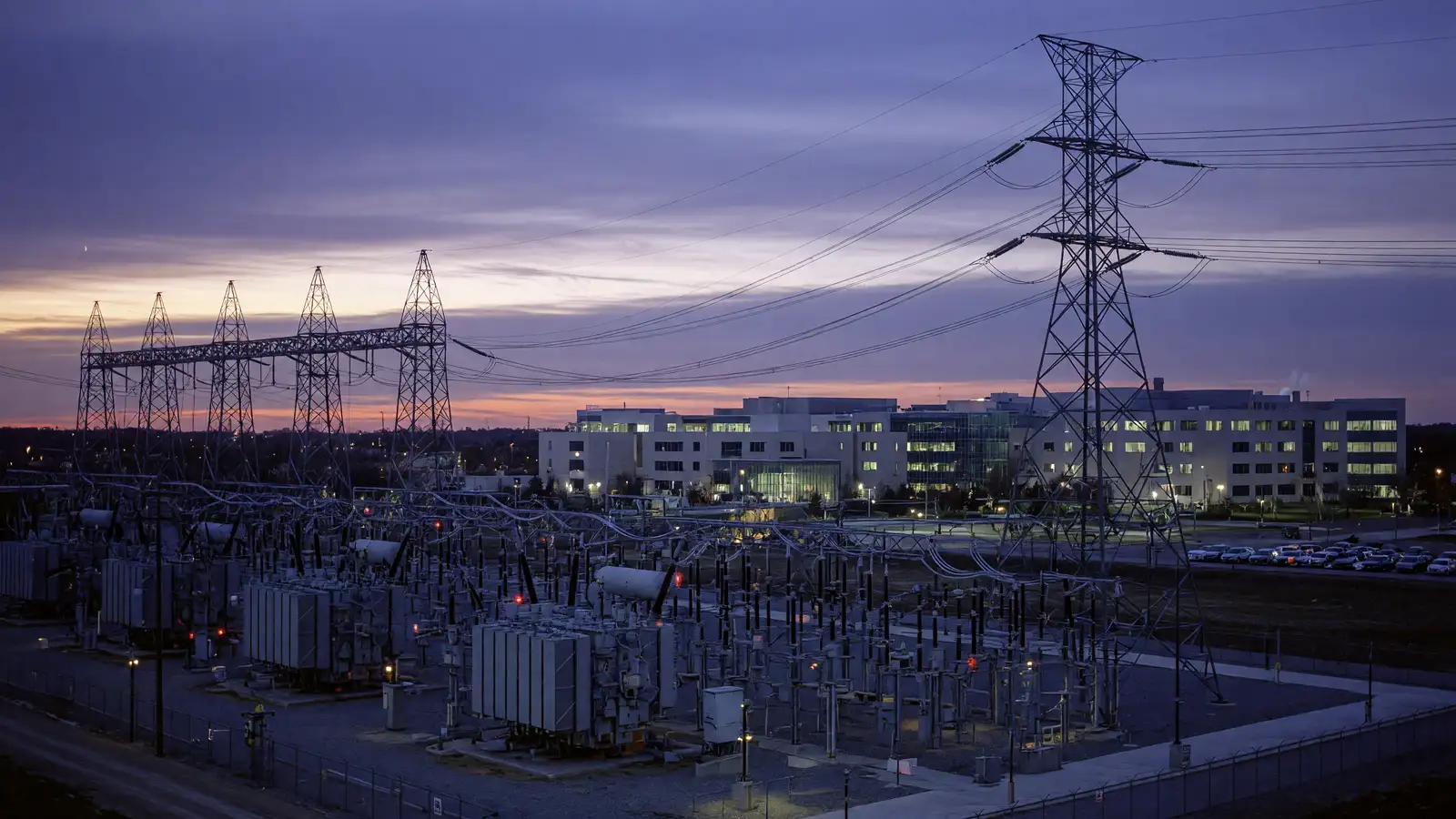
Google’s latest environmental data contains a number that should concentrate minds across the technology industry: the company’s AI infrastructure buildout drove a 37% increase in electricity consumption in 2025. For a company that has been carbon-neutral since 2007 and has made sustainability a core part of its brand identity, the number is an uncomfortable admission that the AI revolution has an energy appetite that current sustainability strategies cannot satisfy.
The Scale of the Problem
Ars Technica reported on Google’s disclosure, which reveals the tension between the company’s AI ambitions and its environmental commitments. The 37% increase is not a one-time adjustment — it reflects the beginning of what will likely be a multi-year trend as AI infrastructure scales to meet demand. Every new generation of AI models requires more compute for training. Every new AI-powered product feature requires inference capacity. Every data center expansion adds to the energy baseline.
Google is not alone. Microsoft’s emissions jumped approximately 30% in 2023 relative to its 2020 baseline, driven largely by data center expansion for AI. Amazon’s carbon footprint has grown with its AI investments. Across the hyperscaler industry, the energy demands of AI are creating a collision between corporate sustainability pledges and commercial AI strategies.
The Physics of AI Energy Consumption
Understanding the AI energy problem requires understanding where the energy goes. Training a state-of-the-art large language model requires running thousands of specialized GPUs or TPUs continuously for weeks or months. Each training run consumes electricity equivalent to hundreds of American households’ annual usage. But training, while dramatic, is not the biggest problem — inference is. Once a model is deployed, every user query, every API call, every AI-generated email and code snippet consumes energy. The cumulative energy cost of inference at global scale dwarfs training costs.
The efficiency gains that have characterized semiconductor progress — Moore’s Law, essentially — are not keeping pace with the growth in AI compute demand. Each new generation of chips is more efficient per operation, but the total number of operations is growing faster than efficiency is improving. The result is net energy growth, and the trajectory suggests this growth will continue.
The Sustainability Responses
The industry is responding to the AI energy crisis on multiple fronts. Google and others are investing heavily in renewable energy procurement, signing power purchase agreements for wind and solar capacity. But renewable energy procurement, while necessary, is not sufficient — the intermittency of renewables means data centers still rely on grid power that includes fossil fuel generation.
Nuclear power is emerging as a more controversial part of the solution. Microsoft’s agreement to purchase power from a restarted Three Mile Island reactor, and similar explorations by other hyperscalers, reflect a growing recognition that 24/7 carbon-free power requires baseload sources that renewables alone cannot provide. The political and public acceptance challenges of nuclear power, however, make this a slow and uncertain path.
More efficient AI architectures — including smaller, specialized models rather than ever-larger general-purpose ones — may be the most scalable solution. The trend toward on-device AI, discussed in the context of Apple’s Foundation Models framework, also helps by distributing inference to energy-efficient edge devices rather than concentrating it in energy-intensive data centers. But these efficiency gains are competing against exponential demand growth, and at current trajectories, demand is winning.
The AI energy crisis is not a reason to stop building AI. It is a reason to get serious about the infrastructure that powers it. The companies that solve the energy problem — through a combination of efficiency, carbon-free generation, and architectural choices that reduce compute requirements — will have a structural advantage in an industry where energy is becoming a binding constraint on growth.
Related Articles
The AI Boom Is Colliding With Climate Change — and Data Centers Are on the Front Line

76% Stuck Their Agents in Pilot. The Tax Is Human Hours