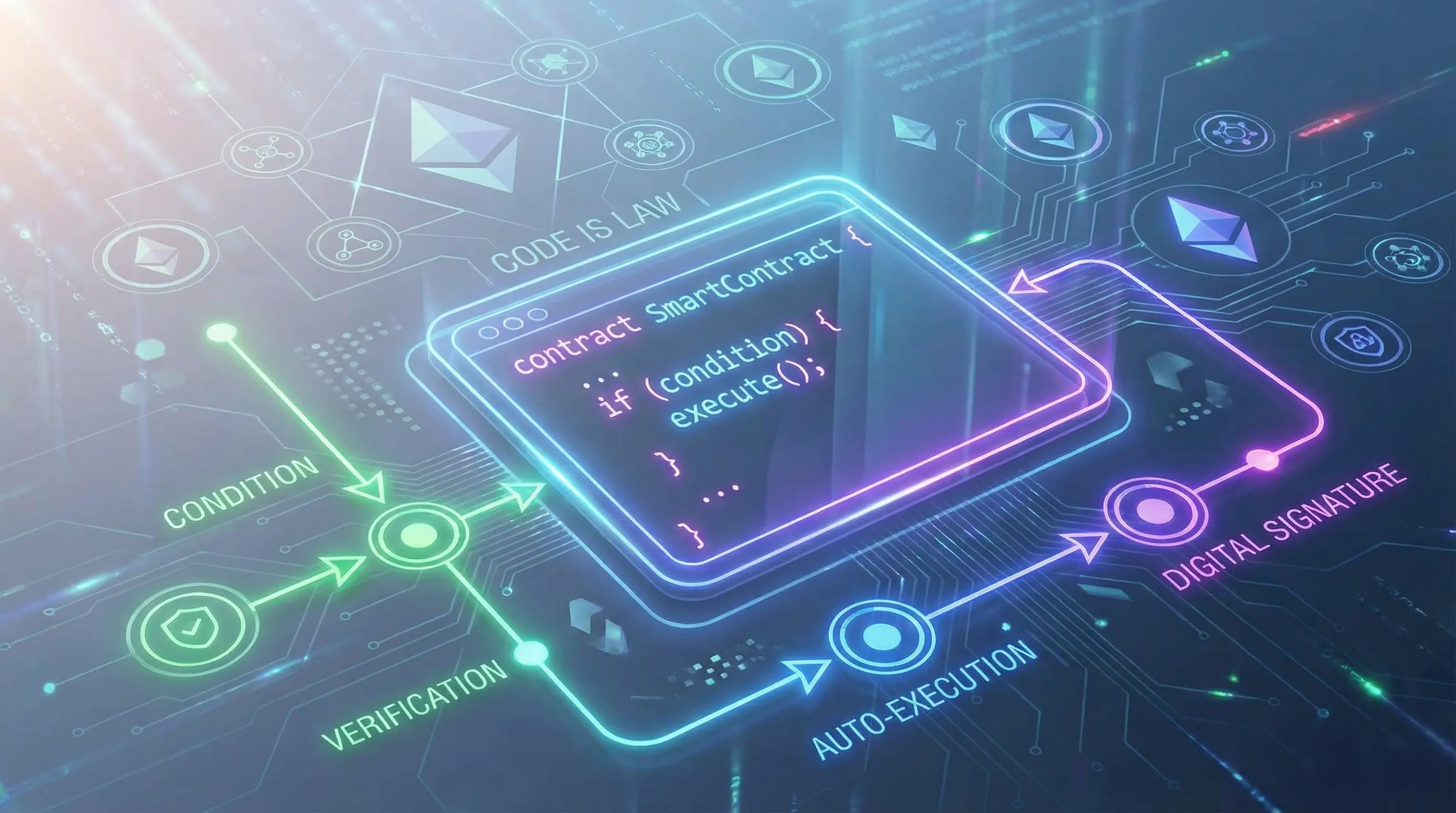
Ethereum's Fee Problem Is Solved — Layer 2 Rollups Already Did It
Remember when sending ETH cost $50? When a simple Uniswap swap burned $120 in gas? When minting an NFT meant paying more in fees than the NFT itself was worth? That era is over, and most people have not fully processed what replaced it.
Ethereum’s average transaction fee in August 2026 sits below $1. Not because the network got cheaper at layer 1 — it did not. The base fee on Ethereum mainnet still fluctuates with demand. The difference is that most transactions no longer happen on mainnet. They happen on Layer 2 rollups, and those rollups have fundamentally changed the economics of using Ethereum.
The Numbers Tell the Story
Layer 2 protocols now process over 80 percent of all Ethereum transactions. Arbitrum, Optimism, Base, zkSync, Linea, and Scroll collectively handle more volume than mainnet itself. The total value locked across L2 protocols exceeded $45 billion in mid-2026, up from roughly $10 billion a year earlier.
Base, Coinbase’s Layer 2 built on the OP Stack, has emerged as the largest rollup by daily transaction count, processing over 10 million transactions per day. For context, Ethereum mainnet handles roughly 1.1 million transactions per day. One rollup is doing ten times the volume of the chain it inherits security from.
The fee reduction is dramatic. A swap on Arbitrum costs fractions of a cent. A transfer on Base costs nothing detectable. Even complex DeFi operations — liquidity provision, yield farming, multi-hop swaps — cost well under a dollar. The experience of using Ethereum has shifted from “check the gas price before every transaction” to “just use it.”
How EIP-4844 Changed Everything
The single most impactful upgrade for L2 fees was EIP-4844, also called Proto-Danksharding, which activated on Ethereum mainnet in March 2024. It introduced a new transaction type called “blobs” — cheap, temporary data storage that rollups use to post their transaction batches to Ethereum.
Before EIP-4844, rollups posted transaction data as calldata, which competed with regular transactions for block space. When mainnet was congested, rollup costs went up too. After EIP-4844, rollup data goes into blobs, which have their own fee market. The result was a 90 percent or greater reduction in the cost of posting data to Ethereum.
This matters because data posting is the largest cost for rollups. The compute happens off-chain, but the data has to be available on-chain so that anyone can verify the rollup’s state transitions. Cheaper data means cheaper transactions, and EIP-4844 made that data dramatically cheaper.
Ethereum’s roadmap now calls for expanding blob space further. The next upgrades will increase the number of blobs per block, continuing to push down rollup costs. The long-term vision is that blob space becomes so cheap that rollup transactions approach zero marginal cost.
The practical impact of EIP-4844 was immediate. Within weeks of activation, major rollups dropped their fees by 90 percent or more. Some rollups temporarily absorbed the cost savings as profit, but competition quickly pushed fees down to near-zero levels. The fee market for L2 transactions is now so competitive that several rollups offer effectively free transfers for standard operations, monetizing instead through value-added services like account abstraction, paymaster integrations, and MEV redistribution.
For developers, the cost reduction changed deployment economics entirely. Smart contract deployment on a rollup, which previously cost hundreds of dollars during peak times, now costs pennies. This lowered the barrier for experimentation — teams can deploy, test, iterate, and redeploy without worrying about gas costs eating into their runway.
The Rollup Landscape in 2026
The L2 ecosystem has分化 into two main architectures: optimistic rollups and zero-knowledge rollups.
Optimistic rollups — Arbitrum, Optimism, Base — assume transactions are valid by default and only run computation if someone challenges them via fraud proofs. They are simpler to build, cheaper to operate, and currently dominate by volume. The OP Stack, Optimism’s shared rollup framework, powers Base, Worldcoin’s World Chain, and dozens of other chains. It has become the de facto standard for launching an Ethereum-compatible L2.
Zero-knowledge rollups — zkSync, StarkNet, Linea — use cryptographic proofs to validate every transaction. They offer faster finality (transactions are confirmed as soon as the proof verifies, without a challenge period) and stronger security guarantees. The tradeoff is higher computational cost for proof generation, though that cost has dropped significantly as proving systems improve.
The practical difference for users is minimal. Both types of rollups deliver sub-cent transactions and near-instant confirmations. The architectural differences matter more for developers choosing where to deploy and for the long-term security properties of the chains.
What Cheap Fees Actually Enable
The obvious consequence of cheap fees is that more people can use Ethereum. But the less obvious consequence is more interesting: cheap fees change what is possible to build.
Micro-transactions become viable when fees are negligible. Paying fractions of a cent per transaction opens up use cases like per-second streaming payments, micropayments for content, and real-time gaming interactions that would be economically impossible at $1 per transaction.
Automated strategies that rebalance portfolios, harvest yield, or execute arbitrage across protocols become practical when the gas cost of each rebalance is essentially zero. The composability of DeFi — protocols calling other protocols in a single transaction — is amplified when the cost of composing drops.
NFT minting and trading, which was throttled by high fees in 2021-2022, has resurged on L2s. Dynamic NFTs that change based on external data, soulbound tokens for identity, and on-chain gaming assets all benefit from the ability to write to the blockchain cheaply.
The Interoperability Gap
The one area where L2s still fall short is cross-rollup interoperability. Moving assets from Arbitrum to Base requires a bridge, which adds time, cost, and complexity. Each rollup is its own execution environment, and assets do not move freely between them.
Several protocols are working on this. Across, Hyperlane, and the Interop Working Group are building cross-rollup messaging standards. The goal is seamless asset transfers and even cross-rollup contract calls, so that a user on Arbitrum can interact with a protocol on Base without manually bridging.
Ethereum’s roadmap includes native rollup interoperability at the protocol level, but that is years away. In the meantime, the fragmented L2 landscape is the cost of scalability. Users and developers have to choose which rollup to deploy on, and assets are siloed across different chains.
The user experience of bridging has improved, but it remains friction-heavy compared to a single-chain world. Bridging from Arbitrum to Base takes a few minutes and costs a small fee. Bridging from an optimistic rollup to a zk-rollup can take days if you rely on the optimistic challenge period, though fast liquidity providers like Across have made this largely invisible to end users by fronting the funds and claiming the assets on the other side.
The fragmentation also creates liquidity silos. A token might have deep liquidity on Arbitrum but almost none on Linea, even though both are Ethereum rollups. This forces protocols to choose where to concentrate their liquidity and users to accept worse execution when moving between chains. Solving this requires either protocol-level interoperability or a market-making layer that operates across rollups — and both approaches are under active development.
The Fee Reduction Is Not the Endgame
Lower fees are a means, not an end. The point of cheap transactions is not to make Ethereum cheaper to use. The point is to make Ethereum useful for things that were previously impossible.
Consider what changes when transaction costs approach zero. In 2022, a DeFi protocol that rebalanced its liquidity pools every hour would spend more on gas than most protocols generated in revenue. Today, rebalancing every minute is economically viable. The frequency of on-chain operations is no longer constrained by cost, but by the speed at which blockspace can be consumed — and on rollups, that constraint is generous.
The gaming industry has noticed. On-chain games that record every player action — movement, inventory changes, combat results — on a blockchain were always technically possible but economically absurd at $1 per transaction. On Base or Arbitrum, those same games run at full fidelity. Several blockchain games launched in 2026 specifically because L2 fees made their design viable.
The transition from “Ethereum is too expensive” to “Ethereum is effectively free” happened faster than most people expected. The question now is what gets built on top of that foundation. The fee problem is solved. The adoption problem is next.
The next twelve months will determine whether cheap fees translate into meaningful usage or remain merely a technical achievement that very few people actually notice today. The infrastructure is ready and waiting. The question is whether the applications are — and whether users will follow once they realize the cost barrier they remember from 2022 no longer exists.
Related reads: The CLARITY Act: Why US Crypto Regulation Is Still Stuck in August 2026 | HSBC and Standard Chartered Execute First Live Tokenized Deposit on Swift’s Ledger | Stablecoins Are Quietly Becoming the Payment Rails of the Global South