
Android XR Glasses Arrive as Meta Rethinks Standalone VR
XREAL Aura debuts as the first Android XR glasses while Meta slows Quest VR updates, shifting spatial computing toward lightweight split-compute wearables.
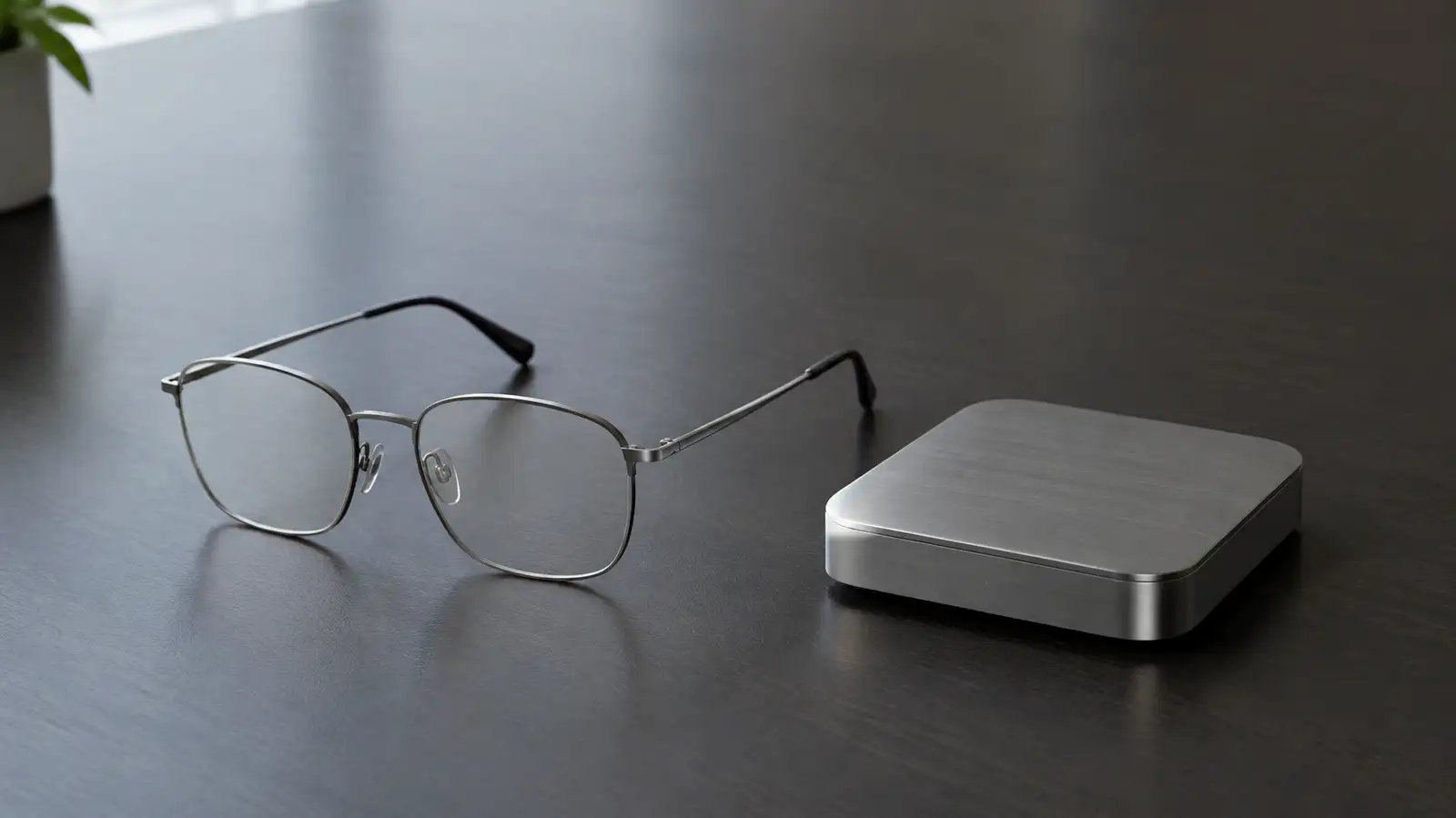
The spatial computing sector reached a distinct inflection point during the opening week of November 2026. The arrival of pre-orders for the XREAL Aura marked the debut of commercial Android XR glasses, introducing Google’s spatial operating system into consumer hardware through a lightweight optical see-through design. Simultaneously, Meta Platforms published third-quarter financial results revealing that Reality Labs generated $443 million in revenue, representing a 6% year-over-year decline. During the accompanying earnings call, Meta Chief Financial Officer Susan Li attributed the dip to softening demand for Meta Quest virtual reality headsets, a contraction softened by rising revenue from smart glasses.
These parallel developments signal a clear hardware realignment across the extended reality industry. For five years, hardware manufacturers prioritized standalone virtual reality helmets that placed batteries, cooling fans, and high-performance chipsets directly on the user’s face. The market response documented in recent retail tracking and quarterly filings indicates that consumer enthusiasm for heavy, enclosed headsets has cooled. As Meta Chief Executive Officer Mark Zuckerberg confirmed to investors that the company will now withhold future consumer VR headset generations until “major breakthroughs” materialize, Google, Qualcomm, and hardware partners like XREAL are advancing an alternative architecture: optical glasses weighing less than 100 grams tethered to a pocket compute puck.
XREAL Aura and the Debut of Android XR Glasses
The retail launch of the XREAL Aura on October 28, 2026, established the first hardware deployment of Google’s long-anticipated Android XR platform. Built in close engineering collaboration with Google and Qualcomm, the device departs from the bulk of traditional mixed-reality headsets by adopting an all-in-two form factor. The head-worn glasses weigh 95 grams, distributing mechanical load across standard titanium-reinforced spectacle frames without the heavy facial padding and counterbalanced straps required by virtual reality helmets.
Optical performance is delivered by dual Sony Micro-OLED displays capable of outputting a 1920 × 1200 resolution per eye, yielding an angular resolution of 32 pixels per degree (PPD). The optical engine produces a 70-degree diagonal field of view, supported by maximum brightness levels reaching 1,050 nits. To accommodate shifting ambient lighting environments without requiring clip-on plastic shades, the outer lenses incorporate five electronic tint levels driven by an integrated electrochromic dimming film. Display calibration achieves 100% sRGB color gamut coverage with a factory-certified delta E value below 3, while refresh rates scale dynamically up to 120Hz to suppress visual fatigue during prolonged text interaction.
Processing duties are handled entirely off-face by an external compute puck connected via a high-bandwidth USB-C braided cable. The puck houses Qualcomm’s Snapdragon Reality Elite platform, which features a dedicated neural processing unit delivering 48 TOPS of on-device artificial intelligence inference. XREAL pairs the Qualcomm platform with a proprietary X1S companion co-processor dedicated to spatial sensor fusion and six-degrees-of-freedom tracking, keeping motion-to-photon latency near 3 milliseconds. Audio is channeled through temple-mounted open-ear drivers tuned in partnership with Bose.
Retail pricing reflects a competitive grab for early market share. Through an introductory promotion running across the United States, Canada, South Korea, and Japan, the base model containing 12GB of RAM and 256GB of storage lists at $1,099, before stepping up to its regular $1,279 MSRP. An elevated tier providing 16GB of RAM and 512GB of internal storage sells for $1,299 during the launch period, against a standard list price of $1,499. Detail on specifications and regional availability is documented in reporting from XREAL’s PR Newswire announcement and official product details on the XREAL Aura product page.
Google Software Strategy: Android XR and Gemini Multimodal AI
The primary significance of the XREAL Aura lies in its operating software. Android XR represents Google’s attempt to replicate the open platform economics of mobile Android within spatial computing, challenging both Apple’s proprietary visionOS and Meta’s Horizon OS. To avoid the software drought that often stalls new computing hardware, Android XR provides native backward compatibility with existing 2D mobile applications in the Google Play Store.
Within the Android XR interface, standard Android productivity tools open as floating, resizable spatial windows that users can pin to physical surfaces or position in circular desktop arrangements. Alongside the standard Play Store library, Google deployed more than 150 dedicated, made-for-XR applications at launch. Core Google services have been re-engineered for spatial interaction: Google Maps features 3D aerial building views that expand into tabletop architectural projections, Google Photos offers volumetric reconstruction of spatial video recordings, and YouTube supports multi-window split streams where statistical data boards run alongside primary video feeds.
Artificial intelligence serves as the primary navigation layer throughout the operating system. Google embedded multimodal Gemini models directly into the Android XR system shell. Through dual outward-facing tracking cameras and array microphones integrated into the Aura’s frame, Gemini observes the user’s surrounding visual environment and processes contextual queries. A wearer can look at a mechanical engine component, an unfamiliar circuit schematic, or a printed foreign document and ask for verbal troubleshooting assistance, system diagnostics, or real-time translated text overlays. Because processing is divided between the puck’s 48 TOPS NPU and cloud endpoints, these contextual lookups function without noticeable frame-rate degradation on the displays.
Meta Reality Labs Q3 Earnings and the End of Incremental VR
While Google and XREAL entered the retail market with lightweight hardware, Meta Platforms presented a financial picture that explains its evolving roadmap. According to Meta’s official third-quarter 2026 earnings release hosted on the Meta Investor Relations Portal, the Reality Labs division booked $443 million in revenue for the quarter ending September 30, falling 6% below the same period in 2025. Over the same three-month span, the division posted an operating loss of $4.13 billion, bringing cumulative losses across the division to substantial historical highs even as Meta’s consolidated company revenue climbed 26% to $64.60 billion.
During the earnings conference call, CFO Susan Li provided granular color on the internal revenue split. The year-over-year revenue drop stemmed directly from declining sales volume for Meta Quest virtual reality headsets. While hardware sales for Quest devices waned across both direct-to-consumer channels and enterprise commercial distributors, revenue generated by smart glasses, specifically the Ray-Ban Meta product family, expanded substantially. The growing demand for lightweight audio-and-camera frames partially cushioned the decline in VR headset shipments, presenting corporate leadership with unambiguous evidence regarding consumer form-factor preference.
Responding to these financial realities, CEO Mark Zuckerberg outlined a formal change in hardware release cadence. Meta had previously pursued an aggressive cycle of regular consumer VR updates, releasing successive iterations of the Quest line to maintain retail momentum. Zuckerberg stated that the company will step back from routine generational releases. Future standalone VR headsets will only be greenlit for commercial production when engineering teams deliver “major breakthroughs” in optical compactness, display clarity, and thermal dissipation.
Instead of pushing iterative updates to 500-gram plastic visors, Meta has diverted substantial capital toward projects like the Muse personal AI ecosystem and lightweight spatial hardware. As explored in our earlier coverage of the Meta VR Glasses: $1,299, 100 Grams, a Puck, Meta’s upcoming flagship hardware scheduled for Spring 2027 adopts the identical split-compute philosophy pioneered by the Aura, targeting a 100-gram frame powered by a pocket processing unit. Additional analysis on this corporate shift can be found in Road to VR.
The Split-Compute Consensus: Physics, Weight, and Ergonomics
The alignment between Google’s Android XR rollout and Meta’s revised hardware timeline underscores a broader physical realization across consumer electronics: standalone spatial computing headsets have reached the ergonomic limits imposed by battery chemistry and passive cooling.
When an engineer places an eight-core mobile processor, high-capacity lithium pouch cells, copper heat sinks, and active exhaust fans onto a headset chassis, the resulting assembly inevitably exceeds 450 to 500 grams. Even with counterbalanced rear battery straps, this mass sits perched on the wearer’s nasal bridge and cheekbones. Biomechanical studies and customer satisfaction metrics have consistently pointed out that wear sessions for 500-gram visors drop sharply after 30 to 45 minutes, with users reporting neck fatigue, facial red marks, and thermal discomfort from enclosed display panels.
The split-compute architecture circumvents these physical constraints by relocating thermal mass and electrical storage into a pocket-sized accessory. A 95-gram pair of glasses generates negligible torque on the wearer’s skull, allowing optical frames to rest naturally on the ears and nose like standard ophthalmic eyewear. The pocket puck acts as an unconstrained thermal envelope, allowing mobile chipsets to sustain higher clock speeds under active cooling without transferring warmth to the user’s face.
This ergonomic divide has played out clearly in daily enterprise deployments. As examined in our previous report on The Metaverse Isn’t Dead — It Just Moved to the Office, corporate workers assigned virtual reality headsets for remote collaboration frequently abandoned the hardware due to social awkwardness and setup friction. Optical see-through glasses, by contrast, preserve natural eye contact across open-plan offices and allow professionals to glance up from floating spreadsheets to speak with colleagues without toggling low-resolution camera passthrough feeds.
Platform Wars: Android XR, Horizon OS, and visionOS
The emergence of Android XR establishes three distinct competing philosophies for spatial computing software, echoing the mobile platform dynamics of the past fifteen years.
+------------------+-----------------------+------------------------+----------------------+
| Dimension        | Google Android XR     | Meta Horizon OS        | Apple visionOS       |
+------------------+-----------------------+------------------------+----------------------+
| Initial Form     | Split-Compute Glasses | Standalone VR / Puck   | Standalone Visor     |
| Average Weight   | 95g (Glasses)         | 100g (2027 Glasses)    | 600g+ (Vision Pro)   |
| App Ecosystem    | Google Play Store     | Horizon Store          | Apple App Store      |
| Core Interaction | Multimodal Gemini AI  | Meta AI & Controllers  | Eye Tracking/Pinch   |
| Distribution     | Open Multi-OEM        | Semi-Open Licensing    | Closed Proprietary   |
+------------------+-----------------------+------------------------+----------------------+
Google’s strategy relies on open hardware licensing. By pairing Android XR with Qualcomm’s reference silicon, Google provides hardware manufacturers like XREAL, Samsung, and potential future entrants with a turnkey spatial stack. This enables hardware specialists to focus on optical waveguide yields and industrial design while Google manages runtime tracking algorithms, developer APIs, and store infrastructure. The presence of the Google Play Store gives Android XR an immediate advantage in software utility, as millions of developers do not need to rewrite their codebases to have their tools visible within spatial viewports.
Meta has pursued a mixed approach with Horizon OS, opening its software platform to select third-party hardware partners such as ASUS ROG and Lenovo while retaining tight control over its core gaming and social graph assets. However, Meta’s historical focus on immersive virtual reality titles means that its application catalog remains heavily weighted toward interactive games, fitness programs, and social chat spaces, leaving a noticeable gap in standard enterprise productivity software.
Apple continues to operate at the ultra-premium tier with visionOS and the Apple Vision Pro. While Apple’s custom silicon and micro-OLED passthrough clarity lead the industry in raw visual fidelity, the company’s commitment to self-contained, sensor-laden helmets has restricted market penetration. As detailed in our analysis of The XR Hardware Shakeup: Meta Charges Forward as Apple Retreats, the steep $3,499 price point and substantial physical weight have limited Vision Pro primarily to institutional labs, design studios, and enterprise visualization deployments.
The Economic Realities of Spatial Wearables
From an editorial perspective, our take on this market transition is that the industry has finally reconciled its product design with real human habits. For nearly a decade, venture capital and corporate marketing divisions attempted to persuade mainstream consumers to isolate themselves inside opaque virtual reality enclosures under the promise of a digital metaverse. The financial contraction in Meta’s Reality Labs demonstrates that consumer demand for total visual isolation has hit a ceiling. Virtual reality will continue to thrive as a dedicated medium for simulation training, competitive gaming, and therapeutic medical treatments, but it is unlikely to become the pervasive general-purpose computing platform envisioned in early corporate presentations.
The rise of split-compute smart glasses introduces a more viable replacement cycle for consumer electronics. When computing hardware is separated from optics, device longevity changes. Optical lenses, titanium frames, and micro-OLED panels can remain relevant for four or five years, functioning essentially as high-resolution wearable monitors. Meanwhile, consumers can upgrade the pocket compute module every two or three years to gain faster NPU throughput, larger battery capacity, or upgraded 5G connectivity without discarding their expensive prescription-ground frames.
This modular separation also lowers financial risk for hardware manufacturers. Producing a sealed standalone headset requires balancing battery safety certifications, high-density motherboard layouts, optical lens alignment, and ergonomic adjustability into a single monolithic shell, creating substantial scrap rates during manufacturing. Separating the system into two distinct components allows manufacturers to use standardized smartphone-adjacent assembly lines for the puck while concentrating specialized optical clean-room processes entirely on the glasses.
Consumer adoption will still face friction points over the coming quarters. While 95 grams represents a dramatic reduction from 500-gram visors, it remains twice the weight of standard acetate reading glasses. The physical tether connecting the frame to the pocket puck creates an aesthetic hurdle for casual public use, and outdoor display visibility under direct sunlight remains challenging despite 1,050-nit peak brightness and electrochromic lenses. Nevertheless, the commercial arrival of Android XR through the XREAL Aura, coupled with Meta’s strategic decision to pause incremental VR updates, confirms that the next phase of spatial computing will be worn as glasses, not strapped on as helmets.
Disclaimer: This article is for informational purposes only and does not constitute financial or investment advice.