AI Just Solved a Math Problem That Stumped Humans for Years — What Comes Next

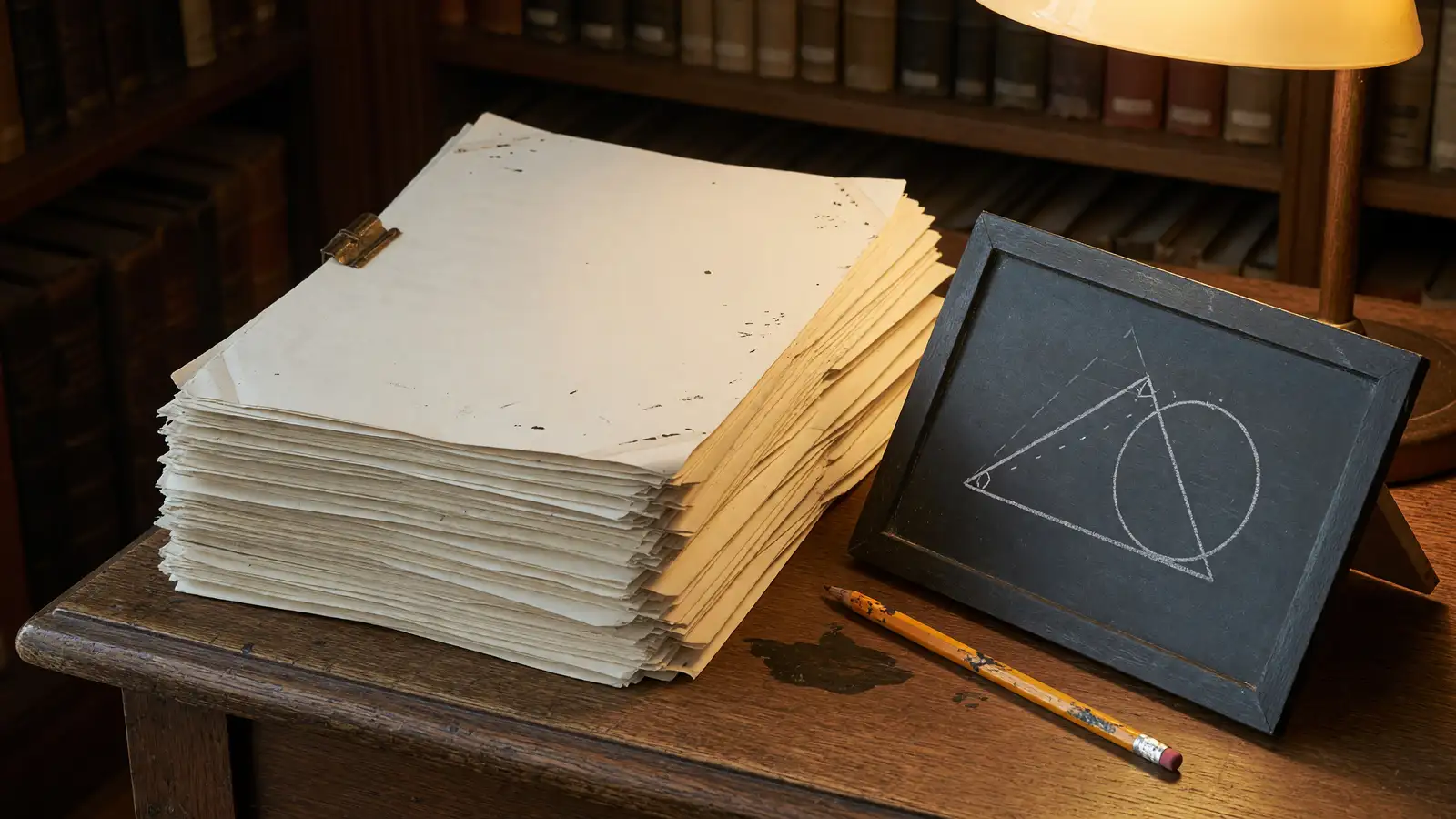
Sidharth Hariharan, a graduate student in mathematics at Carnegie Mellon University, got news earlier this year that would have been unimaginable a decade ago. A team he had been working with received word that an artificial intelligence system had completed a proof they’d been building toward for years — and it did so in just five days.
The system, called Gauss, was built by a California startup named Math, Inc. It had taken the team’s road map for formalizing Maryna Viazovska’s result on the densest possible arrangement of eight-dimensional spheres — the sphere-packing problem — and finished the job in less time than it takes most people to clear their inbox (The New York Times).
The Arms Race No One Asked For
Gauss’s achievement didn’t happen in a vacuum. Technology companies have been pouring billions into reasoning systems capable of tackling open math problems — a field widely considered the ultimate benchmark of machine intelligence. What started as an academic curiosity has become an arms race, with AI competitors using mathematical breakthroughs as proof points for their systems’ capabilities.
The shift is happening fast. Where AI once embarrassed itself by failing to count the letters in simple words (ChatGPT’s infamous struggle with the letter R in “strawberry” became a meme), reasoning systems are now closing gaps in topology, number theory, and abstract algebra. The same architecture that couldn’t handle elementary spelling is now producing formal mathematical proofs.
What This Means for Young Mathematicians
Hariharan’s situation is becoming less unique by the month. Graduate students and postdoctoral researchers who once built their careers by solving increasingly complex math problems are finding themselves competing against systems that never sleep, never lose focus, and never need grant funding.
The question hanging over departments worldwide isn’t whether AI will replace mathematicians — it’s what mathematicians will do once the mechanical work of proof-building gets automated. The creative act of identifying which problems are worth solving, and what new questions those solutions open up, remains human work. But the grueling middle stages of formal verification — the years-long slog of checking every logical step — is exactly where machine reasoning shines.
Beyond Mathematics: AI in Auto Design and Conservation
The sphere-packing story is just one data point in a broader pattern. This week, Automotive News reported that AI is set to redefine car design and manufacturing, with implications for workforce planning that the industry is only beginning to grapple with (Automotive News). Meanwhile, The Washington Post explored how AI can revolutionize conservation efforts — from tracking endangered species to modeling ecosystem collapse scenarios (Washington Post).
The throughline is clear: AI is moving from the realm of pattern recognition and text generation into domains that require genuine reasoning, planning, and problem-solving.
The Billion-Dollar Challenge to NVIDIA
Forbes reported on a startup challenging NVIDIA’s dominance in AI computing hardware — a development that could reshape the economics of training large reasoning models (Forbes). Competition in chip design matters because the cost of training reasoning systems like Gauss directly affects who can build them. If hardware costs drop, expect more players in the mathematical AI space — and more stories like Hariharan’s.
The Real Question Isn’t “Can AI Do Math”
It’s “What Do We Do About It.”
Universities are already adjusting their curricula. Some programs are shifting emphasis from proof construction to problem selection — teaching students to identify interesting questions rather than grind through the verification steps. Others are doubling down on the creative, intuitive aspects of mathematical thinking that AI still struggles with.
For now, the relationship between human mathematicians and AI systems is more symbiotic than adversarial. Gauss didn’t discover the sphere-packing solution on its own — it completed a proof that human researchers had already outlined. The roadmap was human; the execution was machine. Whether that partnership holds or tips toward full automation is one of the most consequential questions in science today.
Related Articles
76% Stuck Their Agents in Pilot. The Tax Is Human Hours

Microsoft's Copilot Super App Meters the Agents