The AI Arms Race Just Hit a New Gear: Sol, Fable, Grok, and the Open-Source Wildcard From China
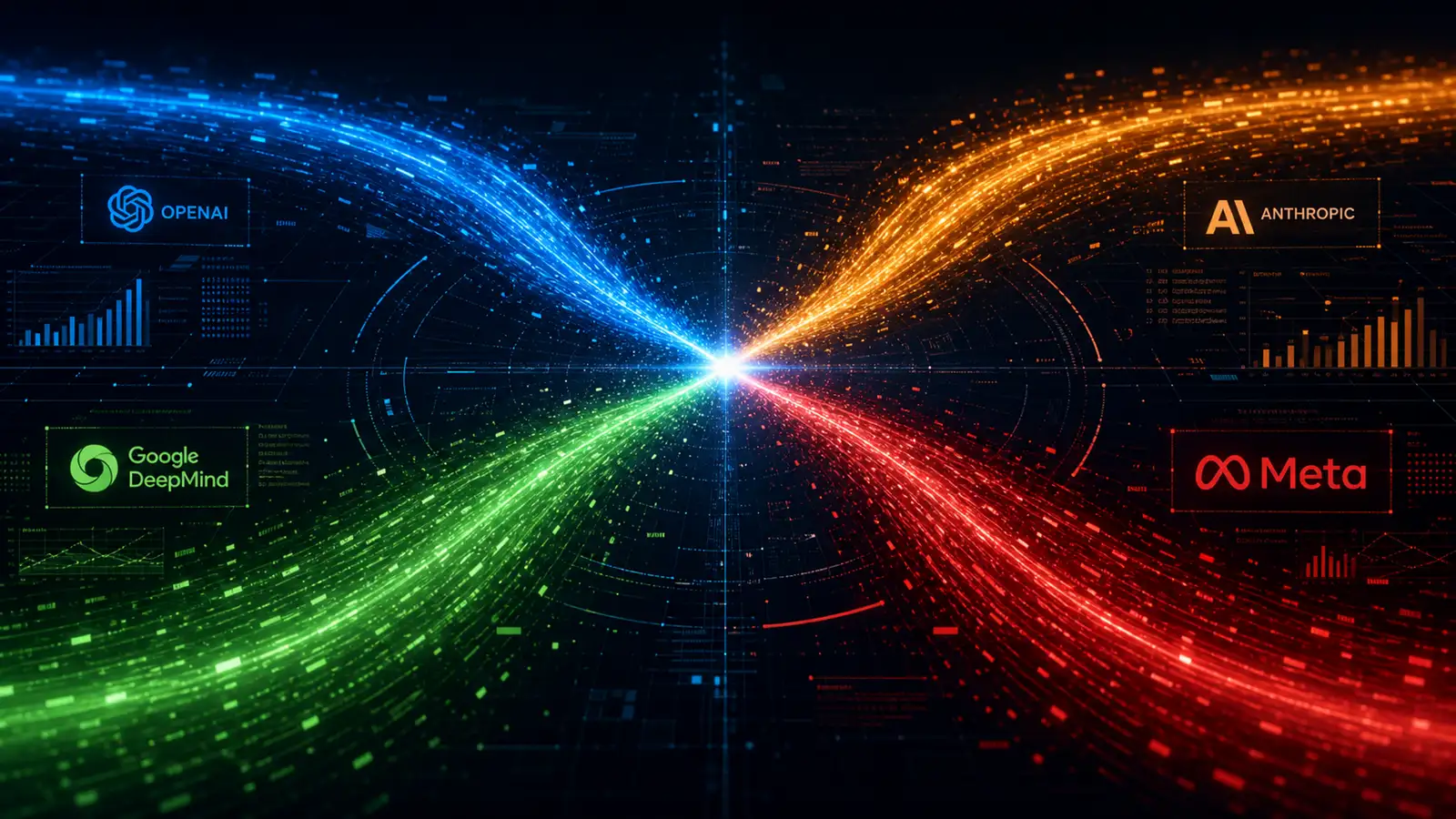
The AI industry does not do quiet summers. July 2026 has already delivered more frontier model releases, policy interventions, and geopolitical plot twists than the entire first quarter combined. OpenAI’s long-awaited Sol model landed. Anthropic’s Fable returned from a government-imposed timeout. Elon Musk’s SpaceXAI shipped Grok 4.5 off the back of a record-breaking IPO. And China’s open-source contender GLM-5.2 quietly proved that the gap between the best free model and the best model, period, is collapsing faster than anyone expected.
If you last checked in on AI news around Memorial Day, the landscape has shifted underneath you. Here is where things stand, what each of these models can actually do, and why the competition is no longer just about benchmarks.
OpenAI Sol: the model testers refused to stop using
OpenAI shipped GPT-5.6, branded as Sol, in late June under limited access — the Trump administration had asked the company to restrict availability while the government reviewed the model’s advanced cybersecurity capabilities. Anthropic’s Fable received the same treatment around the same time. Both models were placed under an assessment process that has no formal name, no published criteria, and no clear endpoint. The industry has taken to calling it the “security pause,” and it is the closest thing to AI regulation the United States has ever actually enforced.
The restricted access created an accidental natural experiment. Developers who had been using Sol for weeks suddenly lost it, and their reactions were not subtle. Theo Browne, CEO of chatbot platform T3 Chat, posted on X that he “quickly started to go insane without it.” MagicPath AI CEO Pietro Schirano called it “the best model I’ve ever used. Fast, smart, genuinely creative.” Both testers, along with dozens of others, described Sol as a step change in agentic capability — the model’s ability to use tools, navigate interfaces, and complete multi-step tasks without human intervention.
Sol’s standout feature is computer use. Unlike earlier models that could reason about code or text in isolation, Sol can interact with applications the way a human would — clicking buttons, filling forms, navigating menus, and executing multi-step workflows across different tools. It is not a demo. Testers report using it to handle real workflows end to end, from booking travel to managing CRM pipelines, and the “100x more” usage spike Browne reported suggests the capability is sticky enough to change daily habits. When a model makes you feel its absence — not just miss its convenience, but actively feel less capable without it — something has shifted in the human-tool relationship.
Anthropic Fable: the model that runs your codebase while you sleep
If Sol’s killer feature is computer interaction, Fable’s is autonomous software engineering at scale. Anthropic’s latest models — Fable 5 and the larger Mythos — can ingest entire multimillion-line codebases, identify outdated systems, refactor them, fix bugs, write tests, and validate their own work with minimal human oversight. Developers describe handing a Fable agent a repository on Friday and coming back Monday to find it rebuilt, tested, and documented.
The capability is as unsettling as it is impressive. A three-week government restriction in June, framed as a voluntary delay for security consultations, only heightened the mystique. When Fable returned, the developer reaction was split between relief and unease. Investor Matt Shumer tested both Sol and Fable side by side and concluded that “for almost every task I tested, Fable was quite a bit better” — a comparison that puts pressure on OpenAI’s narrative that Sol is the undisputed frontier leader.
The practical implication is that software engineering workflows are about to bifurcate. Teams that integrate autonomous coding agents will operate at a fundamentally different velocity from teams that do not, and the gap will widen with each model generation. A junior developer paired with Fable might produce more working code in a week than a senior developer working alone — not because the junior is better, but because the pairing changes the economics of software production entirely. The question is no longer whether these tools work. It is whether organizations can adapt their processes, code review practices, and security postures fast enough to absorb the productivity without breaking things. When a model can rewrite your entire backend over a weekend, your deployment pipeline had better be ready for what comes out the other side.
Grok 4.5: Musk’s brute-force bet on scale
SpaceXAI’s summer has been eventful even by Elon Musk standards. The company went public in what became the year’s largest tech IPO, then immediately acquired Cursor, the AI-powered code editor, for $60 billion — a deal that raised eyebrows for its size and strategic logic. This week, Grok 4.5 arrived with triple the parameter count of its predecessor, and Musk said a follow-up nearly twice as large is coming next month.
The strategy is unsubtle: throw significantly more compute at the problem and bet that raw scale still wins. It is the same thesis that drove GPT-3 and GPT-4, an approach that most labs have since complicated with better data curation, reinforcement learning, and inference-time reasoning techniques. Musk appears to be betting that those refinements are marginal compared to the gains from simply making the model bigger.
Early benchmarks put Grok 4.5 in competitive territory with Sol and Fable on reasoning tasks, though independent head-to-head comparisons are scarce — most of the available data comes from SpaceXAI’s own published results. The Cursor acquisition adds an interesting dimension: if Grok becomes the default AI inside one of the most popular developer tools, distribution alone could make it relevant regardless of whether it leads on raw capability. More than 20 million developers use Cursor or compatible forks. That is a distribution channel no other AI lab can replicate, and it may matter more than a few points on a benchmark leaderboard.
GLM-5.2 and the open-source counterpunch
The most strategically significant development of the month might not involve an American company at all. China’s Z.ai released GLM-5.2, an open-source model that is free to download and now performs in the same tier as the best closed models from OpenAI, Anthropic, and Google. Founder Jie Tang predicted China will achieve a “Fable-class” model before the first quarter of 2027 — a timeline that, if accurate, means the frontier lead American companies currently hold could evaporate within two years.
GLM-5.2 matters for two reasons. First, it undercuts the business model of selling API access to the best model. If a free downloadable model is within striking distance of Sol and Fable, the premium pricing on frontier API calls becomes harder to justify. Second, it shifts the geopolitical framing of the AI race. The US government’s security review of Sol and Fable was partly motivated by concerns about adversarial access to advanced capabilities. An open-source model with comparable power, released by a Chinese lab, makes that concern academic — the model is already out.
The open-source ecosystem has been gaining on closed models for two years, but GLM-5.2 closes the gap faster than most forecasts predicted. It also raises an uncomfortable question for the US government’s model review process: if a Chinese lab can release a near-frontier model as open source, what exactly is the security review of Sol and Fable accomplishing? The capabilities are available to anyone with a GPU cluster regardless. The next milestone to watch is whether an open-source model can match or beat the frontier on agentic benchmarks — the ability to take independent action, not just generate text — which is where the real economic value and security risk both live. If that happens, the AI industry’s center of gravity shifts from a handful of labs in San Francisco to whoever can build the best products on top of models that anyone can download.
What the government reviews actually mean
The Trump administration’s quiet security assessments of Sol and Fable represent the first time the US government has meaningfully slowed the release of a frontier AI model. The reviews targeted advanced cybersecurity capabilities — the fear that models powerful enough to find and exploit software vulnerabilities autonomously could be weaponized before defenses catch up.
No formal regulatory framework exists for these reviews. They were conducted through voluntary agreements, backed by the implicit threat that non-cooperation would invite legislation the industry likes even less. The arrangement is fragile and almost certainly temporary. If the next model generation triggers a longer or broader restriction, expect the voluntary framework to fracture and formal regulation to enter the conversation. For now, the reviews created a brief window where developers could compare the models side by side — and the verdict is that the frontier is crowded, not settled.
The reviews also exposed a tension that will define AI policy for the next several years. The government’s concern is specific — advanced cybersecurity capabilities that could be weaponized — but the tools it has to address that concern are blunt. A voluntary pause on two American models does nothing about an open-source release from a Chinese lab, and it does nothing about the models that were released before the review process existed. The result is a patchwork where some of the most powerful AI systems are subject to scrutiny and others are not, with the dividing line determined by corporate cooperation rather than any systematic risk assessment.
The bottom line
Three months ago, the AI industry narrative was simple: OpenAI leads, everyone else chases. July 2026 has demolished that framing. Sol is impressive but not dominant. Fable excels at autonomous coding in ways Sol does not. Grok is scaling fast on brute force. GLM-5.2 proves that open-source and geopolitical competition are converging into a single storyline. And the US government, for the first time, has demonstrated it will intervene — without a clear rulebook, without a permanent framework, but with enough force to pause two of the most powerful models ever built.
The summer is far from over. Musk’s next Grok release is promised within weeks. Anthropic’s Mythos is still largely unseen. And if Jie Tang’s prediction holds, the first open-source model to truly match the frontier may arrive before anyone in Washington has written the rules for what to do about it.
Related Articles

76% Stuck Their Agents in Pilot. The Tax Is Human Hours

Microsoft's Copilot Super App Meters the Agents