Stablecoins Are Quietly Becoming the Payment Rails of the Global South
If you follow crypto primarily through the lens of trading, DeFi yields, or NFT speculation, you might think stablecoins are just another speculative instrument with a price pegged to a dollar. That framing misses the bigger story.
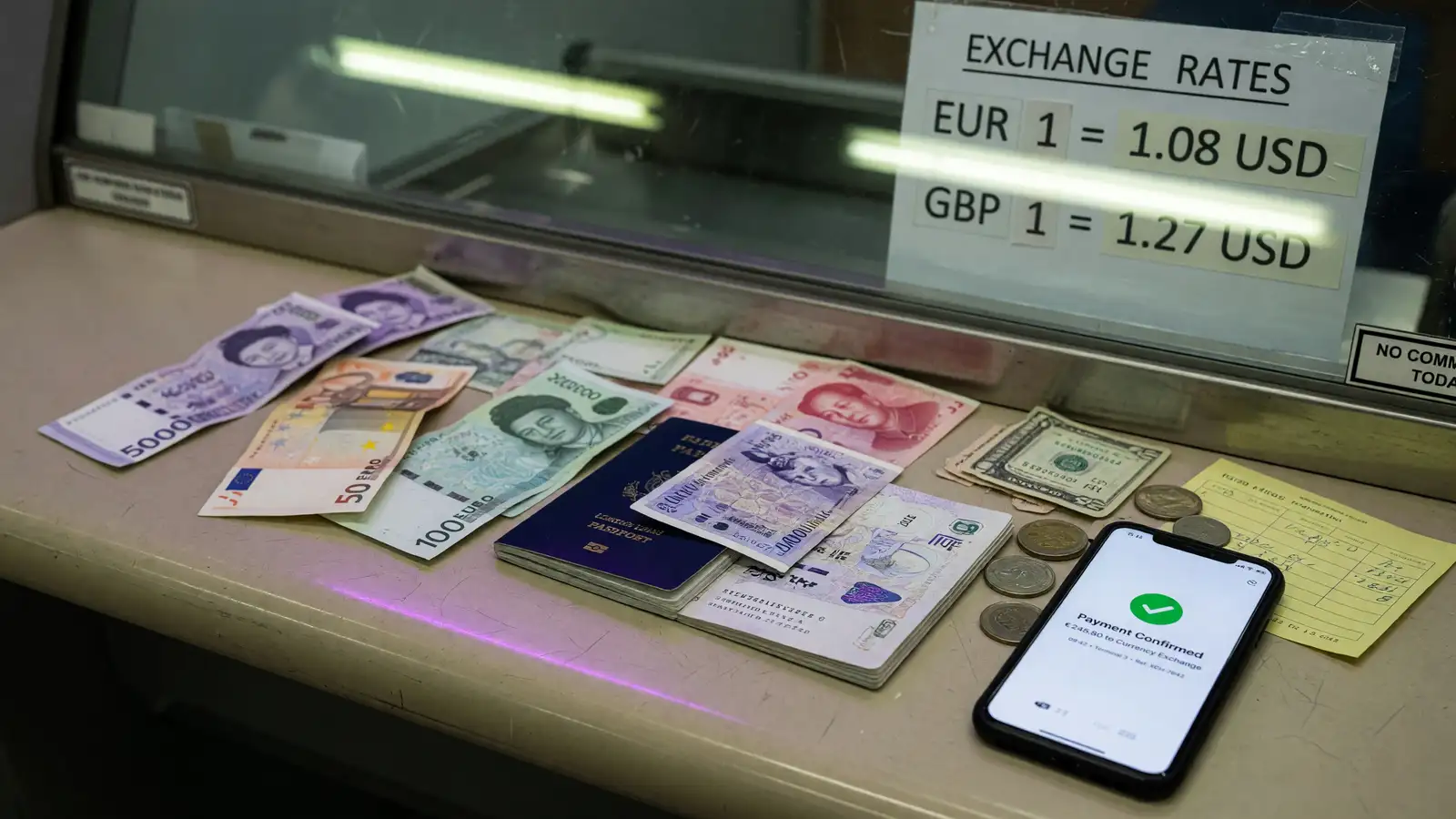
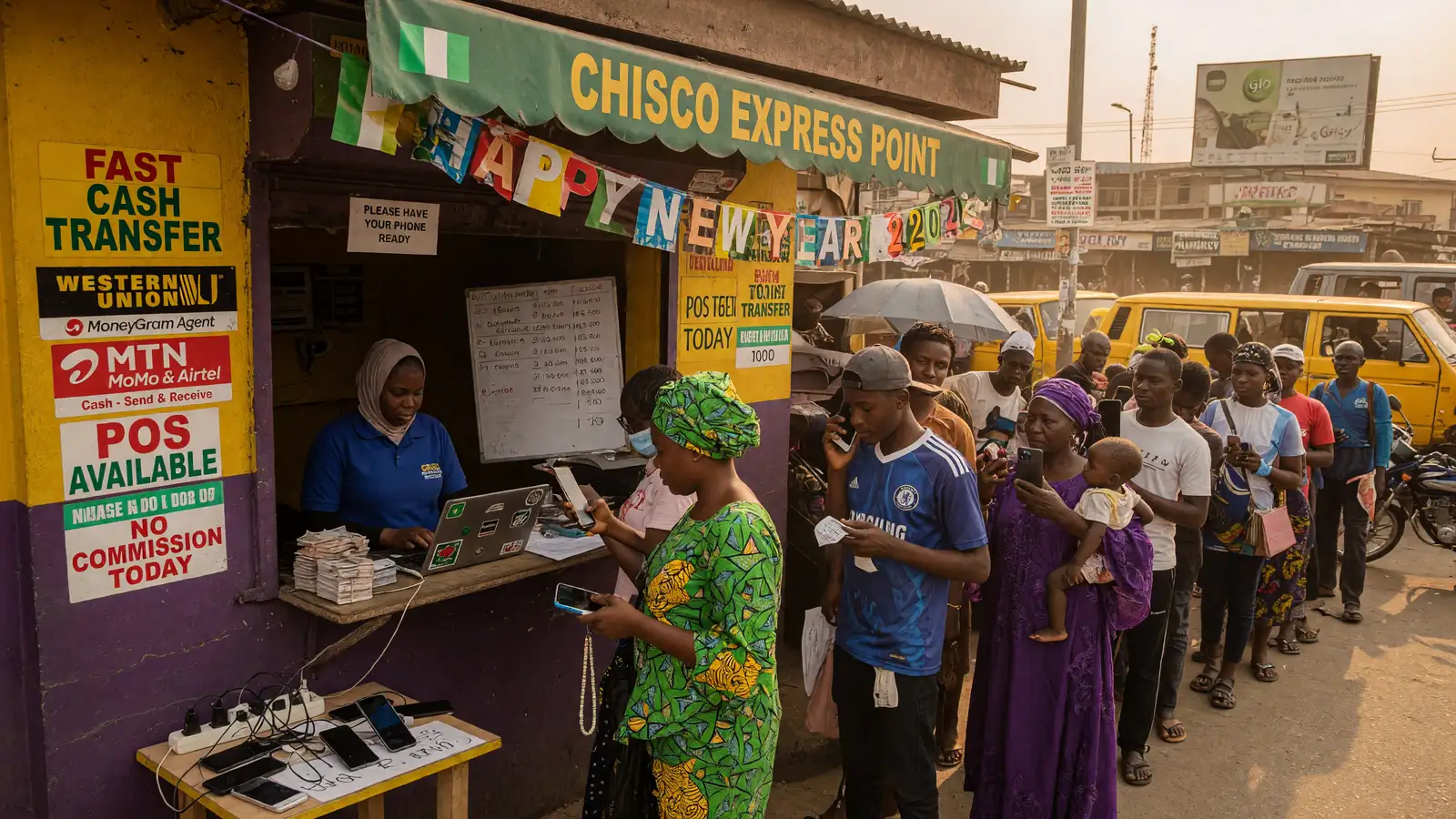
Stablecoins are becoming actual payment infrastructure, and the places where this matters most aren’t Wall Street trading desks or Silicon Valley startups. They’re remittance corridors between the US and Nigeria, between the UK and the Philippines, between Gulf states and South Asian worker communities. In these markets, stablecoins solve a problem that traditional banking has failed to address for decades: moving money internationally without losing 5 to 8 percent to fees and waiting three to five business days for settlement.
The remittance problem that won’t go away
The World Bank estimates that global remittance flows to low- and middle-income countries exceeded $650 billion in 2025. The average cost of sending $200 through traditional channels was 6.35 percent, according to the same data. That means roughly $41 billion per year disappears into fees, intermediary bank charges, and unfavorable exchange rates.
For a migrant worker sending $500 home every month, that fee structure means losing about $32 per transfer. Over a year, that’s nearly $400 — money that could have paid for school fees, medical bills, or household expenses in the receiving country. Multiply that across the millions of migrant workers worldwide, and you start to understand the scale of value that’s being extracted from some of the world’s most vulnerable populations by an infrastructure that was designed in an era before the internet.
Traditional remittance providers like Western Union and MoneyGram have spent decades optimizing their networks, and they’ve brought costs down from historical highs above 10 percent. But the floor they’ve hit around 6 percent reflects the fundamental architecture of correspondent banking: multiple intermediaries, each taking a cut, each operating within their own settlement windows. A transfer from New York to Lagos might pass through three or four banks before it arrives, and each hop adds cost and delay.
Stablecoins cut through this by eliminating most of those intermediaries. A USDC transfer on Base settles in seconds and costs less than a penny in gas fees. The only remaining cost is the on-ramp and off-ramp — converting dollars to USDC on one end and USDC to local currency on the other.
LemFi and BVNK: A case study in stablecoin remittances
The partnership between LemFi and BVNK, announced in August 2026, illustrates how this works in practice. LemFi is a fintech that focuses on remittance corridors between the US, UK, and markets in Africa and South Asia. BVNK provides stablecoin payment infrastructure that handles the settlement layer.
Instead of routing a $500 transfer through correspondent banks in New York, London, and Lagos, LemFi converts the dollars to USDC, sends the stablecoin across the network, and the receiving end converts it to naira (or cedis, or shillings) through a local liquidity provider. The entire process takes minutes instead of days, and the fee drops from the traditional 6 percent to under 1 percent.
This isn’t theoretical. The infrastructure exists today, and companies are already processing real transactions through these rails. The challenge isn’t technology — it’s regulatory clarity, on-ramp/off-ramp availability in target markets, and consumer trust in a payment method that still feels unfamiliar to most people.
The on-ramp problem deserves particular attention. In many target markets, converting local currency to stablecoins requires going through a local exchange or agent network, which reintroduces some of the friction that stablecoins are supposed to eliminate. Companies like LemFi address this by maintaining local partnerships that handle the conversion, but the quality and availability of these off-ramp services vary significantly by country. In Nigeria, where there’s a deep market for USDC/USDT trading, off-ramps are readily available. In smaller markets, they’re still being built out.
Base and the consumer stablecoin payment shift
While remittances represent the cross-border use case, something equally interesting is happening on the domestic front. Base, Coinbase’s Layer 2 network, processed $2.8 billion in stablecoin card payments in July 2026 alone. USDC circulation on Base exceeded $12 billion.
The mechanic is straightforward: consumers load USDC onto a debit card, spend it at any merchant that accepts Visa or Mastercard, and the card network handles the conversion to local currency at the point of sale. From the consumer’s perspective, they’re spending dollars. From the merchant’s perspective, they receive dollars. The stablecoin layer sits invisibly in between.
The economic argument is simple. Traditional card processing costs merchants 2 to 3 percent per transaction. Stablecoin-based card payments on Base cost under 1 percent when you account for the near-zero gas fees and the minimal conversion spread. For a small business processing $50,000 per month in card payments, that difference represents $600 to $1,000 per month in savings. For a restaurant or retail shop operating on thin margins, that’s the difference between profitability and not.
Base’s gas fees — consistently under $0.01 per transaction — make this viable for everyday purchases in a way that wasn’t possible on Ethereum mainnet, where gas fees could spike to several dollars during periods of congestion. The Layer 2 approach solves the cost problem that previously made stablecoins impractical for small transactions. Nobody wants to pay a $3 gas fee to send $5 worth of stablecoins, but at $0.003 per transaction, the economics work for purchases of any size.
The consumer adoption curve follows a familiar pattern. Early adopters are crypto-native users who already hold stablecoins and appreciate the convenience of spending them directly. The next wave comes from cost-conscious consumers who discover that stablecoin-backed cards offer lower fees or better exchange rates than traditional options. Eventually, if the infrastructure matures enough, stablecoin payments become invisible — just another option at checkout that most consumers don’t think twice about.
Why the Global South is moving faster
The adoption pattern follows a predictable logic. In countries with stable banking infrastructure, established payment networks, and low remittance costs, stablecoins offer marginal improvements at best. In the US, Europe, or Japan, the average consumer has little reason to care whether their payment runs through a card network or a stablecoin rail.
But in markets where banking infrastructure is expensive, unreliable, or simply absent for large portions of the population, the calculus changes dramatically. Sub-Saharan Africa has a 35 percent banked population. Southeast Asia has significant unbanked populations in rural areas. In these contexts, a smartphone with a stablecoin wallet becomes a financial access point that no bank branch provides.
The numbers support this. Chainalysis’s 2025 Global Crypto Adoption Index showed that remittance-receiving countries in Africa and South Asia had some of the highest stablecoin adoption rates per capita, driven by practical use rather than speculation. Nigeria, the Philippines, India, and Vietnam consistently rank among the top countries for stablecoin transaction volume relative to GDP.
What makes these markets different isn’t just the lack of banking infrastructure — it’s the presence of a specific need that stablecoins address better than any existing alternative. A construction worker in Dubai sending money home to his family in Kerala doesn’t care about blockchain technology or decentralization ideology. He cares that his $400 arrives within an hour, that his family can access it without traveling to a bank branch in a rural town, and that he doesn’t lose $25 to fees in the process. Stablecoins deliver on all three counts.
Mobile phone penetration in these markets often exceeds banking penetration by a wide margin. In sub-Saharan Africa, mobile phone ownership is above 80 percent while bank account ownership sits around 35 percent. A stablecoin wallet on a smartphone doesn’t require a bank account, a credit history, or a visit to a physical branch. It requires a phone and an internet connection — both of which are increasingly available even in remote areas.
The regulatory bottleneck
The biggest obstacle to stablecoin payment adoption isn’t technology or demand — it’s regulation. The US GENIUS Act, which passed in 2026, established a federal framework for stablecoin issuance and regulation. Europe’s MiCA regulation has been in effect since late 2024. But in many of the markets where stablecoin payments would have the most impact, regulatory frameworks are either absent, unclear, or actively hostile.
China has explicitly ruled out a yuan-denominated stablecoin, choosing to focus on its central bank digital currency (the e-CNY) instead. This leaves dollar-denominated stablecoins as the only practical option for cross-border payments involving Chinese counterparties, creating an awkward dependency on US financial infrastructure for a country that has spent years trying to reduce that dependency.
India’s regulatory stance remains ambiguous. The Reserve Bank of India has expressed concerns about stablecoins displacing the rupee in domestic transactions, while simultaneously acknowledging their potential for cross-border remittances — a market where India is the world’s largest receiver, with over $125 billion in annual inflows. The tension between protecting domestic monetary sovereignty and facilitating cheaper remittances has yet to be resolved.
Nigeria presents a different regulatory challenge. The Central Bank of Nigeria banned banks from processing cryptocurrency transactions in 2021, then partially reversed that stance in 2023. The result is a market where stablecoin usage thrives in the informal economy but lacks the regulatory clarity that would allow mainstream financial institutions to offer stablecoin-based services openly.
The regulatory patchwork creates uncertainty for companies trying to build stablecoin payment infrastructure at scale. A fintech operating across five African countries might face five different regulatory approaches, from outright bans to permissive sandbox environments. This fragmentation makes it difficult to build the kind of standardized, scalable infrastructure that would bring costs down further and improve reliability.
What comes next
The trajectory seems clear even if the timeline is uncertain. Stablecoin payment infrastructure is advancing on two fronts simultaneously: cross-border remittances, where the cost savings are dramatic and immediate, and domestic payments, where the merchant savings and consumer convenience create a slower but steady adoption curve.
The companies building this infrastructure — LemFi, BVNK, Circle, and others — aren’t waiting for perfect regulatory clarity. They’re building in jurisdictions where they can operate, establishing partnerships with local liquidity providers, and proving the model works before regulators catch up. This is a familiar pattern in fintech: innovation outpaces regulation, and the regulatory framework eventually adapts to accommodate what’s already working.
For the global south, stablecoins represent something more significant than a new payment method. They represent a chance to skip the expensive, slow correspondent banking system entirely and jump to a more efficient infrastructure — the same way many developing countries skipped landline telephones and went straight to mobile.
The question isn’t whether stablecoins will become payment rails. That’s already happening. The question is whether regulation will adapt fast enough to let the benefits reach the people who need them most, or whether the regulatory bottleneck will delay adoption by years while the existing system continues to extract billions in fees from the people who can least afford them.