Modular Blockchains in 2026: The Future of Scalable Infrastructure
Understanding the modular approach
Most blockchains today are monolithic, meaning they handle everything execution, consensus, data availability, and settlement within a single network. This approach worked for early cryptocurrencies but is hitting hard limits as adoption grows.
Modular blockchains take a different approach. They separate these functions across specialized layers, allowing each component to optimize for its specific task.
Celestia describes it simply: a monolithic chain is a generalist that tries to do everything, while modular chains focus on doing one thing well.
Why modular matters in 2026
The blockchain industry faces a fundamental tension. Users want fast, cheap transactions. Developers want easy deployment. Security must remain robust. Monolithic chains force tradeoffs between these goals.
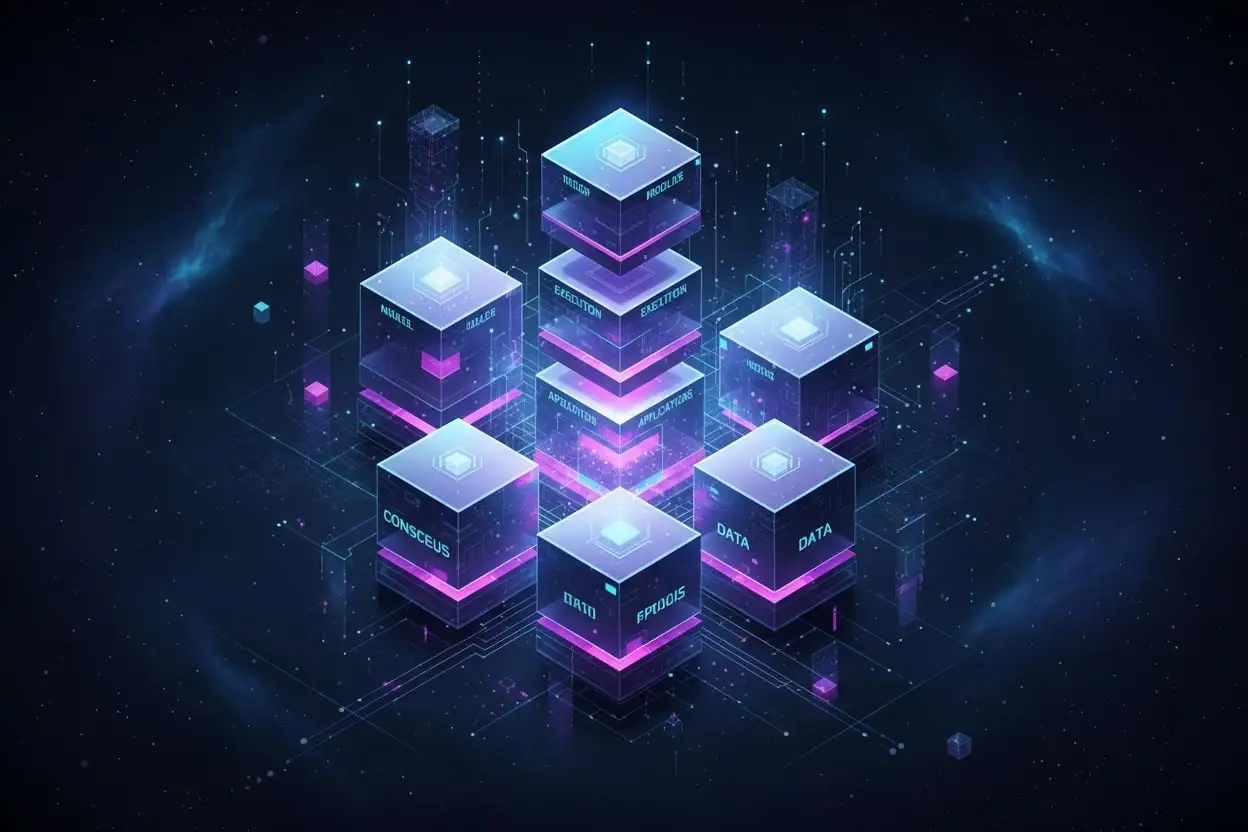
Modular architecture resolves this by letting each layer specialize:
- Execution layers handle transaction processing
- Consensus layers validate transactions
- Data availability layers ensure data is accessible
- Settlement layers resolve disputes and finalize transactions
This specialization enables better performance without compromising security.
Key players shaping the ecosystem
Celestia
Celestia launched as the first dedicated data availability layer. It provides the foundation other chains build upon. Developers can deploy their own execution chains while relying on Celestia for data storage and ordering.
The project went live in late 2025 and has since supported dozens of rollups and application-specific chains.
Cosmos ecosystem
The Cosmos SDK has been building toward this vision for years. Over 200 chains now use it in production, creating an interconnected ecosystem of sovereign blockchains.
Cosmos chains achieve interoperability out of the box through the Inter-Blockchain Communication protocol. Assets and data can flow between chains without bridges or intermediaries.
How modular blockchains work
The architecture typically involves three components:
Rollups execute transactions off the main chain and post compressed data to the data availability layer. This provides Ethereum-level security with higher throughput.
Data availability layers store transaction data in a way that’s easy to verify but hard to censor. They don’t execute transactions or maintain state.
Settlement layers handle finality and dispute resolution. If a rollup operator acts maliciously, users can prove fraud and slash their bond.
This separation lets each component scale independently.
Benefits for developers
Modular blockchains offer concrete advantages:
Faster deployment: Building on an existing data availability layer means starting with proven infrastructure. Developers focus on their application, not consensus mechanisms.
Customization: Each chain can choose its own execution environment, tokenomics, and governance without affecting other chains in the ecosystem.
Interoperability: Cross-chain communication happens at the protocol level, not through third-party bridges that introduce security risks.
The road ahead
Challenges remain. Coordinating between layers adds complexity. User experience across chains needs improvement. Regulatory uncertainty affects all crypto projects.
Summary
Modular blockchains represent a fundamental shift in how we build decentralized systems. By separating concerns across specialized layers, they achieve scalability without sacrificing security or decentralization.
For developers, this means faster deployment and more flexibility. For users, it means better performance and lower costs. The modular future is already here.
Next steps:
- Explore the Cosmos SDK documentation
- Try deploying a testnet rollup on Celestia
- Research cross-chain DeFi opportunities
Related articles: